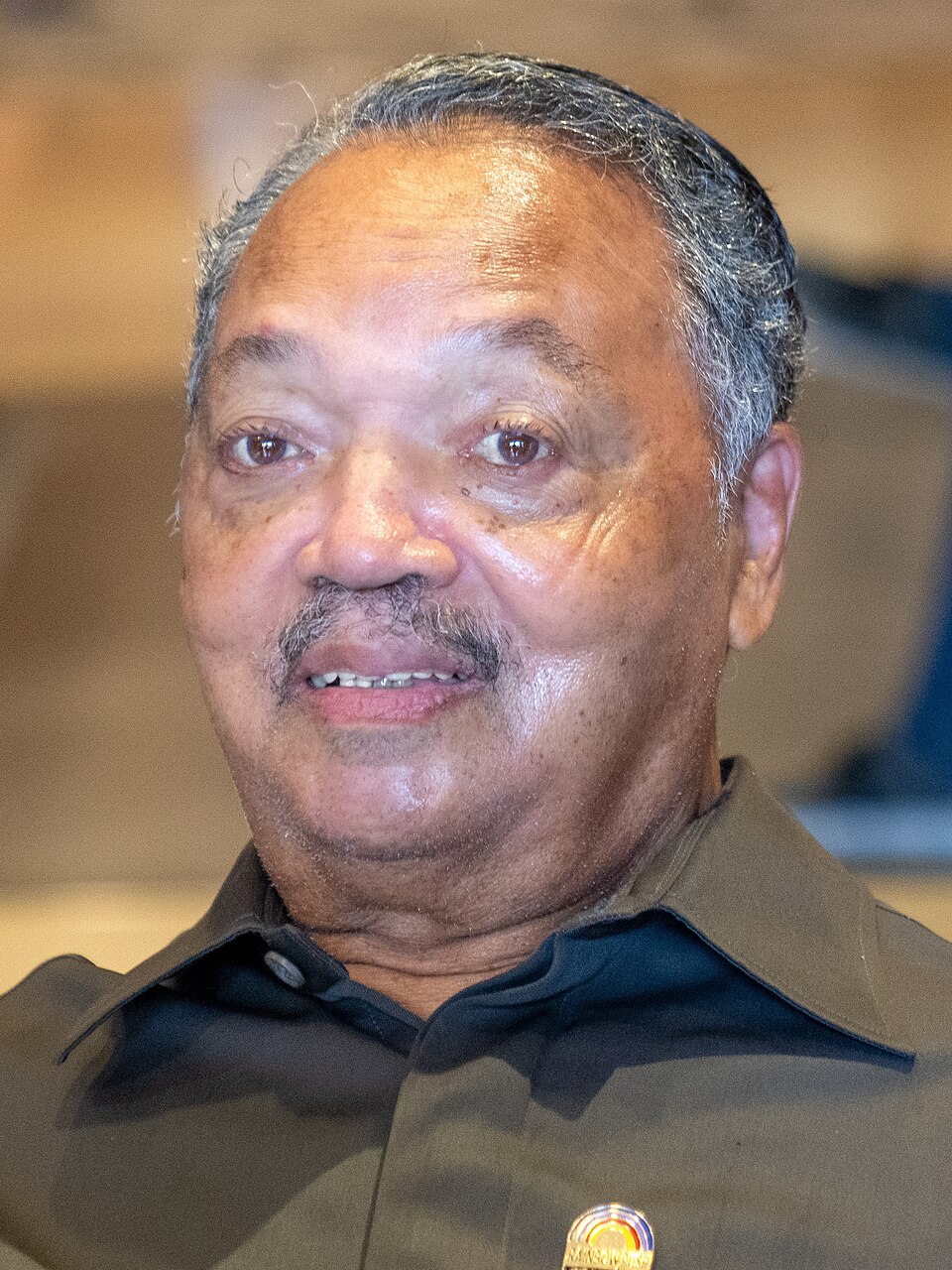
Rev. Jesse Jackson, the civil rights leader who marched alongside Dr. Martin Luther King Jr. and later ran for president of the United States, has died at the age of 84, his family confirmed Tuesday.
Jackson passed away peacefully, surrounded by loved ones. In a statement, his family described him as "a servant leader - not only to our family, but to the oppressed, the voiceless, and the overlooked around the world." A specific cause of death was not immediately disclosed. He had publicly battled Parkinson's disease since 2017 and was later diagnosed with progressive supranuclear palsy, a degenerative neurological condition.
Born in 1941 in Greenville, South Carolina, Jackson rose to prominence during the Civil Rights Movement of the 1960s. As a young activist, he joined the Southern Christian Leadership Conference (SCLC) and worked closely with Dr. King. He led Operation Breadbasket, an initiative focused on economic justice, encouraging companies to hire Black workers and invest in underserved communities. Jackson was in Memphis in 1968 in the days surrounding King's assassination - a defining moment that shaped his lifelong commitment to justice.
In 1971, he founded Operation PUSH (People United to Save Humanity), emphasizing economic empowerment, education, and voter registration. He later launched the Rainbow Coalition, a movement aimed at uniting minorities, working-class Americans, and marginalized communities around shared principles of equality and opportunity.
Jackson made history with his presidential campaigns in 1984 and 1988. In 1984, he won 18% of the Democratic primary vote. In 1988, he captured 11 primaries and caucuses, finishing second in the delegate count - a groundbreaking achievement that expanded Black political participation and reshaped national Democratic politics.
Beyond American politics, Jackson also worked internationally, helping negotiate the release of Americans detained overseas. In 2000, President Bill Clinton awarded him the Presidential Medal of Freedom for his humanitarian efforts.
For believers, Jackson's life was also deeply rooted in ministry. As an ordained Baptist minister, he consistently framed justice as a biblical calling, drawing from Scripture and the prophetic tradition that defends the poor and oppressed. His faith informed his public life, reminding many that Christian conviction and social engagement can walk hand in hand.
Rev. Jesse Jackson leaves behind his wife of more than 60 years, Jacqueline, his children, and a legacy that spans the pulpit, the protest line, and the political stage.


