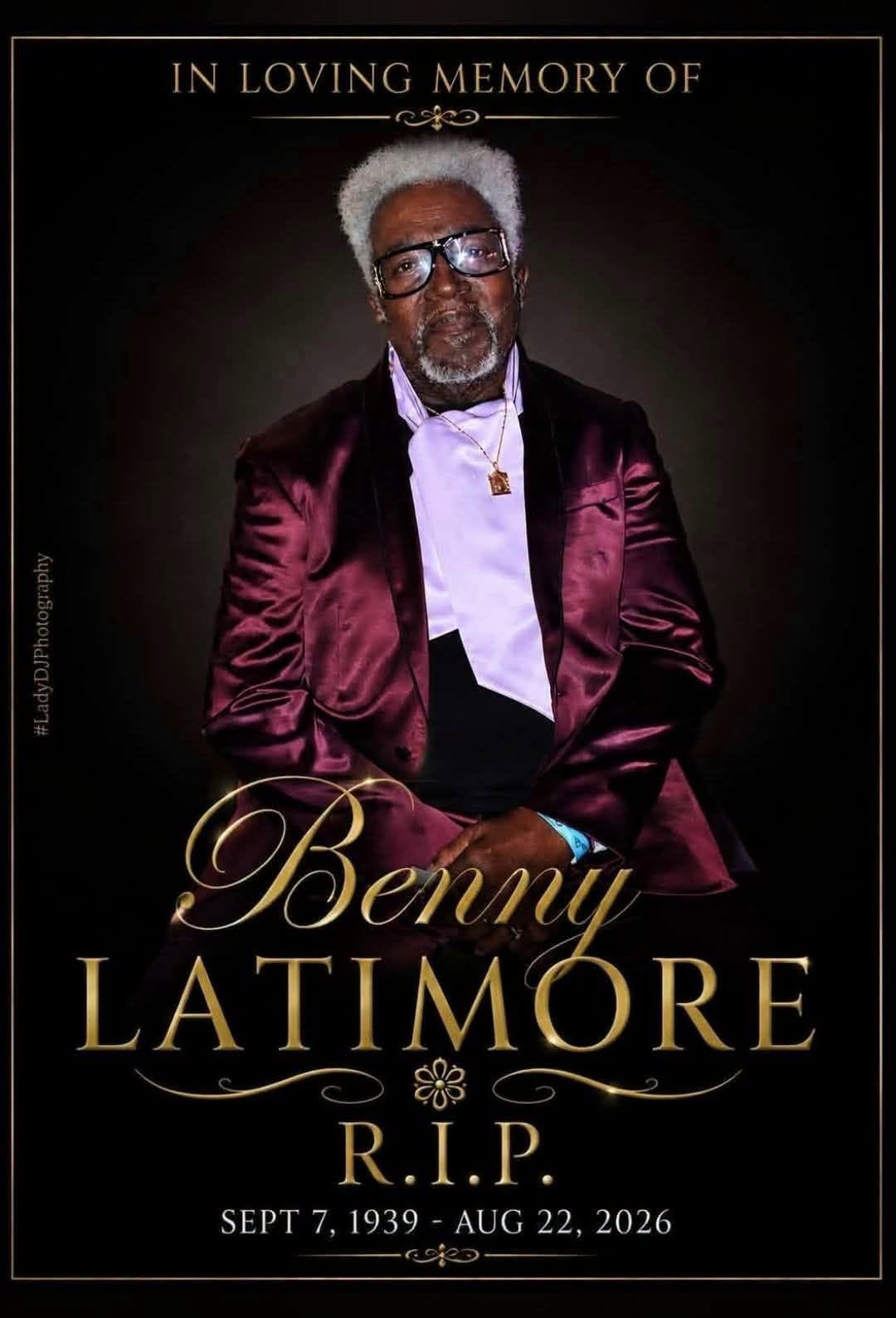
Southern soul has lost one of its unmistakable voices.
Benjamin William "Benny" Lattimore, better known simply as Latimore, has died at the age of 86, bringing to a close a remarkable career that stretched across more than five decades and produced one of soul music's most enduring slow-burn classics, "Let's Straighten It Out."
And while Latimore became famous for songs about romance, heartache and complicated relationships, his musical story actually began somewhere very different: the church.
Born in Charleston, Tennessee, in 1939, Latimore grew up surrounded by an intriguing mixture of country music, blues and the sounds of his Baptist church. He sang in church as a young man, with hymns and congregational music becoming part of the musical foundation that would eventually feed into his distinctive Southern soul sound.
That church connection is worth remembering. Latimore was not primarily known as a gospel recording artist - his catalog could get considerably more sensual than Sunday-morning music - but gospel and church singing were part of the musical soil from which his voice grew.
After entering the professional music world during the 1960s, Latimore eventually found his breakthrough after signing with Glades Records. His rendition of the blues standard "Stormy Monday" gave him a significant R&B hit in 1973, but the following year everything changed.
"Let's Straighten It Out" became the record that would follow him for the rest of his life.
The smoldering relationship song climbed all the way to No. 1 on the R&B chart in 1974, turning Latimore into a major soul star. He followed it with further R&B successes including "Keep the Home Fire Burnin'" and "Somethin' 'Bout 'Cha."
But Latimore was no one-hit wonder quietly living off an old record.
When musical tastes changed, he kept working.
He joined Malaco Records in the 1980s and became part of the Southern soul and blues world that maintained an intensely loyal audience even when mainstream pop radio was looking elsewhere. He later reunited with producer Henry Stone to establish LatStone Records and continued recording and performing well beyond the era that first made him famous.
There were some surprising credits along the way, too.
Latimore remained a respected pianist and session musician and contributed to British soul singer Joss Stone's albums The Soul Sessions and Mind Body & Soul. In 2014, decades after "Let's Straighten It Out" first made him a star, he even appeared on The Tonight Show Starring Jimmy Fallon.
Then came one of the biggest honors of his career: Latimore was inducted into the Blues Hall of Fame in 2017, cementing his place among the artists who helped shape American blues and soul music.
Perhaps what made Latimore so difficult to pigeonhole was also what made him special. His music sat somewhere between the church, the blues club, country radio and the bedroom - sometimes all within the same song.
He himself emerged from a generation of Southern performers for whom those musical worlds were never completely separate. Church singing helped shape the voice; blues supplied the grit; country music supplied another storytelling vocabulary; and soul brought everything together.
For Christian music listeners, Latimore's passing is therefore also another reminder of just how deeply Black church music has shaped the wider landscape of American popular music. The teenager singing in church in Tennessee eventually became a Blues Hall of Famer whose records traveled around the world.
Latimore leaves behind more than five decades of recordings, but one plea will almost certainly remain his musical epitaph:
"Let's Straighten It Out."
The man behind that unmistakable baritone may be gone, but that voice isn't going anywhere.


