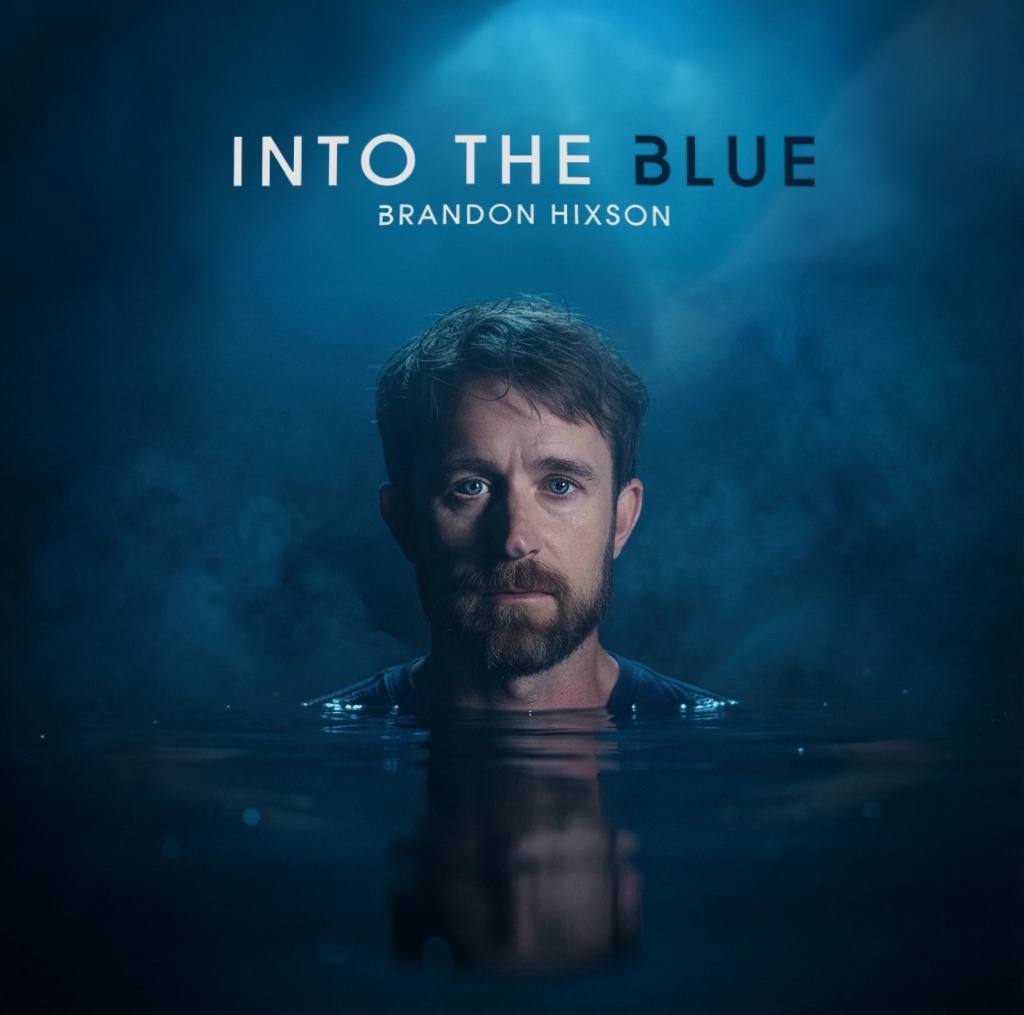
Singer-songwriter Brandon Hixson has steadily built a reputation for crafting honest, faith-centered music that blends heartfelt storytelling with thoughtful artistry. Known for writing songs that explore family, grace, and everyday moments of spiritual reflection, Hixson brings a sincerity that resonates with listeners seeking both authenticity and hope. With a growing audience and a creative voice shaped by years of independent work, he continues to evolve as an artist unafraid to embrace vulnerability and musical exploration - qualities that come fully into focus on his latest project, Into The Blue.
Q: Brandon, for listeners meeting you for the first time, how would you describe who you are as an artist at this stage of your journey, and what does Into The Blue represent for you personally and creatively?
At this stage, I see myself as a storyteller more than anything - someone trying to capture the sacred in everyday moments. My music has always been rooted in faith, family, and reflection, but I'm learning to hold those themes with more honesty and less polish. I'm less interested in sounding perfect and more interested in sounding true. Into The Blue represents stepping into the unknown with trust. Creatively, it was about letting go of expectations - including my own - and allowing the songs to breathe. Personally, it reflects a season of surrender: trusting God in uncertain waters, embracing change, and finding peace not in having all the answers, but in knowing I'm not alone in the questions.
Q: How did it feel to hear your album Room With a View announced as Album of the Year at the Josie Music Awards, and did that moment change the way you approached writing and releasing Into The Blue?
Honestly, the way I found out made the moment even more special - and a little funny. I wasn't at the Grand Ole Opry that night, and I didn't even know I'd been nominated. Then my phone started buzzing. Two friends who were there messaged me within minutes of each other saying, "You just won Album of the Year!"
At first, I thought they were joking. I remember sitting there rereading the messages, trying to process what they were telling me. When it finally sank in, I felt this overwhelming mix of gratitude, disbelief, and humility. As an independent artist working out of a home studio, you don't create music expecting moments like that. It felt like God's gentle reminder that the work done in quiet places still matters.
That experience didn't make me feel pressure to outdo myself with Into The Blue - if anything, it freed me. It reminded me that the goal isn't recognition; it's connection. So instead of chasing another award, I focused on writing songs that were more honest, more vulnerable, and more reflective of where I was in life. The result was an album that feels less like a performance and more like an invitation - to sit in the questions, to trust the process, and to find beauty in the unknown.
Q: You wrote and produced this 10-track project largely on your own in your home studio. How did working in that environment shape the sound, honesty, and emotional tone of Into The Blue?
Working at home removes the barrier between life and music. The same room where I'm recording vocals is where my kids are laughing down the hall and where quiet prayers happen late at night. That proximity seeps into the songs.
The home studio allowed me to sit with emotions longer, to re-record a vocal when it didn't feel honest, and to let imperfections remain when they carried truth. Sonically, it created a warmth and intimacy you can't manufacture. Emotionally, it gave me permission to be vulnerable, because I wasn't performing for a room - I was documenting a moment.
Q: Your earlier music often reflected a strong '90s CCM influence, yet this album expands into funk grooves, modern pop textures, and even soundtrack-style moments. What inspired that sonic evolution, and how intentional was that shift?
The '90s CCM influence will always be part of my DNA - those songs shaped my faith and my understanding of what music can do. But as I've grown, so has my listening. I've fallen in love with groove-driven rhythms, cinematic arrangements, and modern production textures that allow a song to feel both intimate and expansive.
The shift wasn't about leaving something behind; it was about making room. I wanted each song to find the sound it needed rather than forcing everything into one familiar style. Some stories need a quiet acoustic frame, others need movement, and some need space to feel almost like a film score. Into The Blue reflects that freedom.
Q: Songs like "A Better Place," "Letter I Wrote," and "Feels Like Home" explore reflection, family, and faith with a new level of vulnerability. How did your songwriting process change to allow those themes to come through so authentically?
I stopped trying to resolve the story before writing it. In the past, I think I wanted the lesson neatly packaged by the final chorus. This time, I allowed the questions to remain.
Practically, that meant writing from specific moments - a conversation, a memory, a prayer whispered when no one else was listening - and resisting the urge to generalize too quickly. Vulnerability came from staying close to the details: names, places, emotions I might have once edited out. When you write from truth instead of from an idea, authenticity tends to follow.
Q: Looking ahead, now that Into The Blue has marked such a pivotal moment in your career, what creative directions or themes are you most excited to explore in future music?
I'm excited to continue exploring the intersection of faith and ordinary life - the small, quiet moments where grace shows up unexpectedly. Musically, I want to lean further into cinematic storytelling and collaborative textures while still preserving the intimacy that defines my work.
I'm also drawn to themes of legacy, community, and reconciliation - how we carry one another's stories and how hope survives across generations. If Into The Blue was about stepping into deeper waters, the next chapter may be about discovering what grows there.


