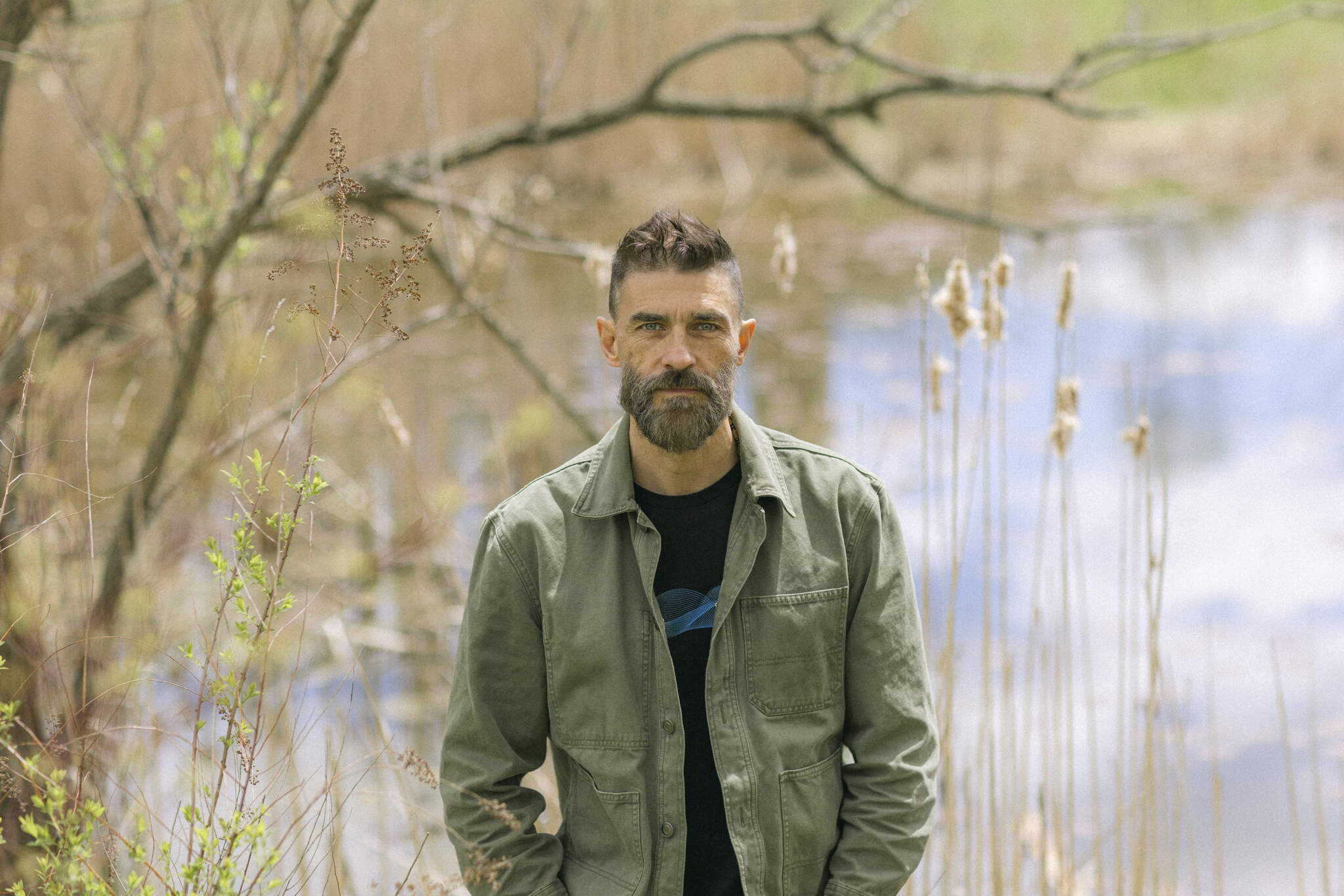
For more than two decades, Juno-nominated pianist, composer, arranger, and songwriter Mike Janzen has built a unique musical career at the intersection of jazz, folk, classical music, and worship. With eight solo albums to his name, numerous GMA Covenant Awards, and a body of work spanning concert halls, churches, festivals, film, and television, Janzen has continually pushed creative boundaries while remaining deeply rooted in faith.
His latest album, The End of Myself, may be his most personal project yet. Written in the wake of a life-altering concussion that left him unable to work for years, the 12-song collection explores themes of surrender, weakness, identity, and resurrection. Blending soulful folk, roots, jazz, and singer-songwriter influences, the album reflects on what it means to reach the end of one's own strength and discover God's presence in unexpected places.
From the poignant honesty of "The Bottom of Myself" to the challenging reflections of "Unless a Kernel of Wheat" and "Make My Name Great," Janzen invites listeners into a journey of loss, healing, and renewed purpose. We recently sat down with him to discuss the experiences behind the album, the lessons learned through suffering, and how God continues to shape both his music and his life.
Q: You've released eight solo albums, earned a Juno nomination, composed for film and television, and led acclaimed jazz and worship projects. Looking back on your musical journey, what have been some of the defining moments that shaped you into the artist and songwriter you are today?
I've always believed the Church should be a place where creative music flourishes. After high school, I spent seven years studying everything from jazz to classical composition. Once I completed my master's degree in classical composition, I shifted gears and spent several years playing in a pop worship band while practicing jazz for hours every day. For a long time, I wasn't sure whether the worlds of pop, jazz, and classical music were truly compatible.
That changed when I was asked to orchestrate an entire concert for my friend, Steve Bell. I remember standing on stage and suddenly realizing that all three disciplines had found their intersection. I was playing a jazz solo in a folk-pop setting while an orchestra performed charts I had written. It was one of those unforgettable "aha" moments that helped me understand who I was as an artist.
But it isn't only the mountaintop experiences that have defined me. Nothing has shaped my music more over the last decade than the debilitating concussion I suffered in 2016. Out of that devastating season came three albums based on the Psalms, as well as my latest record, The End of Myself. In many ways, that experience gave me a new lease on life and a renewed calling to write songs that bring hope to people navigating the challenges of this world.
Q: The End of Myself is a deeply personal title. What experiences led you to explore themes of surrender, weakness, and new beginnings on this album, and why did you feel now was the right time to tell this story?
The End of Myself really began during the aftermath of my concussion. In those difficult years, when I couldn't work and many of the things I had built seemed to disappear overnight, I felt as though everything I had worked for had come to an end-the end of myself. What surprised me was discovering that God was deeply present even at the very bottom. I began to learn that my worth was not rooted in what I accomplished, but in whose I was.
Over the last four years, I've felt significantly better physically, yet I'm still surprised by how often I struggle with making life revolve around myself. Many of the songs on this album challenge me to see life differently-to pursue the flourishing of others, to seek greatness through serving, to care for those on the margins, and to make room to contemplate the self-giving love of Jesus displayed on the cross.
It's remarkable how easily we can get things backwards in our faith. This album continually calls me to die to the selfish parts of myself so that I can step more fully into the resurrected life of Christ.
Q: You've said that your 2016 concussion became a turning point in your life and faith. How did that difficult season influence your songwriting, and what lessons from that experience continue to shape your music today?
I remember sitting on the stairs in our basement one particularly dizzy day and sensing the words, "Sing to the dark." Those words have stayed with me for the last decade, and they've become a guiding principle in my songwriting. I feel compelled to create songs that remind people of God's presence and care in the struggles we inevitably face.
The concussion also gave me a deeper empathy for people who are sick, injured, or wrestling with mental health challenges. It's taught me to trust that what feels devastating today may one day be transformed into something good.
These days, whenever I leave home for a concert, I feel a greater sense of gratitude. I don't take music for granted anymore. Every opportunity to sing over people and encourage them through song feels like an incredible gift.
Q: Songs like "The Bottom of Myself," "Unless a Kernel of Wheat," and "Make My Name Great" challenge many of our cultural assumptions about success and significance. What message do you hope listeners take away from these songs?
In today's politically charged environment, where Christianity often finds itself in the spotlight, it's easy to point out places where faith has pursued power instead of reflecting the self-giving way of Jesus. The reality, however, is that I often find those same tendencies in myself. I want recognition. I want a larger platform. I would rather be near the front of the line than at the back.
Jesus directly confronts those instincts. He doesn't merely teach what greatness looks like-He demonstrates it. Through His life, death, and resurrection, He reveals a God who willingly pours Himself out for the sake of others.
That message is profoundly countercultural. It calls us to lay down our lives for others, to surrender our obsession with status and success, and to discover that true life is found through self-giving love. These songs are as much a challenge to me as they are to anyone listening.
Q: Musically, the album blends folk, jazz, roots, and singer-songwriter influences. How did you approach creating the sound of The End of Myself, and were there any particular artists or collaborators who helped bring the project to life?
With this album, I wanted to lean into a roots-oriented, folk-driven sound where listeners could really hear the personality of the musicians. Since my previous three solo albums were centered on the Psalms, this project gave me the opportunity to explore new musical territory and continue developing both my songwriting and vocal craft.
I've long admired the soulful guitar work and expressive vocals of Joey Landreth, and he appears on "The Bottom of Myself" and "Poison in the Lights." I also love working with musicians who are equally comfortable in the worlds of improvisation, jazz, and folk-pop.
The band-including Davide Direnzo, Mark McIntyre, Joel Schwartz, Drew Jurecka, and Kevin Breit-brought incredible energy and sensitivity to the recordings. Tracking many of the songs live in the studio reminded me of the magic that happens when gifted musicians create together in the same room.
Q: Throughout this album, you speak honestly about failure, surrender, and discovering God's presence in unexpected places. On a personal level, how has your relationship with Christ deepened through these experiences, and what is God teaching you in this season of life?
Some of our closest friendships are formed through seasons of hardship, and I genuinely feel that God has been the closest friend to me through my own journey. Looking back, I was surprised by how present He was during the darkest days of my concussion recovery, yet Scripture continually reminds us that God draws near to the brokenhearted and those who are struggling.
Now that my health has largely returned, a different challenge emerges. It's easy to become distracted by opportunities, responsibilities, and the demands of a career. I can quickly forget that my identity is meant to be anchored in being loved by God rather than in what I accomplish.
In this season, I sense God's invitation to allow His love to reshape how I value others and how I understand my own worth. I'm often humbled by how quickly I crave recognition and success, but I remain committed to the lifelong journey of moving from self-centeredness toward a life shaped by the values of God's kingdom and the new creation He is bringing about.
All the latest Mike Janzen music, tour and more news can be found at www.mikejanzen.ca, Facebook, YouTube, PraiseCharts, Instagram, Apple Music and Spotify.


