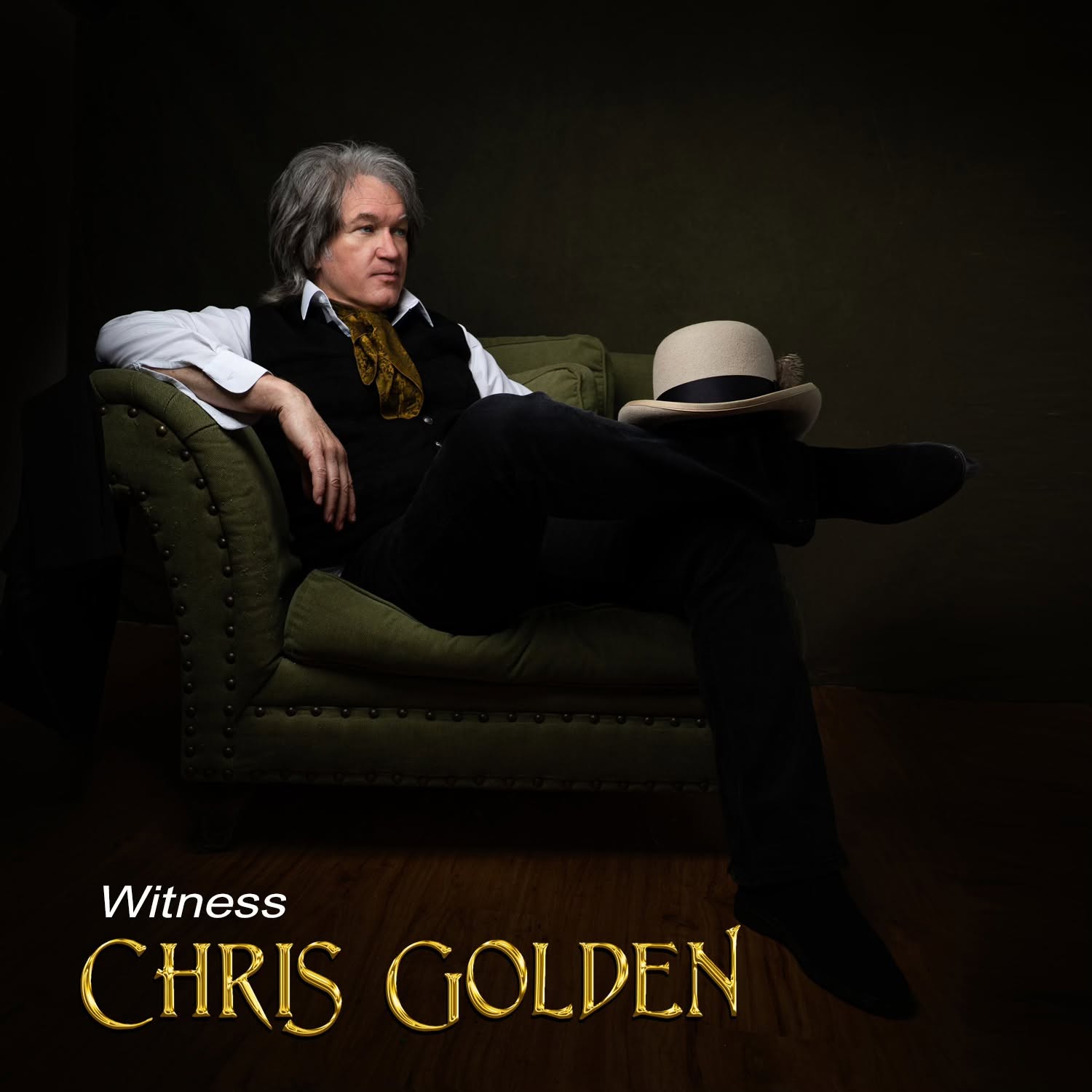
Prime Cuts: "Piano for Sale," "He Loves Me Anyway," "God Did It All"
Overall Grade: 5/5
There are albums that sound polished, albums that contain great songs, and albums that seem to carry the accumulated weight of a life. Chris Golden's Witness belongs emphatically to the last category. This is not simply a collection of country gospel songs assembled around familiar themes of faith. It sounds lived-in. Every turn toward family, heaven, regret, grace, and home feels connected to someone Golden has loved, something he has lost, or a truth he has learned along the way.
That authenticity is what makes Witness such a convincing record. Golden describes these songs as everyday stories about "family, faith, and hope," with the album's central message being the simple declaration that Jesus loves you. Yet the album rarely feels as though it is preaching slogans. Instead, Golden gets at faith through stories-and he has enough life behind him to make those stories matter. In the years leading to Witness, he cared for his mother during her battle with pancreatic cancer and later lost his brother and longtime musical partner Rusty. Golden says he poured his "heart and soul into every note" as music once again became part of his healing.
The album's most affecting moment may be "Piano for Sale." Golden did not write the song, but it fits his life with uncanny precision. As a boy, he would sneak into church with his cousin to play the good piano, moving quickly from secular favorites to gospel songs whenever his preacher uncle appeared. Years later, after putting his late brother Rusty's keyboards up for sale, Golden encountered a song built around remarkably similar memories. Golden does not need to oversing it. The power resides in the memories underneath the words-the piano becoming a symbol of childhood, family, music, faith, and people who are no longer there. In lesser hands, nostalgia can become sentimental. Here it becomes testimony.
"He Loves Me Anyway" reaches the heart from another direction. Written with Kenna Turner West, the song grew from a conversation about Golden's determination to keep loving a prodigal child regardless of circumstances. Golden then recognized himself in the same story: he too has needed the unwavering love of the Father. That double perspective makes the song one of Witness' finest achievements. Golden is simultaneously father and son, the one extending love and the one dependent upon it. Rather than presenting grace as an abstract theological proposition, "He Loves Me Anyway" puts flesh on it.
Then there is "God Did It All," which carries perhaps the deepest family resonance on the record. The song was written by Golden's late brother Rusty with the late Dianne Wilkinson. Golden recalls the rarity of receiving an enthusiastic reaction from his father, William Lee Golden, yet his father once told Rusty that he believed people would still be singing "God Did It All" a hundred years from now. Hearing Chris sing it now inevitably gives the song another layer: it becomes not only a statement of faith but a continuation of his brother's musical witness.
Those three songs alone would make Witness worth hearing, but the album's strength is how consistently the remaining material fills out its world. "Where My People Are" turns Golden's purchase of family cemetery plots into something much larger-a meditation on the ultimate homecoming of heaven. "Grandaddy's Prayers," meanwhile, traces faith backward through generations, inspired by Golden's grandfather and his disciplined life of prayer. Together, the songs give Witness a strong generational dimension: faith is something received, lived, and handed forward.
Golden also knows when to loosen his tie. His treatment of the old hymn "The Old Gospel Ship" reaches back to music heard at Golden Memorial Holiness Church and around the family piano, but he gives it his own muscular spin. Legendary steel guitarist Steve Hinson contributes a one-take slide solo that Golden wisely left intact. "Thank God I'm Free" carries similar revival-meeting electricity. Golden decided to record it after performing the song at a Texas cowboy church and watching a young man leap to his feet with both arms raised when the chorus arrived. Both performances remind listeners that Golden's natural habitat remains somewhere between the country stage and the church platform.
"Can I Get a Witness" embraces call-and-response gospel exuberance, while "Everybody Talks to God" gives Golden another strong country-gospel narrative to inhabit. "Don't Wait," written by Tim Menzies, delivers one of the album's most immediately practical messages: tell people you love them, apologize while you still can, call your mother, and above all, do not postpone responding to Christ. "A Better Man" complements that message with humility-the past cannot be rewritten, but grace can change the person who emerges from it.
Even "The Man Upstairs," a title that might initially suggest familiar country-gospel territory, works because its premise matches Golden's larger vision. God is not presented as a distant figure confined to heaven but as a presence Golden sees throughout ordinary life. That could almost serve as the album's governing idea. On Witness, God keeps appearing in family stories, country roads, church pianos, cemetery plots, regrets, reconciliations, and songs handed from one generation to another.
Musically, Golden's fingerprints are everywhere. He recorded much of the album himself and played most of the instruments, consciously following the example of multi-instrumental artists he admires while still wanting the finished recordings to feel like a band rather than a one-man studio exercise. That craftsmanship matters because Witness manages to sound carefully made without sanding away the humanity that gives country gospel its power. The arrangements generally allow the stories to remain front and center rather than burying them beneath unnecessary production.
And that is why Witness earns its 5/5. The rating is not for technical perfection or stylistic novelty for novelty's sake. It is because Golden accomplishes exactly what this kind of record should accomplish. The songwriting serves the stories. The performances serve the songs. The production serves the singer. Most importantly, the singer serves the message. At this stage of his career, Golden has little reason to chase whatever happens to be fashionable; he makes music rooted in the things that remain when fashions disappear-family, faith, forgiveness, home, memory, and grace.


