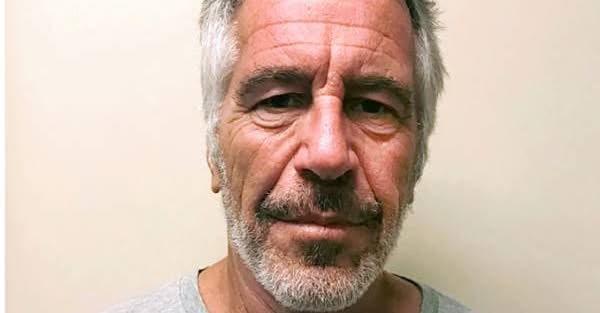
The Jeffrey Epstein scandal has generated years of headlines about powerful friends, private jets, wealthy associates and political connections. But according to one of America's leading researchers on child sexual abuse prevention, all that attention may have helped obscure the most important-and disturbing-part of the story.
Elizabeth J. Letourneau, PhD, director of the Moore Center for the Prevention of Child Sexual Abuse at the Johns Hopkins Bloomberg School of Public Health, says the extraordinary public obsession with Epstein largely failed to produce an equally serious national conversation about preventing the sexual abuse of children.
Speaking with Newsweek's Parting Shot podcast, Letourneau didn't hide her frustration.
"I am outraged," she said, arguing that much of the coverage and even the law-enforcement response failed to treat the Epstein story fundamentally as a case involving child sexual abuse.
It's a striking criticism considering just how much oxygen Epstein has consumed in American media. His wealth, death, connections and relationships with famous figures have fueled countless stories and conspiracy theories. Yet Letourneau's point is uncomfortable: while America kept asking who knew Epstein, who visited him and whose name appeared where, a much bigger question received comparatively little attention-how do we stop children from being sexually abused in the first place?
That question sits at the center of Letourneau's newly released book, One in Five: Why Child Sexual Abuse Is Our Biggest Public Health Crisis-and What We Can Do to Stop It, written with Emmy-nominated journalist Luke Malone.
Released by Basic Books on August 18, the 336-page book argues that child sexual abuse should not simply be treated as a criminal-justice problem addressed after a child has already been harmed. Letourneau and Malone instead want prevention to become the priority.
And the statistic behind the title is staggering.
The authors say approximately one in five children experiences sexual abuse or attempted sexual abuse, including online and offline victimization, before turning 18. The Moore Center separately notes that when online exploitation is included, the figure rises to roughly one in five children globally-nearly half a billion children.
But One in Five also challenges another assumption that could make readers uncomfortable: the stereotypical image of the adult predator does not account for much of the abuse taking place.
According to the Moore Center, most sexual offending against children is actually committed by other children; in the United States, it estimates the proportion at roughly 70 percent.
That dramatically changes the prevention conversation.
Letourneau and Malone argue that waiting until abuse occurs, identifying an offender and imposing punishment is not enough. Their approach asks whether intervention can happen earlier-including helping young people displaying troubling sexual behaviors or attractions before another child is harmed. The authors contend that shame and fear can actually make preventive intervention harder when people who recognize dangerous thoughts or behaviors believe there is nowhere they can safely seek help.
It is an argument Letourneau has been making outside the book as well. Writing for Johns Hopkins in July, she stressed that protecting children needs to begin before abuse occurs and argued that research already provides evidence about where prevention efforts can start.
The pair also discussed the issue with Dax Shepard on Armchair Expert earlier this year, tackling subjects that rarely make comfortable celebrity-podcast conversation: the distinction between pedophilia and offending, abuse perpetrated by minors, shortcomings in the justice system and the possibility of combining accountability with prevention.
That brings the argument right back to Epstein.
His case became irresistible because it contained almost every ingredient of a sensational scandal-money, sex, celebrities, politicians, secrecy and unanswered questions. But Letourneau's criticism suggests the public may have become so fascinated with the people surrounding Epstein that it lost sight of the children at the center of what happened.
The famous names were always going to generate headlines.
The far less glamorous story is the one Letourneau and Malone want Americans talking about now: child sexual abuse is widespread, much of it doesn't resemble the sensational cases that dominate television, and preventing the next case may matter far more than endlessly dissecting the last one.
Learn more about One in Five from Hachette/Basic Books


