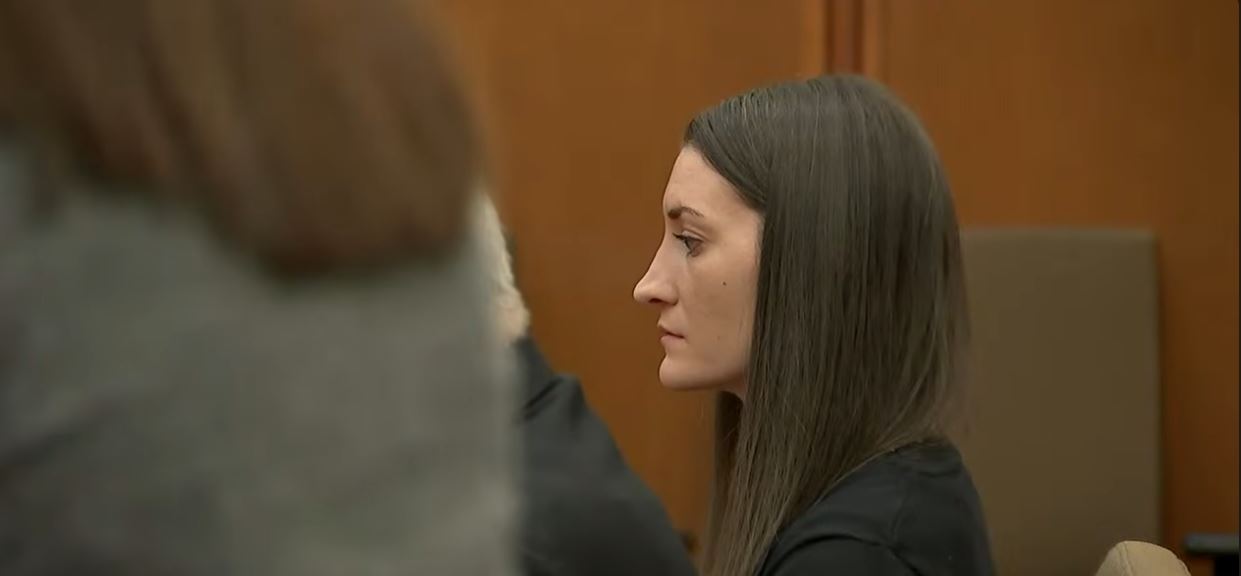
The courtroom drama surrounding Lindsay Clancy did not end when her closely watched murder trial was declared a mistrial. Now three jurors are facing fierce backlash after publicly criticizing the lone panelist who refused to acquit the Massachusetts mother by reason of insanity.
Clancy admitted to strangling her three young children but pleaded not guilty on the grounds of insanity. The case ended in a mistrial after jurors failed to reach a unanimous verdict, reportedly with one male juror holding out against an insanity acquittal.
During an interview with NBC10 Boston, jurors Paula Devlin, Kellie Farina and jury foreperson Roni Carlson offered a striking glimpse inside the tense deliberations. Carlson admitted she became "so excited" when the holdout appeared ready to change his vote-but that excitement quickly disappeared when he stood his ground.
Devlin described the man as "very arrogant," while Farina complained that he "would not interact" with the others and "had the hardest time getting off the fact that Lindsay viciously killed her children."
That last remark immediately ignited social media. Critics found it astonishing that the juror's refusal to move past the deaths of three children was being treated as an unreasonable obstacle rather than the central moral and legal issue confronting the panel.
The interview also raised a potentially serious question about what happened behind closed doors. Devlin indicated that jurors with nursing backgrounds discussed their own interpretations of Clancy's toxicology results. Critics noted that the judge had reportedly instructed jurors not to rely upon expertise or information that had not been presented as evidence during the trial.
The three women also accused prosecutors of being "harsh," "biased" and insufficiently compassionate, while praising defense attorney Kevin Reddington as "funny" and "entertaining." Those comments only intensified suspicions that personality and sympathy may have influenced some jurors as much as the evidence itself.
Conservative commentators quickly piled on. Dave Rubin sarcastically observed how "strange" it was that the holdout could not get over the fact that Clancy killed her children, while Matt Walsh accused the jurors of disregarding the law in their determination to let her escape criminal responsibility.
Christian leaders have also entered the increasingly bitter debate. Texas pastor Josh Howerton compared the case's cultural impact to the shocking moral collapse depicted in the book of Judges, suggesting it could become a moment that forces Americans to ask, "What have we become?"
Yet the tragedy at the center of the controversy must not be lost amid the gender wars, political point-scoring and viral outrage. Three children died, a father lost his family, and a jury could not agree on whether the woman responsible was criminally accountable. Whatever happens next, justice demands more than outrage or sentiment-it requires truth, moral clarity and compassion that never forgets the victims.


![At The Meeting (Live) [Official Lyric Video] --- Kelontae Gavin](https://jubileecast-29b4.kxcdn.com/data/videos/thumbnail/1227/at-the-meeting-live-official-lyric-video-kelontae-gavin.jpg?w=436&h=265&l=50&t=10)


