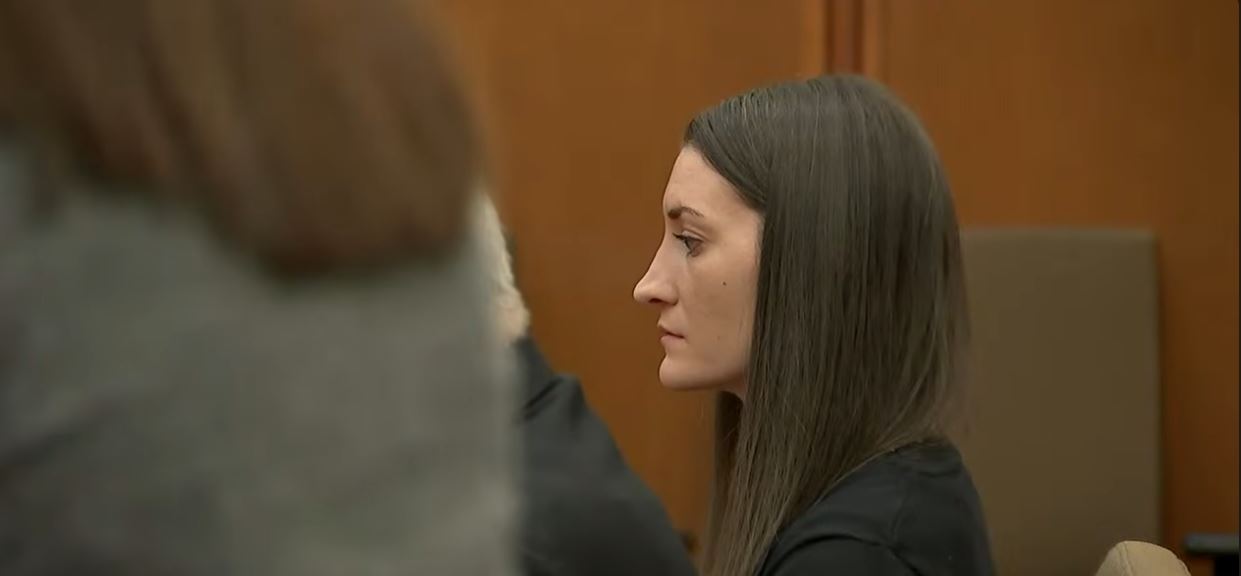
A lone juror who prevented Lindsay Clancy from being found not guilty by reason of insanity is now at the center of another extraordinary controversy-with strangers donating more than $370,000 to support him.
Michael Desronvil was reportedly the only member of the 12-person jury who remained convinced that Clancy should be held criminally responsible for killing her three children, Cora, 5, Dawson, 3, and Callan, 8 months. His refusal to join the other 11 jurors resulted in a deadlocked jury and a mistrial, leaving prosecutors with the possibility of putting Clancy on trial again.
Now, a GiveSendGo fundraiser titled "Stand With The Juror" has transformed Desronvil from an unidentified courtroom holdout into a public figure. The campaign had collected more than $374,000 as of Monday afternoon, reportedly intended to cover his security, legal expenses, and income lost amid the intense public reaction to his decision.
But why has one juror's vote inspired hundreds of thousands of dollars in donations-and why does he reportedly no longer feel safe in his own home?
Desronvil has not participated in a full public interview, but he released a statement through attorney Edward Paltzik explaining why he rejected Clancy's insanity defense. He said the physical evidence, witness testimony, and prosecution's case persuaded him that Clancy understood and planned what she was doing.
"As I tried to explain different possible theories during deliberation, I kept getting cut off as if I had doubts based on the evidence presented," Desronvil alleged in the statement.
Clancy admitted killing her children in their Duxbury, Massachusetts, home in January 2023 but pleaded not guilty by reason of a lack of criminal responsibility. Her defense argued that postpartum psychosis and the effects of her psychiatric treatment left her unable to appreciate the criminality of her actions.
The case subsequently became a bitter national debate over maternal mental health, psychiatric medication, legal responsibility, and whether acknowledging postpartum psychosis risks minimizing the deaths of the children. While Clancy's supporters viewed her as a severely ill mother failed by the medical system, others maintained that her mental-health history should not automatically erase criminal accountability.
The fundraiser supporting Desronvil adopts the latter position in unusually confrontational language. Its organizers accuse Clancy's defenders of placing her diagnosis above the three children and celebrate Desronvil as the man who resisted intense pressure to accept the insanity defense.
"One juror held his seat," the campaign declares, portraying his decision as a defense of Cora, Dawson, and Callan when the rest of the courtroom appeared ready to reach a different conclusion.
Further claims about what allegedly happened inside the jury room have now intensified the controversy. Fugitive TV host Ray Marcel said Desronvil told him that eight jurors initially favored a not-guilty verdict, two remained uncertain, and two-including Desronvil-believed Clancy was guilty. According to that account, the other juror supporting guilt eventually changed her position, leaving Desronvil standing alone.
Marcel also claimed Desronvil believes he was targeted partly because he is a Black Republican serving on a predominantly female, Democratic-leaning jury. Those political characterizations have not been independently confirmed, but they have added another explosive dimension to a case already divided by questions of gender, medicine, motherhood, and criminal justice.
Other jurors offered a sharply different account after the mistrial. Three women who served on the panel reportedly described the unidentified holdout as "very arrogant" and alleged that he would not meaningfully engage with them. They said he could not move beyond the brutality of the children's deaths to consider whether Clancy was legally insane when she killed them.
Desronvil's supporters argue that this criticism proves why the fundraiser is necessary. Marcel claimed people have appeared outside the juror's home and the homes of his relatives, leaving family members frightened and unable to live normally. The campaign says the money will help provide protection, legal representation, and financial support as Desronvil faces public exposure.
The reported harassment raises a troubling question extending beyond the Clancy case: Can jurors still vote according to their convictions if they fear being identified, threatened, financially harmed, or publicly condemned afterward?
A holdout juror does not need to prove that the other 11 jurors were wrong. The American jury system requires unanimity in serious criminal cases, giving every juror both the authority and responsibility to resist a verdict he or she does not believe the evidence supports. At the same time, jurors are expected to deliberate honestly, consider opposing arguments, and follow the judge's instructions rather than allowing personal or political beliefs to determine the outcome.
That tension now sits at the heart of the controversy surrounding Desronvil. To his supporters, he is a courageous father who refused to let a psychiatric diagnosis overshadow three murdered children. To his critics, he was an immovable holdout who prevented a nearly unanimous jury from recognizing the devastating power of postpartum psychosis.
With more than $370,000 already raised, the response has become far larger than financial assistance for one juror. It has turned Desronvil's vote into a public cause-and exposed how deeply the Clancy case continues to divide people over where mental illness ends and criminal responsibility begins.
Was Michael Desronvil protecting the integrity of the justice system by standing alone, or did one man's refusal prevent 11 other jurors from delivering the verdict the evidence demanded?


