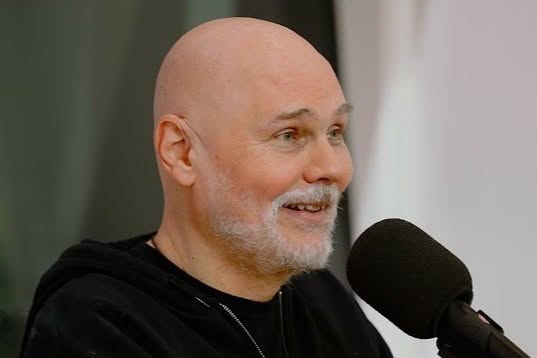
Billy Corgan has spent decades making music that asks difficult questions. In a conversation with Stryper frontman Michael Sweet, the Smashing Pumpkins singer raised one about his own industry: Why can rock musicians speak openly about almost anything, yet hesitate to talk about God?
On the September 23 episode of Corgan's podcast The Magnificent Others, he identified himself as a Christian and described a deliberate decision to speak publicly about his faith. He said he knew that calling Jesus his Lord and Savior could affect his career, but he wanted listeners to hear from him honestly.
That admission made the exchange more than an interview about Stryper. Sweet built his career in a band whose Christian message was unmistakable, even when it drew resistance from both the rock world and the church. Corgan found a connection with that experience, though his own music has followed a different path. Together, they considered the pressure artists feel to make their beliefs visible without being reduced to a label.
Corgan recalled describing God as "the third rail of rock and roll"-a subject musicians might avoid because of what it could cost them. His concern was personal: if he concealed a belief central to his life, what kind of honesty could he ask fans to hear in his songs?
Sweet suggested fear helps explain why some artists who admire Stryper privately remain reluctant to speak about faith publicly. He also acknowledged a tension within his own performances. Stryper once spent more time preaching between songs; today, he said, the band generally lets its music carry the message. His account raised another question for Christian performers: when does speaking plainly invite people into a conversation, and when might the way it is done push them away?
Corgan's comments did not present faith as a tidy answer to every question. When describing conversations with people who ask how he knows God exists, he said he does not claim certainty of that kind. He spoke instead about why belief in a just universe makes sense to him. That candor gave weight to his criticism of the music business: he was asking for room to discuss conviction and uncertainty in public.
For fans familiar with the darker spiritual questions in Smashing Pumpkins' music, Corgan's remarks may invite a fresh listen. He did not announce a change in the band's direction or promise explicitly Christian songs. He explained why he no longer wants to keep his faith out of conversations about who he is.
The most probing question from the interview may therefore extend beyond Corgan and Sweet. If artists are expected to reveal their heartbreak, anger and struggles to their audiences, why should speaking about faith feel like the greater career risk?


