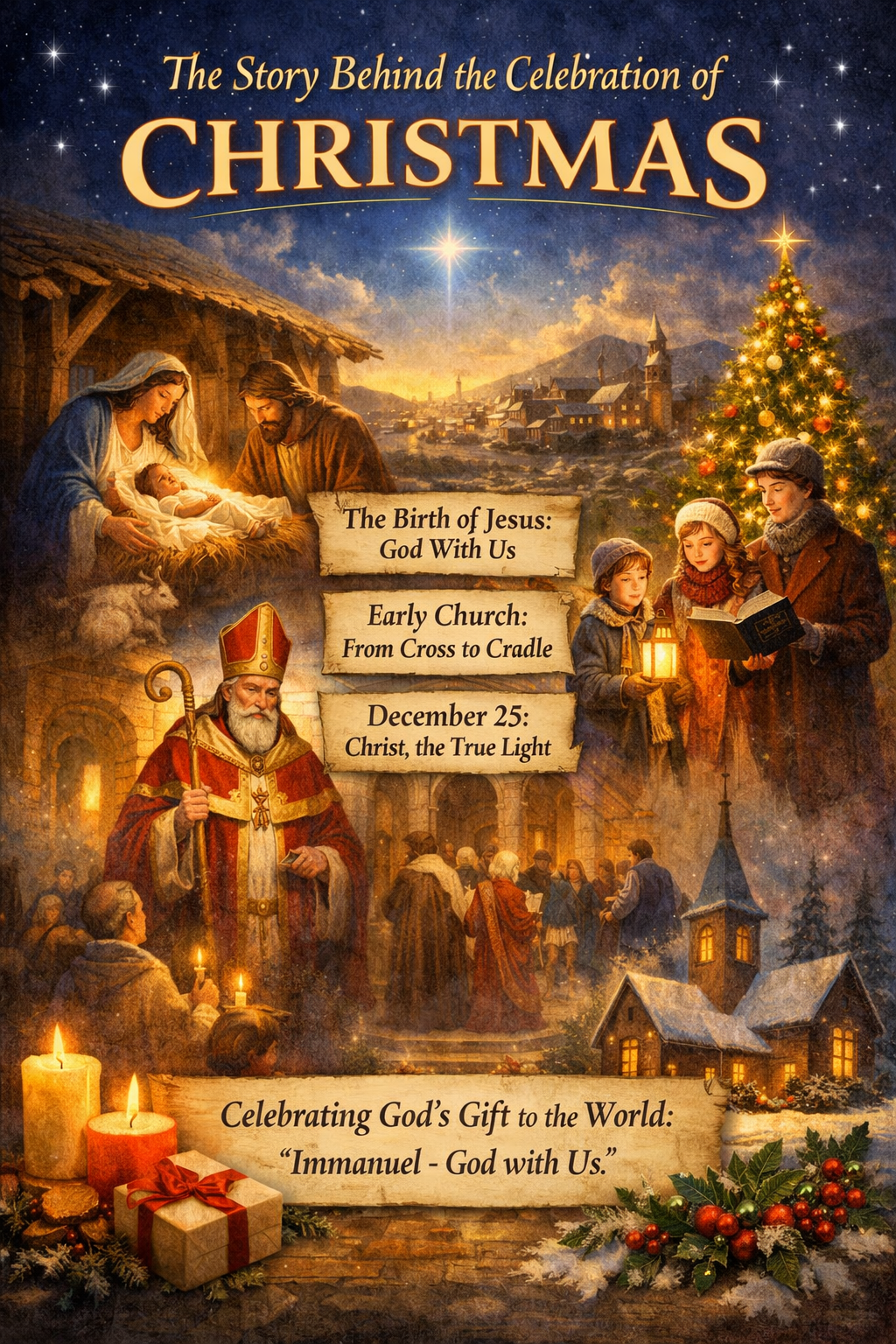
Christmas, celebrated annually on December 25 by billions around the world, traces its origins to the birth of Jesus Christ, whose arrival Christians believe marked God's entrance into human history.
The biblical account of Christmas is found in the opening chapters of the Gospels of Matthew and Luke, which recount the birth of Jesus in Bethlehem. Born to Mary, conceived by the Holy Spirit, and laid in a manger, Jesus' humble arrival was announced by angels and first witnessed by shepherds. Matthew interprets this moment through the prophetic title Immanuel, meaning "God with us," expressing the Christian conviction that God drew near to humanity in the person of Christ.
While the birth of Jesus stands at the heart of Christmas today, the early Christian church did not initially observe the holiday. For the first centuries of Christianity, believers focused primarily on Jesus' death and resurrection. It was not until the fourth century that a formal celebration of Christ's birth emerged within the church.
December 25 was chosen through a combination of theological reflection and cultural context. Early Christians associated Jesus' conception with March 25, believing that a perfect life began and ended on the same date. Nine months later placed His birth in late December. The date also coincided with popular Roman winter festivals, including Saturnalia and celebrations honoring Sol Invictus. Rather than adopting pagan worship, Christians used the season to proclaim Christ as the true Light of the world.
By the Middle Ages, Christmas had become one of the most significant feasts in the Christian calendar, marked by worship services, nativity plays, carols, and acts of charity. Traditions of generosity were influenced in part by the legacy of Saint Nicholas, whose care for the poor later inspired modern gift-giving customs.
Over time, Christmas expanded beyond church walls into broader culture, becoming a season associated with family gatherings, music, decorations, and goodwill. Despite increasing commercialisation, Christian leaders continue to emphasize the original meaning of the celebration: God's gift of Himself to the world.
At its core, Christmas proclaims a message of hope, humility, and divine presence. It marks not humanity's ascent toward God, but God's gracious decision to dwell among humanity-a story that continues to shape faith, culture, and celebration across the globe.


