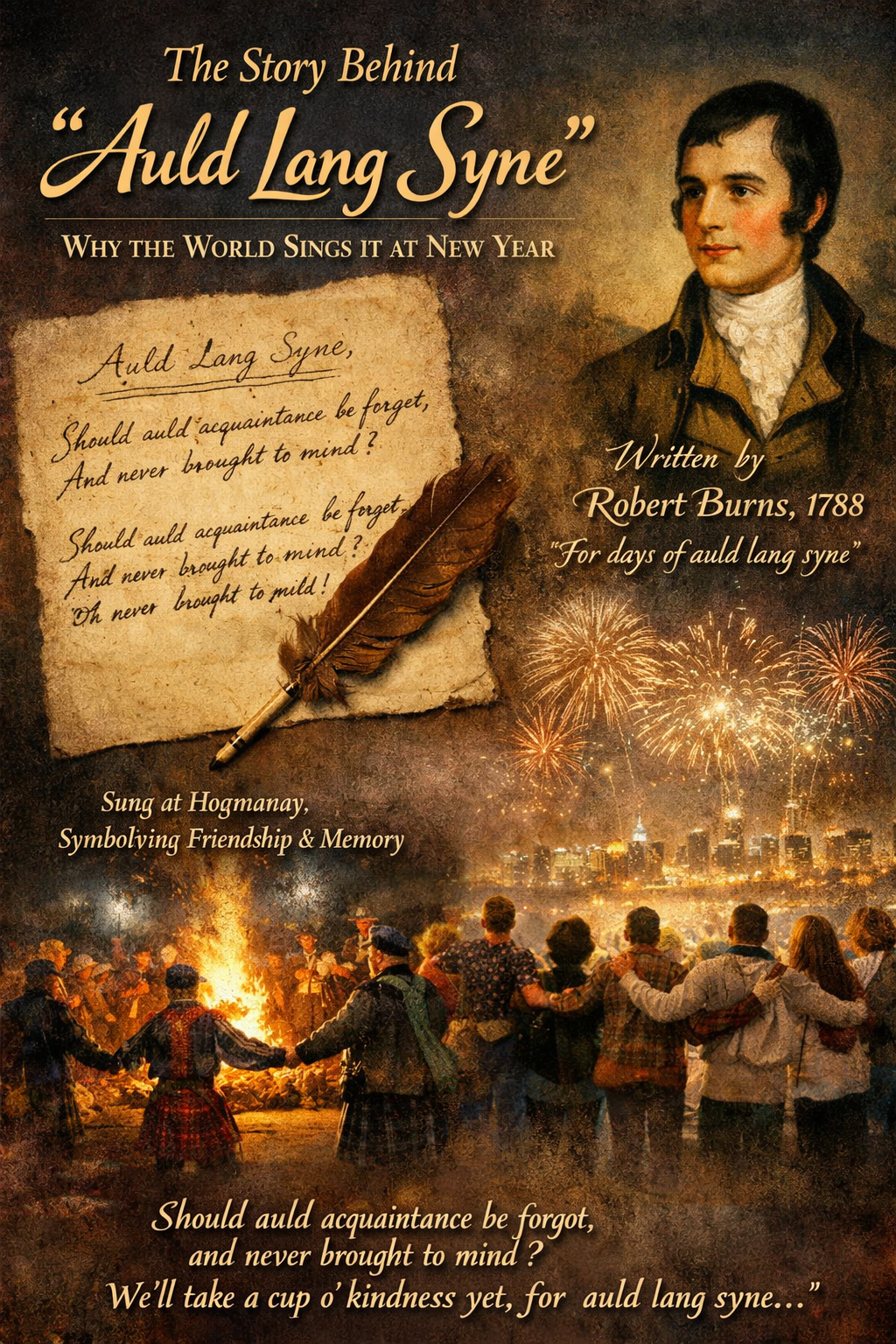
"Auld Lang Syne" is one of the most widely sung songs on the planet-yet its origins are deeply personal, poetic, and rooted in memory. The phrase auld lang syne is Scots for "old long since" or "days gone by," and the song itself is a meditation on friendship, shared history, and the passage of time.
The version known today was popularized in 1788 by Scottish poet Robert Burns, who said he collected the words from an old song sung by an elderly man. Rather than inventing something new, Burns preserved what he believed to be a fading piece of oral tradition, polishing it just enough to ensure it would endure. He sent the lyrics to a publisher, noting that the song was "old" and had never before been in print.
At its heart, "Auld Lang Syne" asks a simple but profound question: Should old friendships be forgotten? The answer, sung in unison across cultures, is a resounding no. The lyrics call friends to remember shared joys and struggles, to raise a cup together, and to honor bonds that time and distance cannot erase.
The song became closely associated with New Year's Eve through Scottish Hogmanay celebrations, where it was traditionally sung at midnight as people joined hands-symbolizing unity, forgiveness, and continuity. Scottish immigrants later carried the custom around the world, cementing the song's place in global New Year traditions.
Over time, "Auld Lang Syne" has been sung not only to welcome new beginnings, but also at farewells, funerals, graduations, and moments of collective remembrance. Its enduring power lies in its honesty: life moves forward, seasons change, but shared love and memory remain.
More than two centuries after Burns preserved it, "Auld Lang Syne" continues to remind the world that while the future awaits, the past-especially the people who shaped us-is worth holding onto.


