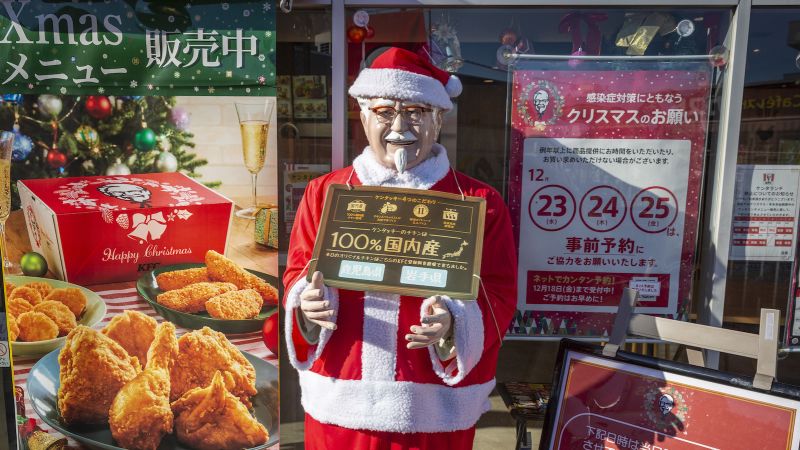
Each Christmas season, millions of families across Japan gather not around turkey or ham, but around buckets of fried chicken from KFC-a custom that has become one of the most fascinating holiday traditions in the world.
The phenomenon traces back to 1974, when KFC Japan launched a bold and culturally intuitive campaign titled "Kurisumasu ni wa Kentakkii" ("Kentucky for Christmas"). At the time, Japan had no established Christmas meal tradition, as the holiday was not widely observed as a religious or family-centered event. This cultural gap created a unique opportunity.
According to company lore, the campaign was inspired by a conversation with a foreign customer who lamented the lack of roast turkey in Japan during Christmas. Fried chicken, he suggested, could serve as a substitute. That simple insight sparked what would become a marketing masterstroke.
KFC Japan positioned its fried chicken not as everyday fast food, but as a special, Western-style Christmas meal. Television advertisements featured joyful families, festive decorations, and even Santa Claus enjoying KFC, reframing the brand as part of a once-a-year celebration. Over time, KFC introduced limited-edition Christmas meal sets featuring fried chicken, cake, and seasonal sides, further cementing the association.
Today, the tradition is firmly embedded in Japanese culture. Customers often pre-order their Christmas KFC meals weeks in advance, and long lines are a common sight outside stores on December 24 and 25. For many households, Christmas feels incomplete without their annual KFC feast.
Industry observers frequently cite KFC Japan's Christmas success as one of the greatest examples of localized global branding. Rather than importing an existing tradition, the company helped create one-demonstrating how storytelling, emotional connection, and cultural sensitivity can transform a marketing campaign into a lasting social custom.
What began as a clever advertisement more than five decades ago has become a defining feature of the Japanese Christmas season, surprising visitors and delighting locals year after year.


