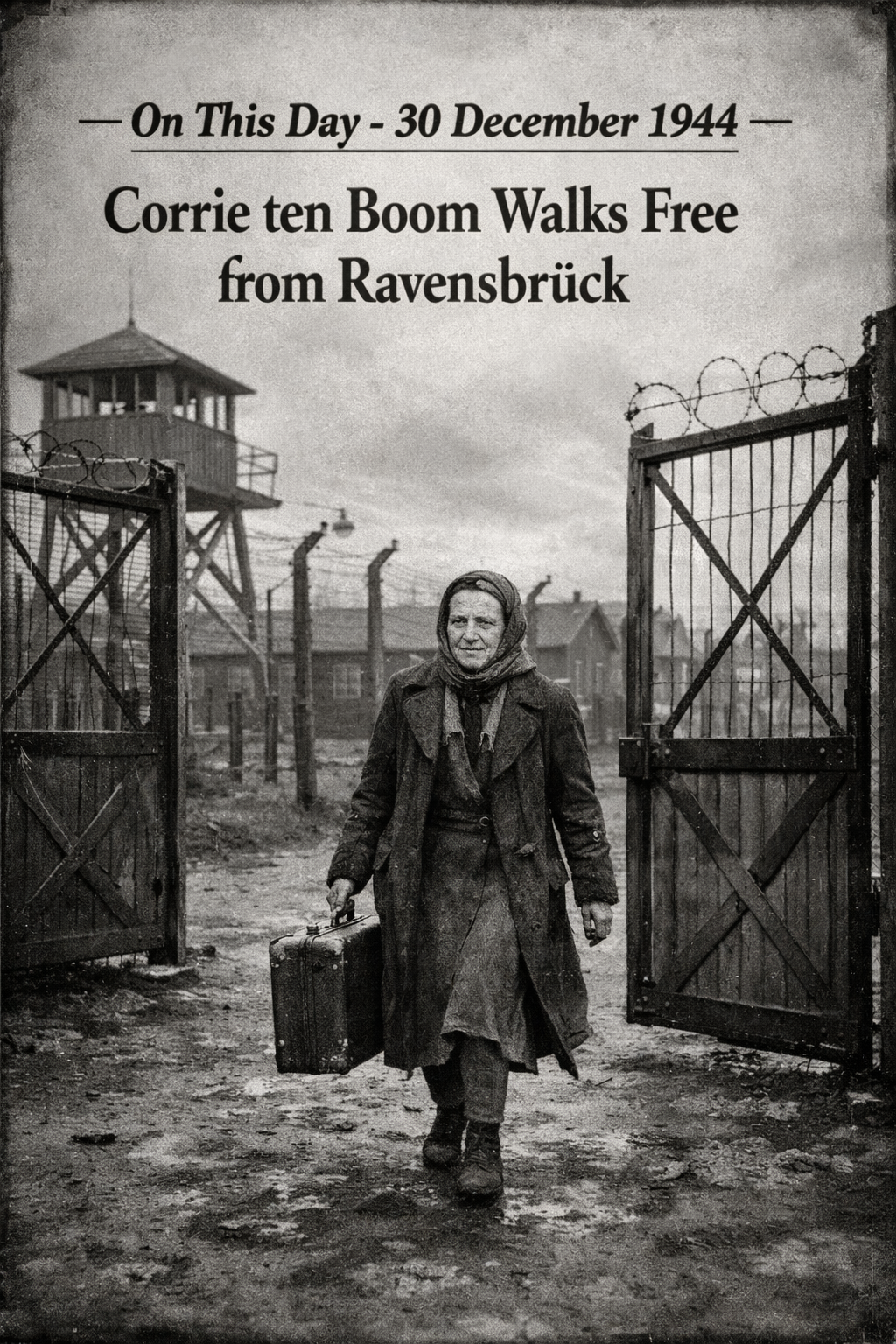
On this day in history, 30 December 1944, Dutch Christian and resistance worker Corrie ten Boom walked out of Ravensbrück Concentration Camp, marking one of the most remarkable moments of deliverance to emerge from the darkness of World War II.
Imprisoned for aiding the underground resistance in the Netherlands and sheltering Jews from Nazi persecution, ten Boom had endured months of brutal confinement. She entered Ravensbrück known not by her name, but by prisoner number 66730. Her father had died shortly after arrest, and her beloved sister Betsie had succumbed to illness in the camp just days before Corrie's release.
Ten Boom's freedom came through what would later be revealed as a clerical error-an administrative mistake that spared her life. Only days after her departure, women of her age group were executed at the camp. Though officially discharged, her release was delayed by severe illness and swelling in her legs, forcing her to remain in the camp hospital, where she continued to care for others despite her own suffering.
When the gates finally opened on 30 December 1944, Corrie boarded a train without a ration card, traveling for several days without food. By the time she reached the Netherlands, she was weak, hungry, and barely able to stand-yet alive.
That survival would change countless lives. In the years following the war, Corrie ten Boom became an international Christian speaker, author, and advocate for forgiveness and reconciliation. Her testimony, later captured in The Hiding Place, stands as a powerful witness to faith under persecution and hope born in suffering.
Reflecting on her experience, ten Boom would famously say, "You never know that Christ is all you need, until Christ is all you have."
As the world remembers 30 December 1944, Corrie ten Boom's release remains a profound reminder that even in humanity's darkest hours, grace can arrive-sometimes through a single, overlooked line on a piece of paper.