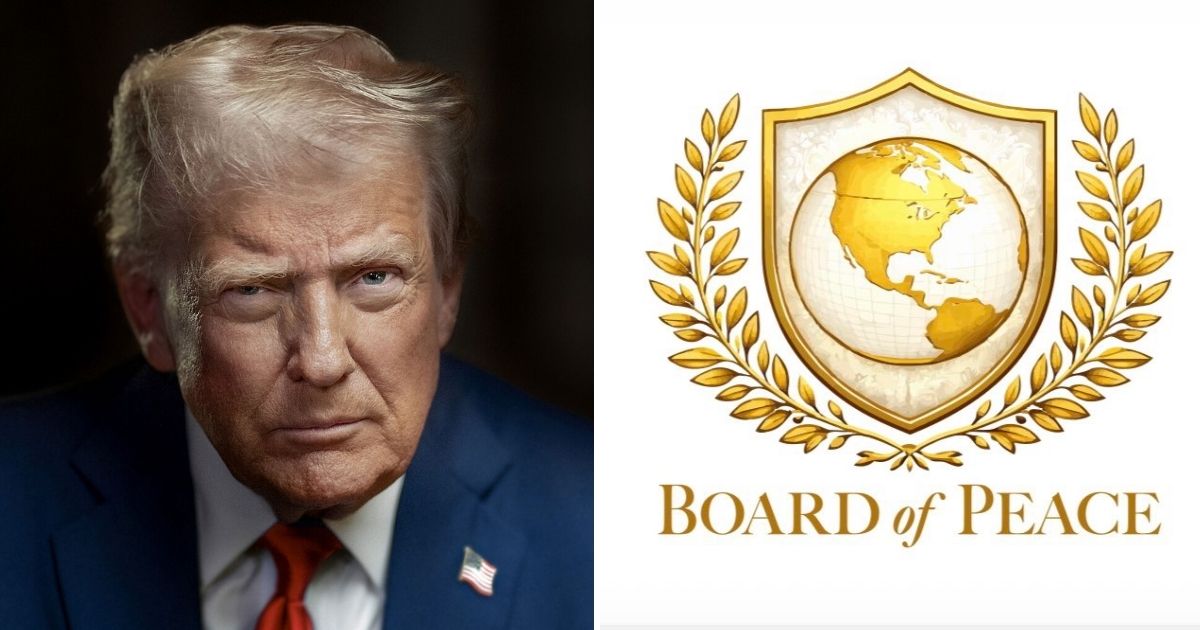
With billions pledged, troop commitments announced, and a vision for long-term rebuilding unveiled, President Trump's first Board of Peace meeting offers what supporters call a hopeful path forward for a region long defined by conflict.
Washington - In a room filled with global leaders and high-level envoys, President Donald Trump cast Thursday's inaugural Board of Peace meeting as more than a diplomatic gathering. He framed it as a pivot point.
After months of fragile ceasefire conditions in Gaza, Trump announced that members of the Board of Peace have pledged $7 billion toward reconstruction efforts, alongside a $10 billion commitment from the United States to support the initiative's broader mission. The goal, he said, is not only to stabilize Gaza but to help shape a long-term path toward peace and rebuilding.
"We will help Gaza," Trump told attendees. "We will make it successful. We will make it peaceful."
For a region where ceasefires have often been temporary pauses rather than permanent solutions, the message was clear: move from stopping violence to restoring life.
Billions Pledged as Reconstruction Vision Takes Shape
The Board of Peace, initially introduced as a framework to oversee Gaza stabilization, has expanded into what Trump describes as a global conflict resolution body. Representatives from dozens of countries attended the first meeting in Washington, signaling international interest in the initiative's scope.
Trump announced that nine member nations committed a combined $7 billion for a Gaza relief package. He also revealed a $10 billion U.S. pledge toward the Board of Peace effort, arguing that the financial commitment is modest when compared to the high cost of prolonged warfare.
A presentation during the meeting outlined a phased rebuilding strategy. Within three years, the plan envisions reconstruction of heavily damaged areas such as Rafah. By year ten, organizers hope Gaza will be self-governed, economically integrated into the region, and supported by new housing and industries.
While questions remain about funding sources and long-term logistics, the tone of the summit leaned heavily toward forward movement rather than stalemate.
International Stabilization Force Announced
Among the most consequential announcements was the proposal for a U.N.-authorized international stabilization force in Gaza. Several nations signaled willingness to dedicate troops, including Indonesia, Morocco, Kazakhstan, Kosovo, and Albania.
Supporters argue that without coordinated security oversight, rebuilding efforts could stall. Implementing the next phase of the ceasefire, including demilitarization provisions, remains a complex and sensitive challenge.
A senior U.S. official acknowledged the difficulty but said mediators have expressed cautious encouragement regarding ongoing discussions.
The stabilization force concept reflects the broader ambition of the Board of Peace: pairing humanitarian reconstruction with structured security oversight.
Balancing Optimism With Reality
Even as optimism filled the room, global reaction has been mixed.
Some U.S. allies declined formal membership, citing concerns about how the Board of Peace will interact with the United Nations. The Vatican also declined participation, emphasizing the U.N.'s primary role in global peacekeeping.
Human rights advocates have raised concerns about representation, particularly the absence of direct Palestinian representation on certain executive structures tied to the initiative. A separate technocratic body supervised by Palestinian officials is expected to oversee day-to-day administration within Gaza.
Despite those concerns, the meeting projected momentum.
Trump described the gathering as potentially "one of the most important days" of participants' careers. He suggested that the board's model could eventually extend to other global conflict zones.
A Region at a Crossroads
The ceasefire in Gaza has largely held, though tensions and sporadic violence continue to test its durability. Large portions of infrastructure remain damaged, and humanitarian conditions are still severe for displaced residents.
Against that backdrop, the Board of Peace represents an attempt to shift the narrative from emergency response to structured rebuilding.
The numbers alone tell part of the story. Billions pledged. Multiple governments engaged. Troop commitments discussed. Long-term infrastructure plans outlined.
Whether the initiative ultimately succeeds will depend on implementation, political cooperation, and sustained funding. But for now, Thursday's summit marked a moment of transition - at least symbolically.
From ceasefire to reconstruction.
For many watching closely, that shift may define what happens next.


