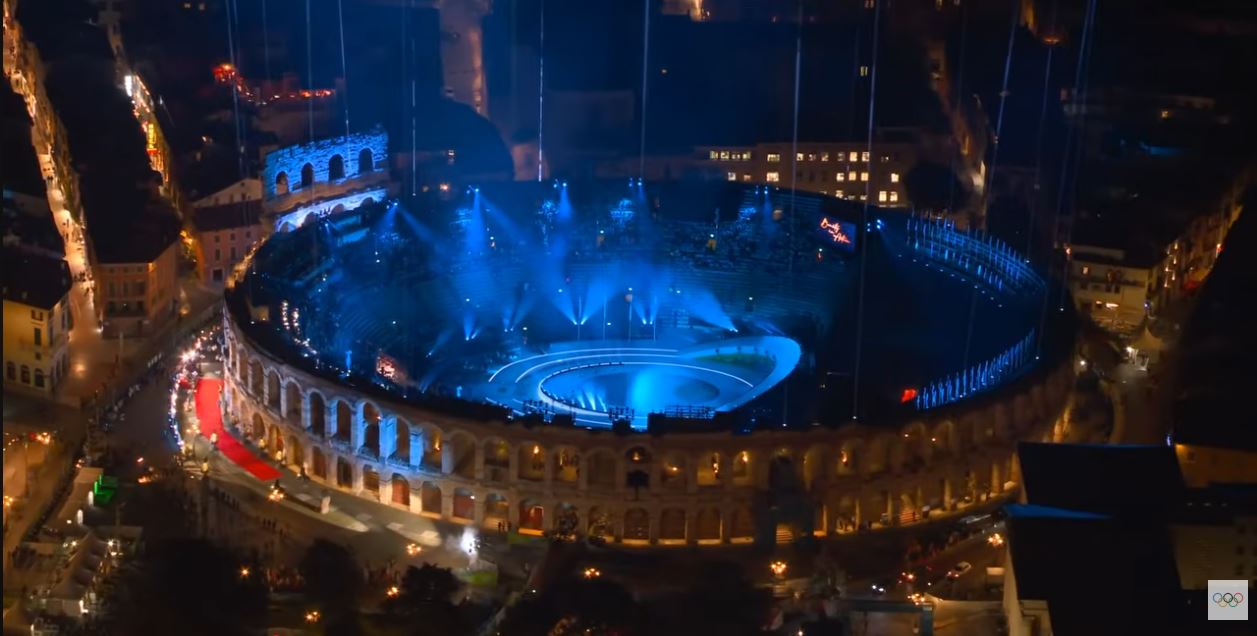
The Milan-Cortina 2026 Winter Olympics officially concluded on Sunday, February 22, with a spectacular closing ceremony at the historic Verona Arena in northern Italy, marking the end of 16 days of competition across 116 medal events.
Athletes from 92 nations gathered inside the ancient Roman amphitheater as the Olympic flame - carried in a glass vessel known as the "Drop of Fire" - illuminated the rings one final time before being extinguished. The ceremony blended Italian opera, contemporary performances, and the traditional parade of athletes, bringing the Winter Olympics 2026 to a symbolic and celebratory close.
Record-Breaking Performances Define Milan-Cortina 2026
The Milan-Cortina 2026 Games will be remembered for historic achievements and global milestones.
Norway finished atop the Winter Olympics 2026 medal table for the fourth consecutive Games. Cross-country skier Johannes Hoesflot Klaebo delivered one of the most dominant performances in Olympic history, winning six gold medals - the most ever by an individual athlete at a single Winter Games. His sixth medal in the men's 50km mass start was awarded during the closing ceremony, becoming the final medal presentation of Milano-Cortina 2026.
Team GB celebrated its most successful Winter Olympics ever, earning five medals, including a record three golds. Skeleton champion Matt Weston and snowboarder Charlotte Bankes served as British flagbearers after leading a breakthrough campaign for Great Britain.
Brazil also made history when Lucas Pinheiro Braathen secured South America's first Winter Olympic gold medal in alpine skiing. Georgia claimed its first Winter Olympic medal, and Spain captured its first gold in 54 years, underscoring the expanding global reach of winter sport.
Host nation Italy delivered its strongest Winter Games performance, winning 10 gold medals among 30 total podium finishes.
Ceremony Highlights at Verona Arena
The closing ceremony at Verona Arena opened with a tribute to Italy's operatic heritage before transitioning into performances by internationally known artists including Roberto Bolle, Major Lazer, and Achille Lauro. Fireworks later illuminated the Verona skyline, providing a dramatic visual finale.
International Olympic Committee President Kirsty Coventry officially declared the Games closed, praising athletes for demonstrating excellence, respect, and unity.
In a time when global headlines often reflect division and conflict, the scene in Verona offered a different picture: competitors from rival nations standing shoulder to shoulder, celebrating not only victory but perseverance. The Olympic spirit - rooted in discipline, endurance, and mutual respect - mirrors values long emphasized in Christian teaching: running the race with perseverance, honoring others above self, and striving for excellence with integrity.
For many viewers, the ceremony served as a reminder that sport can reflect deeper truths - that strength is forged through trial, character matters as much as medals, and unity is still possible across borders.
Looking Ahead to the 2030 Winter Olympics
A key moment of the closing ceremony included the official handover of the Olympic flag to representatives of the French Alps, host of the 2030 Winter Olympics. A contemporary rendition of La Marseillaise signaled the transition to the next chapter of the Winter Games.
As the flame faded in Verona, Milan-Cortina 2026 leaves behind more than records. It leaves a legacy of perseverance, global milestones, and a renewed reminder that even in fierce competition, shared humanity - and hope - can shine brightest.


