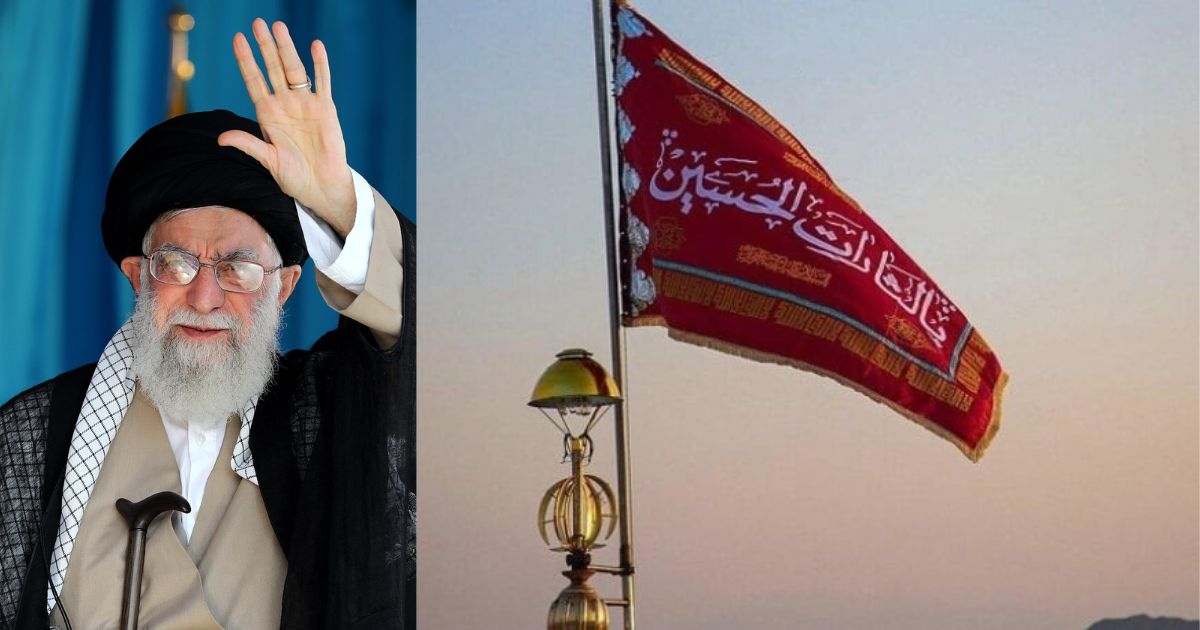
Why did Iran raise the red flag of revenge - and what message is it sending to the world?
After the reported killing of Supreme Leader Ayatollah Ali Khamenei in joint U.S.-Israeli strikes, Iran raised what is known as the "red flag of revenge" over the dome of the Jamkaran Mosque in Qom. The powerful image quickly spread across global media, triggering urgent questions about symbolism, retaliation, and what could come next.
But what exactly is Iran's red flag of revenge?
What Is the Red Flag of Revenge?
In Shia Islamic tradition, a red flag represents unavenged blood. It is historically raised when a significant figure is martyred or when a grave injustice is perceived to have occurred.
Unlike ordinary religious banners, the red flag carries a specific emotional and theological weight. It signals that justice has not yet been served.
Iran previously raised a similar red banner after the killing of General Qassem Soleimani in 2020. That moment was widely interpreted as a warning of retaliation.
Now, with Khamenei's death confirmed by Iranian state media, the reappearance of the red flag of revenge has reignited concerns about possible escalation in the Middle East conflict.
Why Was It Raised at Jamkaran Mosque?
The Jamkaran Mosque in Qom is not just symbolic - it holds deep spiritual significance in Shia Islam and is closely connected to Iran's religious identity.
Raising the red flag there elevates the message from political reaction to religious declaration.
It blends grief with resolve.
It communicates mourning - but also defiance.
Is the Red Flag a Declaration of War?
Not necessarily.
While many analysts view the red flag of revenge as a signal of potential retaliation, it does not automatically mean immediate military action will follow.
Iran has declared 40 days of national mourning and vowed that those responsible will "pay a heavy price." At the same time, reports suggest diplomatic backchannels may still be active.
The red flag can serve multiple purposes:
-
Rallying national unity
-
Signaling resolve to supporters
-
Sending a warning to adversaries
-
Framing the conflict in religious terms
Symbolism in a Tense Moment
The timing matters.
The Middle East is already on edge.
Missile exchanges have been reported.
Global markets are reacting.
International leaders are urging restraint.
Against that backdrop, the Iran red flag of revenge becomes more than fabric on a dome - it becomes a symbol loaded with meaning.
Is it a warning?
A message to the West?
A call to action?
Or a symbolic expression of grief?
The answer may not be immediate.
For now, the red flag flies over Qom - and the world is watching closely to see what follows.


