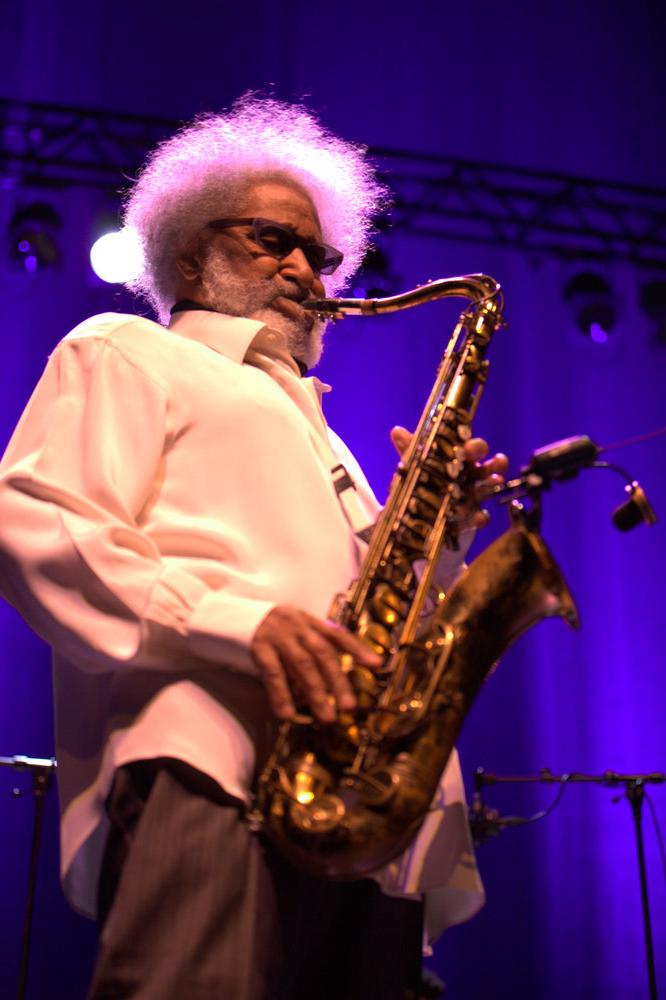
The music world is mourning the loss of one of the greatest voices jazz has ever known.
Sonny Rollins, the tenor saxophonist who played alongside bebop pioneers Charlie Parker, Miles Davis, John Coltrane, and Thelonious Monk in the 1950s and continued performing for another half-century, has died at 95. His spokesperson Terri Hinte confirmed that Rollins died at his home in Woodstock, New York. No specific cause of death was given, though she noted he had been largely housebound over the past couple of years due to various physical problems.
Who Was Sonny Rollins?
Raised in Harlem, Rollins came to music at an early age - first as a pianist before switching to the saxophone. His mother gave him his first alto saxophone at age seven. What followed was one of the most remarkable careers in American music history.
His 60-plus year career produced more than 60 albums. His compositions "St. Thomas," "Oleo," "Doxy," and "Airegin" became jazz standards. The New York Times observed that even by the standards of a music that prizes individuality, he stood out. The Associated Press called him the restless genius of jazz.
He was one of the last living greats of the bebop era and - alongside John Coltrane and Charlie Parker - one of the most influential saxophonists of his generation.
The Bridge That Defined Him
In the late 1950s, seeking a new direction, Rollins withdrew from performing and practiced his saxophone alone at night on New York's Williamsburg Bridge. His return in 1962 - with an album simply titled The Bridge - was welcomed as a cultural event. It remains one of the most storied acts of artistic discipline in music history.
A Spiritual Man to the End
What makes Rollins special is how openly he spoke about faith and eternity. The statement announcing his death included a 2009 quote from Rollins himself: "I think when the creative person ends, he continues in the next existence. I'm a person who believes this life isn't the be-all and end-all of everything. A spiritual person doesn't feel like that."
He was a National Endowment for the Arts Jazz Master, a recipient of a Kennedy Center honor, and a recipient of the National Medal of the Arts.
Sonny Rollins leaves behind a legacy that cannot be measured in awards alone. He leaves behind the sound of a man who gave everything he had to music - and believed something greater waited on the other side.


![Majesty (Here I Am) [Official Live Session] --- Stu Garrard & Darlene Zschech](https://jubileecast-29b4.kxcdn.com/data/videos/thumbnail/1147/majesty-here-i-am-official-live-session-stu-garrard-darlene-zschech.jpg?w=436&h=265&l=50&t=10)


