Prime Cuts: Hit the Wall, Look at My Life, Afflictions
Overall Grade: 3/5
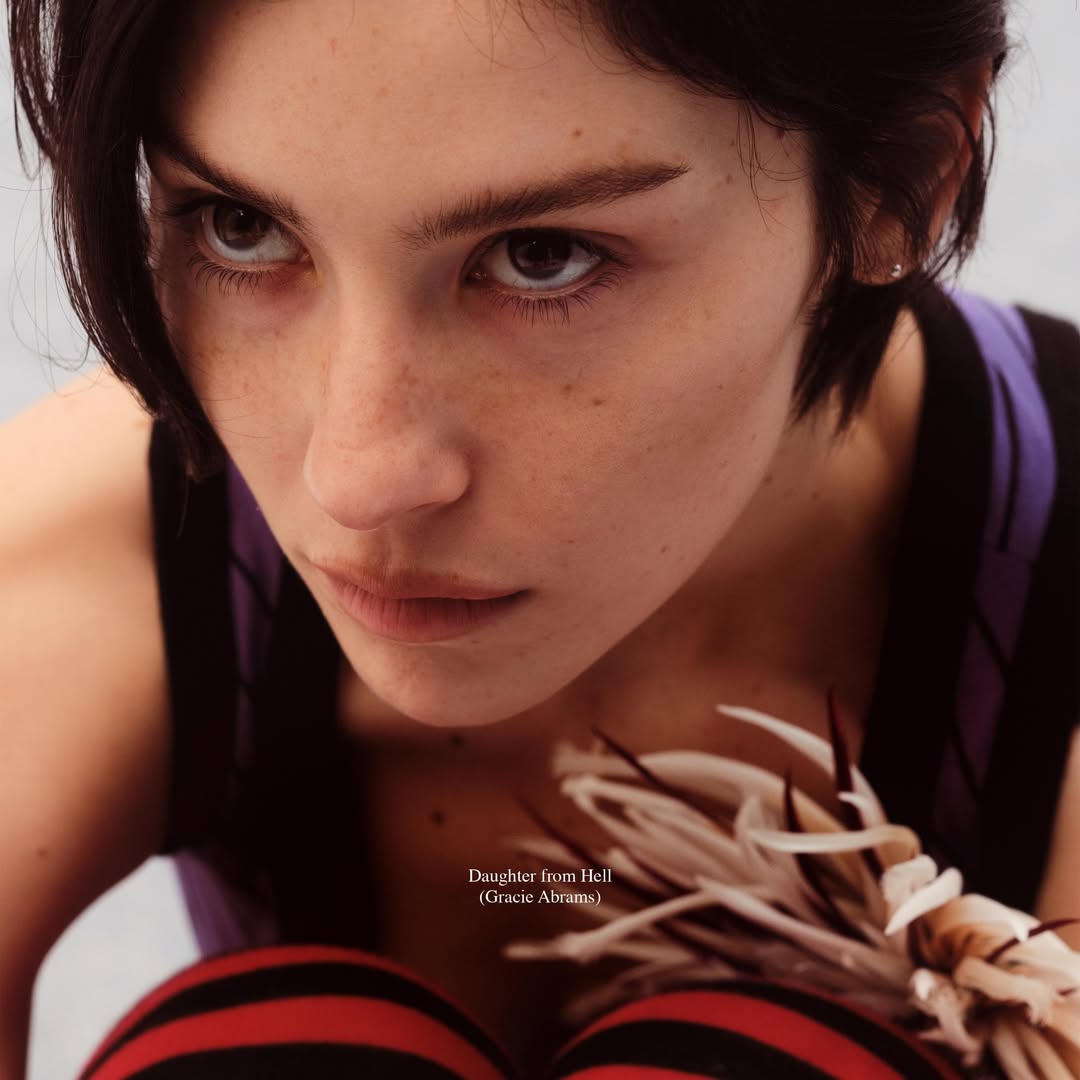
Gracie Abrams has never been an artist interested in grand reinvention, and Daughter From Hell doesn't attempt one. Instead, her third album refines the intimate indie-pop formula that has become her trademark, pairing Aaron Dessner's understated production with lyrics that are less accusatory and more reflective than anything she's written before. It's a thoughtful record that rewards close listening, but over sixteen tracks its emotional palette becomes so uniform that many songs struggle to distinguish themselves.
Abrams deserves credit for resisting the temptation to chase bigger pop moments after The Secret of Us turned her into an arena headliner. She instead leans further into melancholy folk-pop, trading chart-ready hooks for careful character studies. The problem is that restraint becomes the album's defining feature. Even when songs seem poised to explode emotionally, they often retreat back into muted guitars and whispered vocals.
The opening one-two punch is among the album's strongest. "Hit the Wall" remains the standout, its anxious momentum perfectly capturing the feeling of spiraling without losing melodic focus. It's one of the few tracks where Dessner's production builds genuine tension before delivering a satisfying release. "Look at My Life" follows with a welcome burst of energy, using brighter rhythms to explore burnout and public pressure, though its themes occasionally feel less universal than the songs surrounding it.
Abrams is at her best when she allows specific emotions rather than abstract melancholy to guide the writing. "Afflictions" is refreshingly sincere, avoiding clichés as she finally embraces writing about love instead of heartbreak. The warmth of the arrangement mirrors the security she describes, making it one of the album's most affecting moments. Likewise, "What If It's Right?", featuring Marcus Mumford, succeeds because the duet feels like an honest conversation rather than another internal monologue, with both voices sharing equal responsibility for a relationship slowly slipping away.
Elsewhere, "Imaginary Friend" cleverly transforms the childhood idea of an imaginary companion into a lingering emotional ghost, while "Good Reason" offers one of Abrams' more mature perspectives as she reflects on being the one who caused someone else's heartbreak. Those songs reveal an artist increasingly interested in moral ambiguity rather than simply documenting emotional wounds.
Not every experiment lands. "Men Like You" builds compelling tension before its reveal loses some of its impact, while "Sober" introduces an intriguing metaphor that never develops as fully as it could. Even the moving piano ballad "The Knife" feels as though it is holding something back, building toward a climax that never quite arrives. That hesitation becomes a recurring issue across the second half of the album, where beautifully crafted songs like "Mews", "Cold Goodbyes", and "Humming" blur together despite their individual lyrical strengths.
The title track provides one of the album's few real surprises. "Daughter From Hell" surrounds Abrams with distorted guitars instead of delicate acoustics, giving her tribute to her mother a welcome sense of urgency. It's one of the rare occasions where the production expands to match the emotional weight of the lyrics, and Abrams delivers perhaps her finest vocal performance on the record.
There is no shortage of thoughtful songwriting on Daughter From Hell, and Abrams continues to prove herself one of pop's most perceptive young lyricists. Yet great lyrics alone cannot carry sixteen songs that often inhabit the same sonic space. By the closing tracks, the album begins to feel less like a carefully sequenced journey and more like variations on a single mood.
Daughter From Hell is an intimate, emotionally intelligent collection that showcases Abrams' continued growth as a songwriter, but its reluctance to push beyond familiar musical territory keeps it from reaching the heights of its finest moments. There is plenty here to admire, though just as much that leaves you wishing she had taken a few more risks.


![At The Meeting (Live) [Official Lyric Video] --- Kelontae Gavin](https://jubileecast-29b4.kxcdn.com/data/videos/thumbnail/1227/at-the-meeting-live-official-lyric-video-kelontae-gavin.jpg?w=436&h=265&l=50&t=10)


