Prime Cuts: "What A Life," "Have My Yes," "He Knows My Name"
Overall Grade: 4.5/5
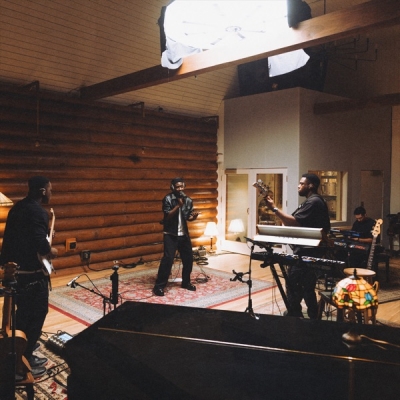
CalledOut Music has always been adept at making faith sound joyful rather than obligatory, and The Room may be his warmest expression of that gift yet. Recorded live with musicians together at Nashville's Gnome Studios, the seven-track project feels deliberately intimate: less like a meticulously constructed studio statement and more like being invited into a musical conversation already underway.
"Everything And More" establishes that atmosphere immediately. CalledOut's gratitude is not merely lyrical; it shapes the music itself. The relaxed groove and soulful delivery give the song the character of testimony, with worship emerging from affection rather than grandeur. It is an effective doorway into an album concerned with experiencing God personally rather than simply making declarations about Him.
That idea blossoms on "What A Life," the record's most immediately infectious moment. Afro-Gospel rhythms carry a song that refuses to pretend life is trouble-free. Instead, CalledOut places gratitude in the middle of difficulty. His repeated celebration of life and God's goodness turns thanksgiving into something physical-you can hear it in the buoyancy of the performance and feel it in the invitation to move. It is worship with its shoes off.
"Have My Yes" changes the temperature. Where "What A Life" celebrates what God has given, this song asks what the believer will give back. CalledOut moves from gratitude toward surrender, and the transition into the brief "Yes (interlude)" cleverly allows that response to linger. The sequencing makes "yes" feel less like a catchy refrain than a spiritual posture.
"So Real" brings the album back into its soulful pocket before "He Knows My Name" supplies one of its most affecting moments. The title expresses the song's strength: Christianity here is relational rather than abstract. CalledOut sings from the assurance of being known, giving the track an intimacy that suits the album's entire "room" concept. Rather than chasing a huge worship climax, he lets closeness carry the emotional weight.
The closing "Your Love For Me" completes the journey naturally. After celebrating life, offering God his yes, and resting in the assurance of being known, CalledOut ends with divine love. There is an appealing circularity to it: the album begins with what God is and gives, and finishes by contemplating the love underneath it all.
At only seven tracks, The Room could leave listeners wishing CalledOut had stayed in the room a little longer. Yet its compactness is also part of its charm. His Nigerian heritage, British musical formation and new American chapter meet without sounding forced, allowing Afro-Soul, gospel, R&B, pop and worship to inhabit the same space.
The Room ultimately succeeds because CalledOut Music does not confuse worship with musical uniformity. These songs dance, testify, surrender and rest. Faith is not merely the subject of the record; it determines its emotional movement.


