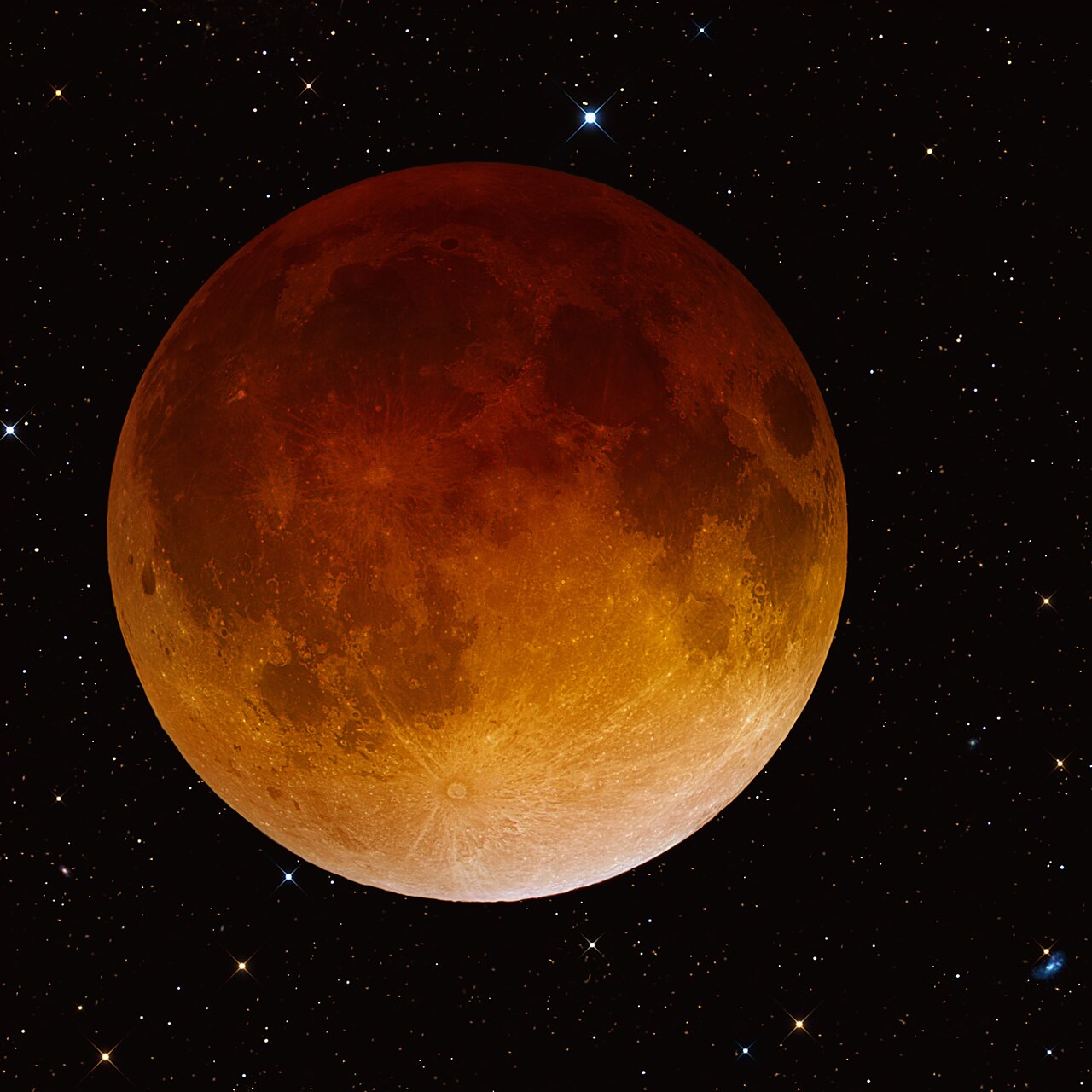
A deep partial lunar eclipse will darken 96.2% of the Moon's surface on the night of August 27 into the early morning of August 28, according to NASA's Scientific Visualization Studio. The event falls just short of a total eclipse but will appear nearly identical to one, with the Moon glowing deep orange-copper as it passes through Earth's umbral shadow.
NASA data shows the eclipse will be visible to roughly 3.3 billion people across North America, South America, and parts of Europe and Africa.
For observers on the U.S. East Coast, including New York and Jacksonville, the eclipse will peak around midnight local time. West Coast skywatchers in cities like Los Angeles and Portland will see maximum eclipse just a few hours after sunset. Maximum eclipse occurs at 4:12 a.m. UTC on August 28 - 12:12 a.m. EDT, 11:12 p.m. CDT, 10:12 p.m. MDT, and 9:12 p.m. PDT.
No special equipment is required. The eclipse is fully visible to the naked eye, and unlike a solar eclipse, it carries no eye-safety risk.
The next total lunar eclipse widely visible across North America won't arrive until June 25, 2029, making this week's near-total event the most dramatic sky show of the year for U.S. viewers. As the Psalmist wrote, "He appointed the moon for seasons: the sun knoweth his going down" (Psalm 104:19) - a reminder that even the sky's rare moments follow a design far beyond human hands.
RELATED ARTICLES:
- Lunar Eclipse August 2026: Blood Moon Time & Visibility
- Blood Moon Meaning Explained: Science & Scripture 2026
- Lunar Eclipse Viewing Guide: Blood Moon August 2026 Tips & Time


