Prime Cuts: "On and On," "Sailing," "I'd Really Love to See You Tonight"
Overall Grade: 4.5/5
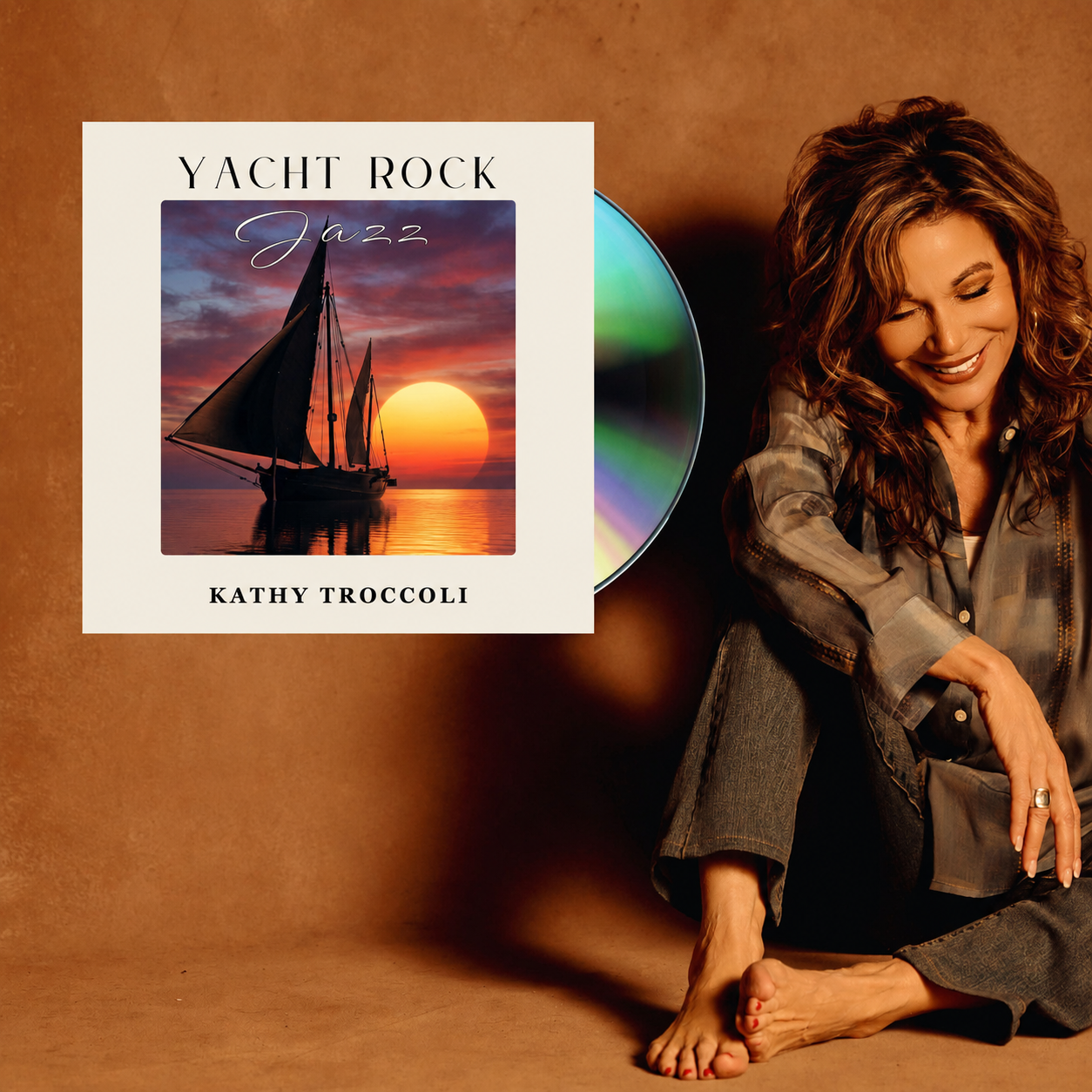
Kathy Troccoli has never been an artist who can be confined to one musical category. Although she remains closely associated with contemporary Christian classics such as "Go Light Your World" and "My Life Is in Your Hands," her rich, expressive voice has always carried traces of pop, soul, jazz and adult contemporary music. On Yacht Rock Jazz, Troccoli sails confidently into those broader waters.
Released independently through KT Records on August 28, Yacht Rock Jazz finds Troccoli placing her distinctive vocal stamp on nine soft-rock favorites from the 1970s and 1980s. Rather than simply reproducing the original recordings, she gives these familiar songs a sophisticated jazz makeover. The result is an exceptionally smooth and easy-to-listen-to album that feels equally suited to a quiet evening at home, an intimate dinner party or a late-night drive.
The album opens beautifully with Stephen Bishop's "On and On." Troccoli understands that the song does not need to be overloaded with vocal theatrics. She relaxes into its wistful melody, allowing the lyric's gentle melancholy to emerge naturally. Her performance is controlled but never cold, making this one of the album's most immediately inviting selections.
Track two, "What a Fool Believes," is the record's weakest moment. The Michael McDonald and Kenny Loggins composition is an undeniable yacht-rock classic, but this rendition feels a little too restrained. The arrangement glides pleasantly enough, yet it lacks the rhythmic spark and emotional lift needed to distinguish it from the many previous versions. It is not unpleasant, but it becomes slightly boring and is the one track most likely to fade into the background.
Fortunately, the album quickly regains momentum with Bill Withers' "Lovely Day." Troccoli brings warmth and optimism to the familiar song without trying to compete with Withers' famous sustained vocals. Her interpretation favors grace over grandstanding, capturing the sheer pleasure contained within the lyric.
Ambrosia's "Biggest Part of Me" fits Troccoli particularly well. The romantic melody allows her to draw upon the soulful side of her voice, while the jazz-influenced setting gives the song an elegant, grown-up atmosphere. Lionel Richie's "All Night Long" receives an even more surprising transformation. Instead of attempting to recreate the original's exuberant party energy, Troccoli settles into a smoother groove. The result is more cocktail lounge than crowded dance floor, but the fresh approach works.
Orleans' "Dance with Me" continues the album's relaxed romantic mood. Troccoli sings it with an ease that makes the performance feel conversational, almost as though she were sharing the song directly with one listener. That intimacy is one of the album's greatest strengths. Even when working with songs that have been heard countless times, she rarely sounds as though she is merely performing a nostalgic tribute act.
Christopher Cross' "Sailing" is the album's finest marriage of singer and song. Troccoli has described it as one of her favorites, and that affection can be heard throughout the performance. The composition's longing for freedom, tranquility and release seems especially natural in her hands. Her vocal carries both serenity and an undercurrent of emotional yearning, giving the familiar standard renewed beauty.
Billy Joel's "Just the Way You Are" is another natural choice. Troccoli does not force the sentiment or oversing its famous melody. Instead, she approaches it with tenderness and maturity, allowing the song's message of unconditional acceptance to speak for itself.
The album closes with "I'd Really Love to See You Tonight," featuring John Ford Coley, one of the voices behind the original 1976 hit. His presence gives the recording an authentic connection to the yacht-rock era, but the duet does not survive on nostalgia alone. Troccoli and Coley sound relaxed together, exchanging lines with genuine warmth. It is a fittingly intimate ending to an album built around melody, memory and emotional connection.
Listeners expecting an overtly Christian recording may be surprised that Yacht Rock Jazz is centered on secular soft-rock standards. Nevertheless, the album displays another dimension of an artist whose faith has never prevented her from exploring romance, longing, beauty and the complexities of human relationships. Troccoli sounds comfortable, confident and completely at home in this setting.
Yacht Rock Jazz does not attempt to reinvent these songs beyond recognition. Its achievement is subtler: Troccoli creates a unified musical atmosphere while reminding listeners why these melodies have endured. Apart from the comparatively uneventful "What a Fool Believes," the album is consistently tasteful, warm and pleasurable.
This is music made for listeners who appreciate strong melodies, sophisticated arrangements and a vocalist who knows that emotional restraint can sometimes communicate more than vocal excess. Smooth without becoming disposable and nostalgic without sounding dated, Yacht Rock Jazz is an excellent addition to Kathy Troccoli's remarkably varied catalogue.


