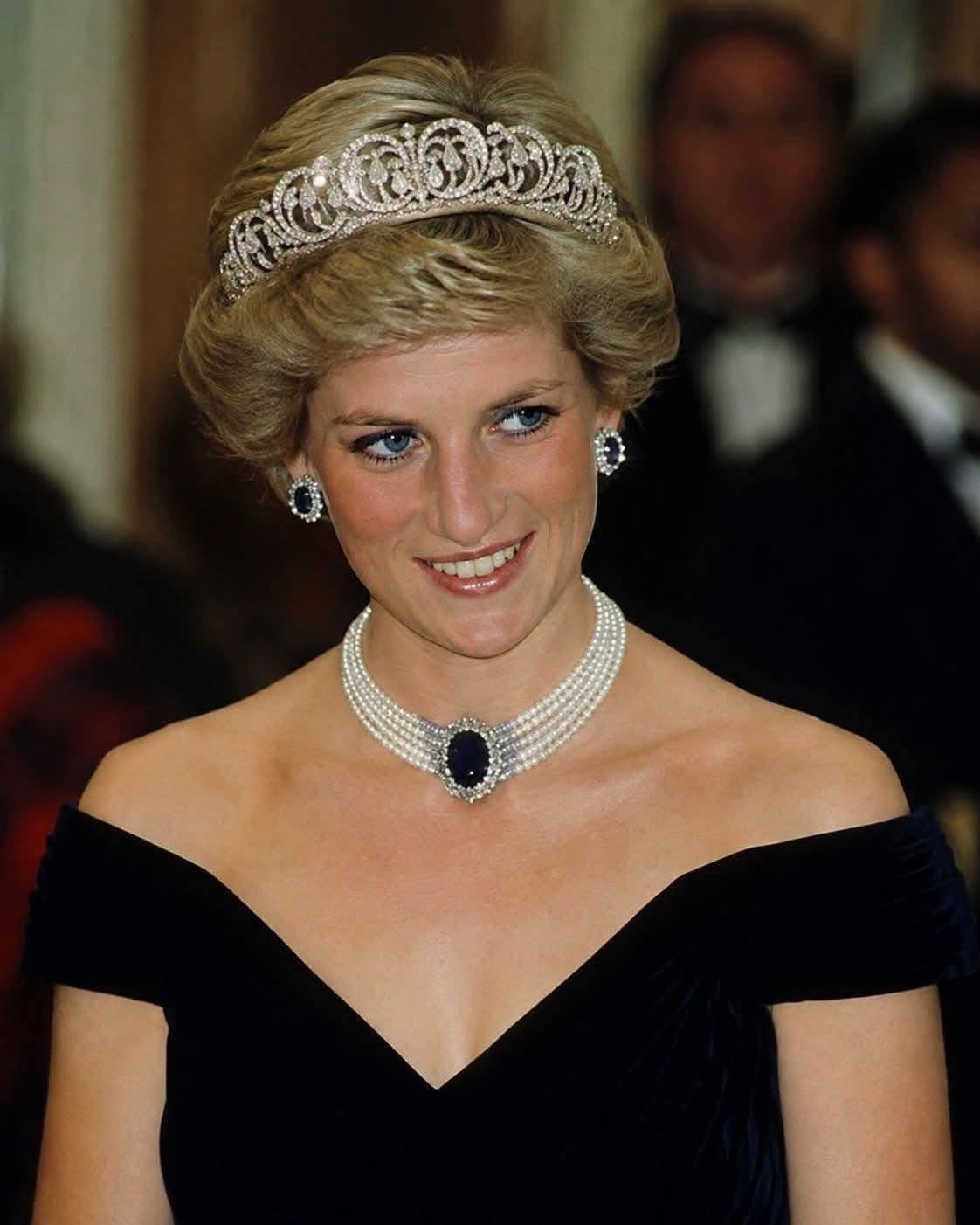
Princess Diana died 29 years ago today, on August 31, 1997, leaving the world stunned and two young princes without their mother. Yet behind the enormous headlines, overflowing flower tributes and historic royal funeral was one painfully ordinary detail: dinner had been prepared for Diana and her boys at Kensington Palace, but she never came home.
Diana's former personal chef, Darren McGrady, later shared the heartbreaking memory while marking the anniversary of her death.
"I had dinner prepared for a special lady and her boys," he recalled. "She didn't come home."
McGrady had worked as Diana's personal chef for four years, preparing meals for the princess and her sons, Prince William and Prince Harry. The boys were expected to return from Balmoral, and he had been looking forward to hearing them racing through the palace corridors again. Instead, he turned on the television and learned that Diana had died.
That waiting meal captures the tragedy in a way that even the dramatic images from Paris cannot. To the world, she was the glamorous "People's Princess." Inside Kensington Palace, she was a 36-year-old mother expected home by those closest to her.
The Final Night That Changed The Royal Family Forever
Diana was traveling through Paris with Dodi Fayed when their Mercedes crashed inside the Pont de l'Alma tunnel shortly after midnight. Dodi and driver Henri Paul died at the scene, while Diana was taken to Pitié-Salpêtrière Hospital with severe internal injuries.
French firefighter Xavier Gourmelon, who did not initially realize that the injured woman was Princess Diana, later said she regained consciousness briefly and asked, "My God, what's happened?" After she went into cardiac arrest, he performed cardiac massage and restored her breathing. He believed she would survive.
Diana was pronounced dead at the hospital several hours later.
The news triggered an extraordinary wave of public grief. Mountains of flowers appeared outside Kensington Palace, and millions watched her funeral at Westminster Abbey on September 6. One of its most enduring images was that of 15-year-old William and 12-year-old Harry walking behind their mother's coffin.
However, Diana's story did not end in the Paris tunnel. Nearly three decades later, her legacy remains visible in the causes she transformed, the conventions she challenged and the lives she touched.
The Handshake That Confronted The World's Fear
In April 1987, Diana opened Britain's first dedicated HIV and AIDS ward at London's Middlesex Hospital. At a time when misinformation and fear surrounding the disease were widespread, she publicly shook hands with a man living with HIV without wearing gloves.
The gesture may appear unremarkable today, but at the time it was revolutionary. Diana used one photograph to challenge the false belief that HIV could be transmitted through ordinary physical contact. Her compassion helped replace fear with human connection.
She continued visiting people living with HIV and AIDS, often sitting beside them, holding their hands and embracing them. The National AIDS Trust remembers her as a patron whose public involvement helped confront the stigma endured by patients.
Diana understood that royal visibility could do more than attract photographers. She could direct those cameras toward people whom society had ignored, feared or pushed aside. Her gift was not merely appearing at charitable events; it was making marginalized people feel seen.
The Minefield Walk That Became An Iconic Moment
Only months before her death, Diana traveled to Angola and walked through a minefield while wearing a protective vest and visor. The photographs traveled around the world and forced the public to confront the devastation caused by landmines long after wars had ended.
Some British politicians criticized Diana and accused her of entering a political debate. She refused to be silenced. By concentrating attention on survivors-including children who had lost limbs-she helped transform landmines from a distant military issue into an urgent humanitarian cause.
The HALO Trust says her 1997 visit dramatically raised international awareness. Later that year, 122 countries signed the Ottawa Mine Ban Treaty. Although Diana did not live to witness its signing, her influence had helped build its momentum.
Her impact can still be seen in Angola today. The area in Huambo where she made her famous walk has been cleared and transformed into a community containing homes, businesses and a school bearing her name. Children now learn and play on ground once threatened by explosives. The HALO Trust describes that transformation as part of Diana's continuing legacy.
A Princess Who Went Where Others Would Not
Diana also championed people experiencing homelessness, particularly young people supported by Centrepoint. She took William and Harry to homeless shelters so they would encounter lives far removed from royal privilege. William later became Centrepoint's patron, continuing one of the causes his mother had introduced to him.
Her charitable interests also included children's hospitals, leprosy, cancer care, mental health, addiction recovery and support for victims of war. She did not cure these problems, but she understood how to use fame to make the forgotten impossible to ignore.
Diana also changed public expectations of the monarchy. Rather than keeping a carefully maintained distance, she knelt beside children, touched patients and listened to people tell their stories. Her warmth made royal service appear more personal, emotionally open and human.
That influence can still be detected in the public work of both her sons. William has maintained connections with homelessness initiatives, while Harry has continued supporting landmine clearance and has retraced Diana's steps in Angola.
The Empty Place That Could Never Be Filled
The world remembers Diana through famous photographs: the royal wedding, the so-called revenge dress, the HIV ward and the minefield walk. Yet the image of a dinner waiting at Kensington Palace may be the one that strips away the celebrity most completely.
It reminds us that Diana did not know she was living her final day. A household expected her return. Her sons expected more time with their mother. Plans had been made, food had been prepared and ordinary family life was supposed to continue.
Twenty-nine years after her death, Princess Diana's legacy is not simply that she was mourned by millions. It is that she made compassion powerful. She touched those others feared to touch, walked where others feared to walk and turned the world's cameras toward people who rarely received attention.
The princess never returned to Kensington Palace. But the humanity she brought to public life never truly disappeared.


