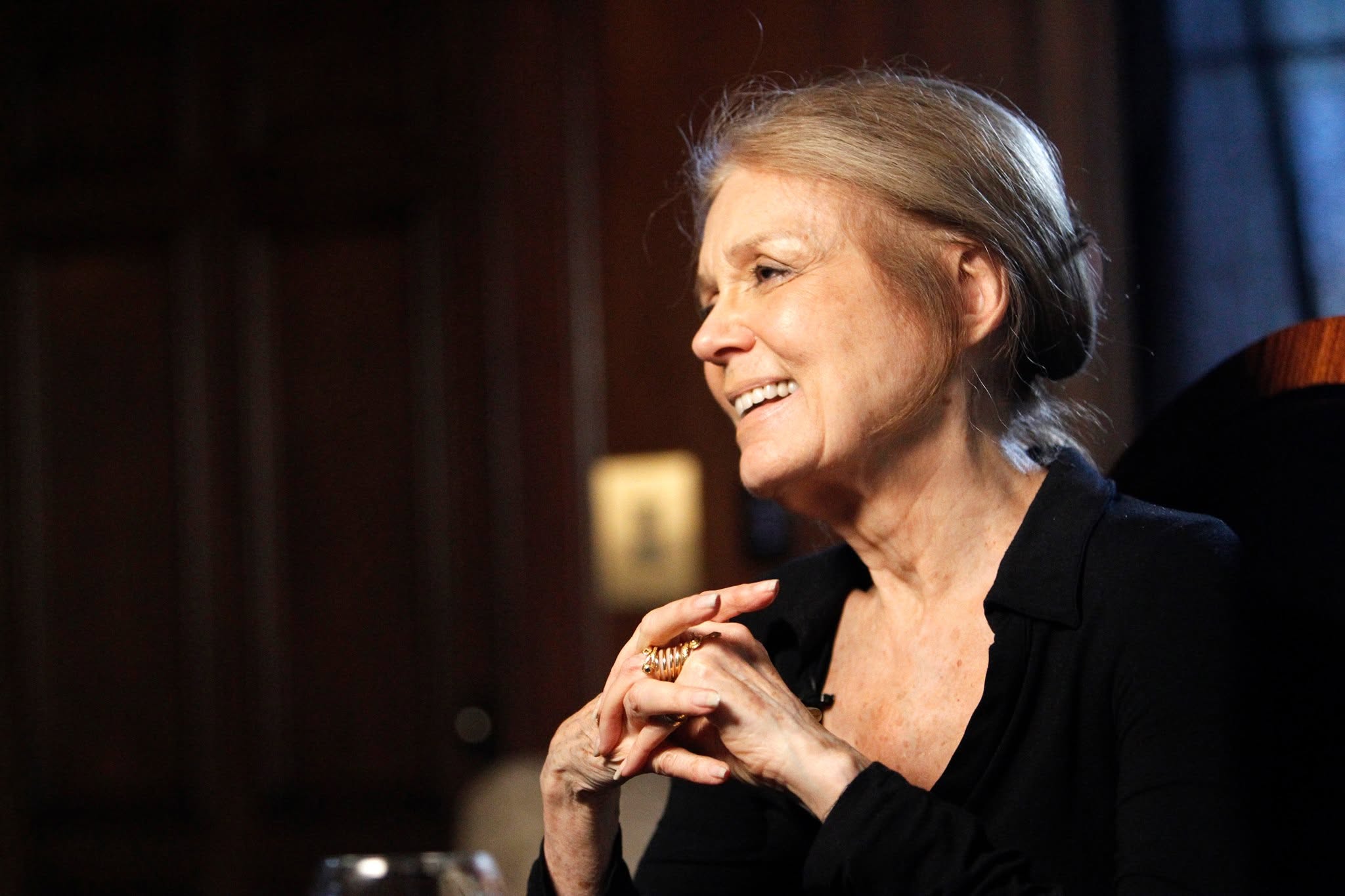
Gloria Steinem, the fearless writer and activist who became one of the most recognisable faces of the modern women's movement, has died at the age of 92.
Steinem died peacefully Wednesday at her longtime home in New York City, surrounded by loved ones, according to a statement shared through Gloria's Foundation. A cause of death has not been disclosed.
"Gloria was surrounded by loved ones in her home," the organisation announced, remembering her as a woman whose curiosity, humour and commitment to equality never faded.
The timing makes her death especially poignant. Steinem had been preparing to release a new memoir, An Unexpected Life, on September 22. Even in her nineties, the celebrated feminist apparently had no intention of quietly retreating from public life.
She had also remained active at her Manhattan home, where she welcomed activists, writers and influential guests for intimate "Talking Circles." Meghan Markle was reportedly among those who participated in the gatherings.
Long before she became an establishment icon, Steinem made headlines by infiltrating New York's Playboy Club in 1963. Wearing the famous bunny costume, she worked undercover and later exposed the allegedly degrading conditions endured by the women employed there. The resulting article, "A Bunny's Tale," made her famous-but Steinem later admitted that the provocative assignment initially made it more difficult for male editors to take her seriously.
Her career took another defining turn when she helped launch Ms. magazine in the early 1970s. With her trademark aviator glasses and streaked hair, Steinem became a glamorous but polarising public face of second-wave feminism, campaigning for workplace equality, reproductive rights and the Equal Rights Amendment.
She was not universally adored. Conservative critics accused her of attacking traditional family structures, while some voices within feminism questioned whether the media elevated her because she was white, conventionally attractive and camera-ready. Steinem nevertheless remained at the centre of the movement for decades, using both the attention and the controversy to keep women's rights in the headlines.
Her private life also fascinated the public. After spending decades famously unmarried, Steinem surprised many by marrying environmental activist David Bale-the father of Hollywood actor Christian Bale-in 2000, when she was 66. Bale died from brain lymphoma in 2003, leaving Steinem a widow after fewer than three years of marriage.
Steinem survived breast cancer in the 1980s and was later diagnosed with trigeminal neuralgia, a painful neurological condition. However, there has been no indication that either illness contributed to her death.
President Barack Obama awarded her the Presidential Medal of Freedom in 2013, recognising a lifetime spent pushing women's concerns from the margins into mainstream American political life.
Steinem leaves no biological children but became stepmother to Bale's four children. Her foundation has requested that those wishing to honour her make donations to support its continuing work.
Whether celebrated as a liberator or criticised as a cultural provocateur, Steinem never stopped forcing America to argue about power, gender and equality. More than six decades after she first slipped into that


