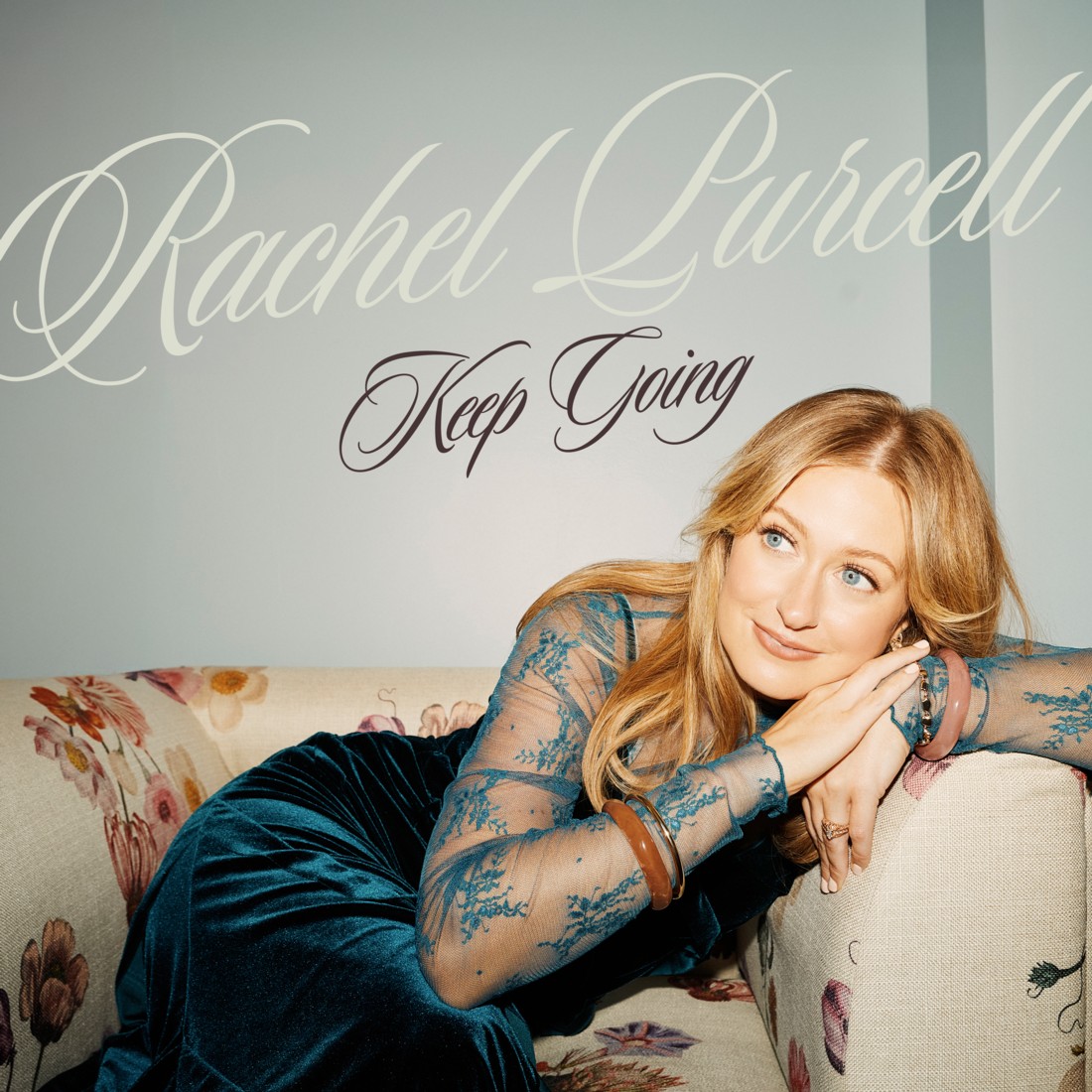
Prime Cuts: "(Can't) Trust You," "Keep Going," "Who I Belong To"
Overall Grade: 4.5/5
Rachel Purcell's Keep Going is more than an encouraging collection of Christian songs-it is the sound of a woman dragging hope out of the darkest chapter of her life. Written following a traumatic miscarriage and medical emergency that nearly took her life, the EP never treats perseverance like a decorative slogan. Every declaration of faith sounds earned.
Longtime country listeners may remember Purcell as Rachel Wammack, the powerhouse vocalist who shared stages with Reba McEntire and Trisha Yearwood. Here, she carries that country-bred warmth into a decidedly more soulful setting. Horns, strings, shimmering piano and doo-wop-styled backing vocals give the project the flavour of vintage Muscle Shoals, while Purcell's commanding voice keeps the songs rooted in the present. Christian music rarely sounds this gloriously retro.
"(Can't) Trust You" opens the EP with a clever contradiction. Its title initially sounds like an accusation, but Purcell turns it into a confession of how difficult trusting God can feel when life stops making sense. Cinematic strings and stately piano enlarge the emotional tension, while her vocal moves between vulnerability and conviction. Instead of pretending that faith eliminates doubt, the song lets the two wrestle in the same room.
The title track is where survival begins to dance. Written while Purcell was training for a 10K, "Keep Going" converts emotional and physical recovery into a buoyant soul-pop anthem. The upbeat arrangement does not trivialise her pain; it pushes back against it. When Purcell urges the listener forward, she does not sound like someone shouting advice from the sidelines. She sounds like a fellow traveller, breathless but still running beside us.
"You Love Me The Best," written during an impromptu session with Blessing Offor, leans most enthusiastically into Purcell's Muscle Shoals heritage. The horns and doo-wop touches sparkle, while the melody carries the easy familiarity of a song that might have been hiding in an old soul catalogue for decades. Its message is uncomplicated but necessary: human approval fluctuates, yet God's love remains dependable. Purcell delivers that truth with personality rather than preachiness.
The closing "Who I Belong To" brings the EP's journey home. Here, identity becomes the answer to isolation: Purcell belongs to a perfect Father and a risen Saviour whose love refuses to release her. Her vocal performance is suitably enormous, but the song's real power lies beneath the volume. Having come so close to losing everything, Purcell does not merely sing about belonging-she clings to it.
If the EP has a weakness, it is simply that such a rich musical and emotional world deserves more room. Just as its combination of southern soul, country phrasing and contemporary Christian testimony gathers momentum, the collection ends. Nevertheless, Keep Going accomplishes something many longer albums never manage: it tells a coherent story, establishes a distinctive sound and leaves the listener stronger than it found them.
Purcell has transformed private devastation into public encouragement without polishing away the scars. Keep Going does not claim that faith prevents suffering. It testifies that suffering does not get the final word.


