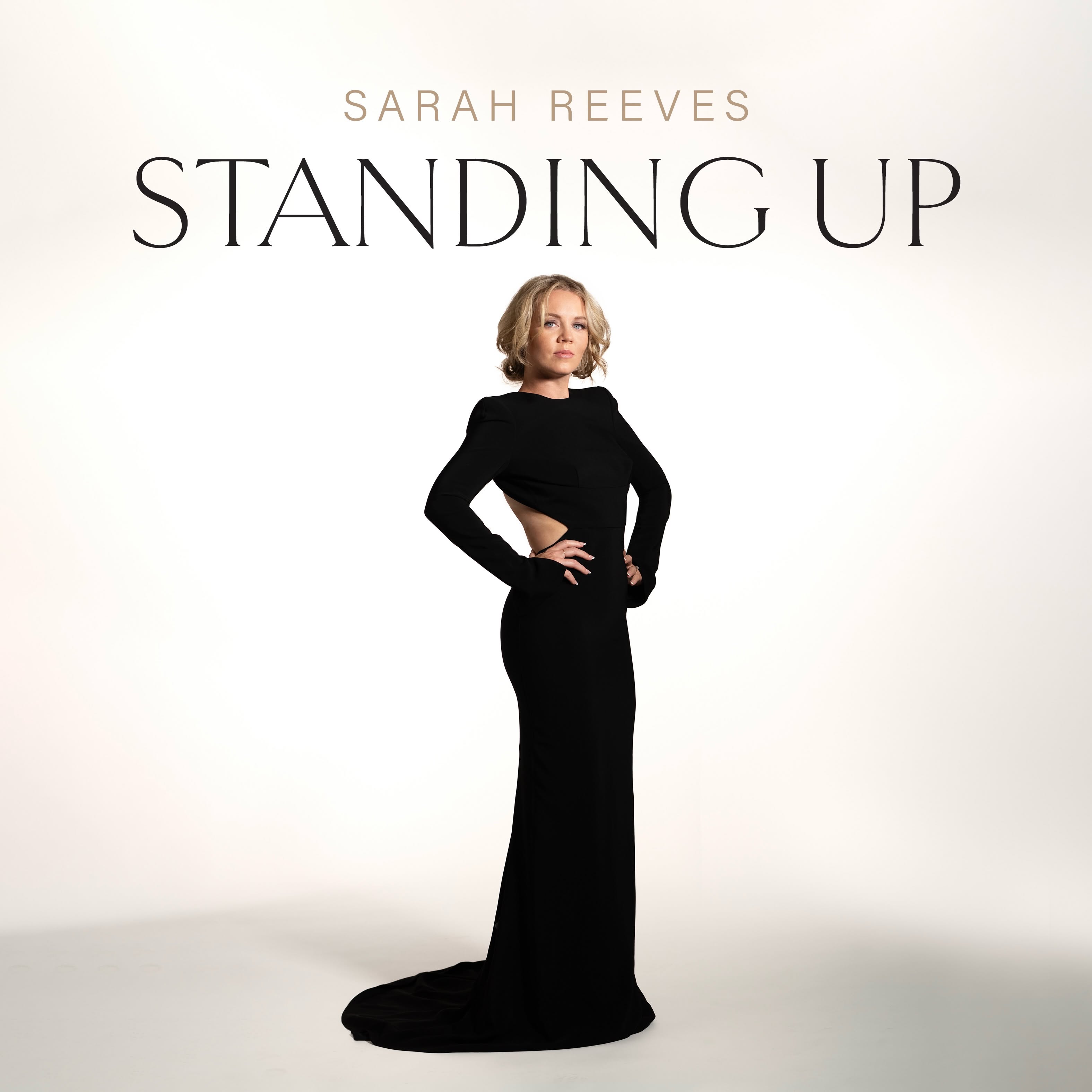
Prime Cuts: "Healing," "Standing Up," "Believe In Me"
Overall Grade: 3.75/5
There is a moment after heartbreak when survival is no longer enough. A person can continue saying, "I'm fine," or finally admit that coping and healing are not the same thing. Sarah Reeves builds Standing Up around that difficult distinction, transforming five turbulent years of divorce, self-examination, renewed faith and unexpected love into an expansive 16-track pop album.
This is Reeves at her most autobiographical. She does not simply write about overcoming pain from a comfortable distance; she repeatedly returns to the uncertainty of rebuilding while still carrying the bruises. Consequently, Standing Up is less a collection of unrelated inspirational songs than a diary whose pages gradually change color. The early material wrestles with inadequacy and emotional dependence, the middle finds its footing, and the closing stretch cautiously allows romance and hope back into the room.
"More Than Enough" opens the album by confronting the temptation to seek security in another person. Reeves recognizes how easily someone can become "comfy in the crazy" and mistake an unhealthy attachment for protection. Its message of emotional sufficiency establishes the record's central struggle: learning to stand without pretending that standing alone is painless.
"Believe In Me" continues that work internally. Instead of waiting for affirmation from someone else, Reeves challenges the negative voice that has shaped how she sees herself. Her changing vocal delivery mirrors the song's emotional movement, beginning from a place of vulnerability before gaining confidence. It is polished contemporary pop, but the performance keeps its affirmation from sounding like a motivational slogan.
The album briefly steps into brighter territory with "Cloud Nine," "Freedom" and "Good Tears." These songs are important because Reeves does not present healing as endless sadness dressed in spiritual language. Joy returns, sometimes cautiously and sometimes exuberantly. "Freedom" is especially effective as a release valve, capturing the sensation of discovering that life beyond a broken relationship can contain more than mere survival.
"Overnight Success" adds another dimension to the story by challenging the illusion that transformation happens suddenly. Reeves knows that listeners usually see the breakthrough without witnessing the years of disappointment, discipline and private reconstruction behind it. Positioned among songs about emotional renewal, the track suggests that becoming whole is also a long, largely invisible form of work.
The record's emotional center arrives with "180" and "Standing Up." The former marks the narrative turn, when Reeves' life begins moving in an unexpected direction. The title track then supplies the album's clearest mission statement. Written after she decided to divorce, "Standing Up" does not portray courage as the absence of fear. Its image of rising on shaking knees is far more convincing: faith becomes an action taken before confidence fully arrives. Reeves' declaration that God has not finished her story gives the song its spiritual foundation without turning it into a conventional worship anthem.
The second half refuses to romanticize every relationship. "This Isn't Love" draws a necessary boundary between genuine love and whatever harms, controls or diminishes a person. Its directness is refreshing, particularly on an album that could easily have rushed from divorce to a neat romantic resolution. Reeves first has to identify what love is not before "The Second Time" and "The Right One" can celebrate the possibility of finding it again.
"Made" addresses anyone who feels unseen, inadequate or unsure of their worth. Reeves grounds identity in something deeper than romantic approval, success or appearance, returning the album to its language of faith. The song's reassurance is familiar territory within Christian pop, yet it works because the surrounding album reveals what forced Reeves to ask those questions about her own value.
The finest moment is "Healing," a cinematic ballad that exposes the difference between numbing pain and walking through it. Reeves does not offer recovery as a quick spiritual formula. She acknowledges that healing can be uncomfortable, unattractive and slow. That honesty gives the song more weight than the album's broader empowerment anthems. It is not about announcing victory; it is about finally becoming willing to face what hurts.
The later tracks-"The Right One," "Dancing On My Own" and "Run Away"-explore independence alongside the return of romantic hope. Reeves can dance alone without declaring that she must remain alone forever. That tension keeps the record from confusing strength with emotional isolation. Meanwhile, "Didn't Just Lose You" provides a fitting conclusion by recognizing that divorce involves more than losing a partner. It can also mean losing routines, dreams, shared history and an imagined future.
At 16 tracks, however, Standing Up is overextended. Several songs revisit similar ideas of worth, resilience and freedom without adding substantially to the emotional progression. A tighter track list would have given its most revealing moments more room to breathe. Reeves' gleaming pop production can also smooth over some of the messiness described in her lyrics; occasionally, the record sounds more triumphant than the story actually feels.
Still, Standing Up succeeds because Reeves refuses to let divorce have the final word. She neither hides the collapse nor treats it as her permanent identity. Instead, she offers a record about discovering that faith can survive disorientation, joy can return after grief and love can be encountered again without erasing what came before.
This is not a flawless account of healing, and that may be precisely the point. Reeves does not rise without trembling. She simply decides that trembling will not keep her on the ground.


