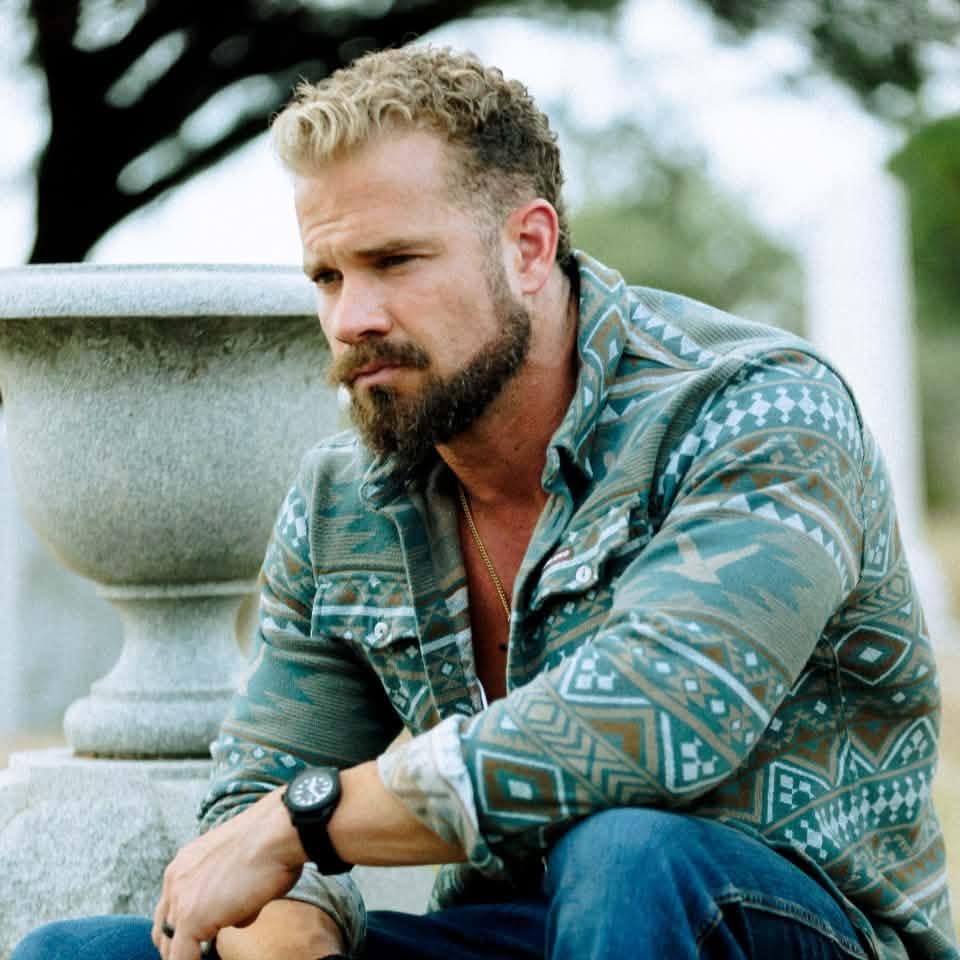
Actor, filmmaker, author, and U.S. Navy veteran Cody Bobay is calling men out of isolation and into lives marked by courage, brotherhood, and surrender to God. His ninth book, Memoirs of the Mighty Men, is a 68-day "cinematic devotional" that retells the experiences of biblical men-from Adam to Timothy-in the first person. In this exclusive interview, Bobay discusses the book's unusual approach, the hidden years that shaped Joseph, the spiritual battles facing men today, and why biblical masculinity requires both strength and vulnerability. He also opens up about his role in the upcoming film Brotherhood: A Cinematic Musical and his larger mission to create stories with an eternal purpose.
Memoirs of the Mighty Men is available to purchase on Amazon.
Cody Bobay is an actor, filmmaker, and author whose work lives at the intersection of action, storytelling, and faith. A U.S. Navy veteran, he brings real-world grit, discipline, and authenticity to everything he creates.
Q: Your new book, Memoirs of the Mighty Men, takes an unusual approach by allowing 68 biblical men, from Adam to Timothy, to tell their stories in the first person. Where did the idea for this "cinematic devotional" come from, and what do you hope men experience by stepping inside these biblical stories rather than simply reading about them?
A: I've always been drawn to the humanity of the men in Scripture. Sometimes we read the Bible knowing the ending, and because of that, we can unintentionally skip over the weight of the moment these men were actually living in. David didn't know how the battle with Goliath would end when he stepped onto that field. Joseph didn't know that the prison was part of the road to the palace. Peter didn't know, in the devastation of denying Jesus, that restoration was coming.
That's really where the idea for Memoirs of the Mighty Men came from. I wanted to slow those moments down and let men feel them. What would it have been like to stand there? What would the fear, doubt, temptation, shame, courage, or surrender have felt like?
I love cinematic storytelling, so I approached these 68 stories almost like scenes in a film while staying rooted in what Scripture actually tells us. My hope is that a man doesn't just finish a chapter thinking, "That was a great story about David," but instead thinks, "I understand David differently now, and I see something about my own life in his story."
These weren't superheroes. They were imperfect men who encountered a perfect God. I want men to realize that God is still writing stories through imperfect men today.
Q: You describe these biblical men through their failures, doubts, courage, and surrender, not simply their victories. Was there one biblical character whose story surprised or personally challenged you most while writing the book?
A: Joseph really impacted me.
We love to talk about Joseph in the palace, but I kept thinking about Joseph in the prison. Imagine being given a dream by God and then watching your circumstances move in what appears to be the exact opposite direction. Betrayed by your brothers. Sold into slavery. Falsely accused. Imprisoned. Forgotten.
And yet God had not forgotten him.
That challenged me because I think we can become obsessed with the promise while despising the process God uses to prepare us for it. Joseph reminded me that the prison wasn't evidence that the promise had failed. The prison was part of the preparation.
One of the lines I wrote in the book really captures what struck me about his story: "God is working while you are waiting. The thirteen years in the pit and the prison were not wasted. They were the road."
Your pit is not a detour from your purpose. It is the road.
There have been seasons in my own life where I've had to trust God when what I could see didn't seem to match what I believed He had spoken. Joseph's story reminds me that faithfulness in the hidden season matters. God is doing things in us before He does things through us.
Q: You've spent years encouraging men toward biblical strength and purpose through Soulcon. From your conversations with men today, what do you believe are some of the biggest spiritual struggles facing husbands, fathers, and young men, and how does Memoirs of the Mighty Men speak into those struggles?
A: I think a lot of men are fighting battles in isolation.
Lust and pornography are massive issues. So are passivity, loneliness, distraction, insecurity, anger, and the pressure to appear like you have everything together. We have access to more people than any generation in history, yet a lot of men don't have two or three brothers who actually know what is happening inside their souls.
And isolation is dangerous.
One of the things we emphasize through SOULCON is brotherhood. Biblical masculinity isn't pretending you never struggle. It's having the courage to bring what is hidden into the light, confess sin, ask for prayer, receive correction, and then get back into the fight.
That's one reason I wanted Memoirs of the Mighty Men to include the failures. David had catastrophic failures. Peter denied Jesus. Moses struggled with anger. Elijah experienced tremendous discouragement. These men had weaknesses, but their weakness wasn't the end of their story.
I want the husband who feels like he's failing, the father carrying enormous pressure, or the young man fighting temptation to see that God has always worked through men who desperately needed His grace.
The goal isn't to convince men that they're mighty on their own. It's to remind them what God can do through a surrendered man.
Q: You're a husband, father, U.S. Navy veteran, author, filmmaker, and actor. How have those different parts of your own life shaped your understanding of biblical masculinity, particularly the relationship between strength, vulnerability, leadership, and surrender to God?
A: For a long time, I think our culture has presented men with two extremes. One says masculinity is domination. Never show weakness, never admit fear, never need anybody. The other seems almost suspicious of masculine strength altogether.
I don't think either one looks like Jesus.
Jesus was incredibly strong, but His strength was completely submitted to the Father. He confronted evil. He protected people. He spoke truth without apology. He also wept. He served. He washed feet. He allowed people close enough to see His anguish. And ultimately, He laid His life down for others.
The Navy taught me discipline, responsibility, teamwork, and the importance of the man standing beside you. Marriage and fatherhood have taught me that leadership begins with sacrifice. Writing and ministry have forced me to examine my own heart before telling another man how he should live. And acting and filmmaking have continually reminded me of the power stories have to reach places an argument sometimes cannot.
I believe biblical masculinity is strength under authority. It's not the absence of vulnerability. It's having the courage to be truthful. It's taking responsibility when you're wrong. It's protecting without controlling, leading by serving, and understanding that surrender to God isn't weakness. It's where a man's real strength begins.
My family doesn't need me to be the toughest man in every room. They need me to be a man who knows who he belongs to.
Q: This fall, audiences will also see you in Brotherhood: A Cinematic Musical, which follows neighboring American and Mexican families and asks what it really means to "love your neighbor." What drew you to this project, and what can you tell us about your role and the experience of bringing this story to the screen?
A: What drew me to Brotherhood was the heart behind it. At its core, it asks a very simple but incredibly challenging biblical question: What does it actually mean to love your neighbor?
We live in a time when it is incredibly easy to reduce people to categories, political positions, backgrounds, or disagreements. But Jesus never gave us permission to stop loving someone because loving them became complicated.
I play Scott in the film, and I loved getting to step into this world and be part of telling a story that approaches these issues through characters and relationships rather than simply preaching an argument. That's one of the things I believe film can do so powerfully. A story can lower someone's defenses and allow them to experience a truth emotionally before they ever begin debating it intellectually.
And the cinematic musical element makes Brotherhood especially unique. It was a very different creative experience for me, and I'm excited for audiences to see what this team has built.
I hope people walk out of the theater examining their own hearts, not just thinking about who their neighbor is, but asking whether they are actually loving that person the way Christ commanded us to.
Q: With your ninth book now released and Brotherhood arriving in theaters this fall, you're working across books, film, ministry, and storytelling. Do you see all these projects as expressions of one larger calling, and what do you believe God is asking you to communicate in this season of your life?
A: Absolutely. To me, they're not separate careers. They're different vehicles carrying the same message.
Whether I'm writing a book, building SOULCON, acting in a film, or developing projects through i68 Studios, I keep coming back to the same question: How do we use story to call people toward courage, purpose, sacrifice, and ultimately toward God?
Isaiah 6:8 has become incredibly important to me: "Here am I. Send me."
That's the posture I want my life to have.
With i68 Studios, our mission is to create films that inspire heroism globally. But when I say heroism, I'm not simply talking about the guy who wins the fight or saves the world. I'm interested in the deeper kind of heroism. The husband who stays faithful, the father who is present, the man who confesses what he has hidden, the person who stands for truth when it costs something, the believer who says yes to God without knowing exactly where that yes will lead.
I feel an incredible urgency in this season. I believe we desperately need stories that remind people that courage still matters, truth still matters, sacrifice still matters, and faith still matters.
I'm 41 years old now, and I'm more aware than ever that I don't want to spend the second half of my life simply building things. I want to spend it building things that matter eternally.
Books, film, ministry. They're simply the tools God has put in my hands.
My prayer is that I remain willing to use all of them whenever He says, "Who will go?"
Here I am. Send me.


