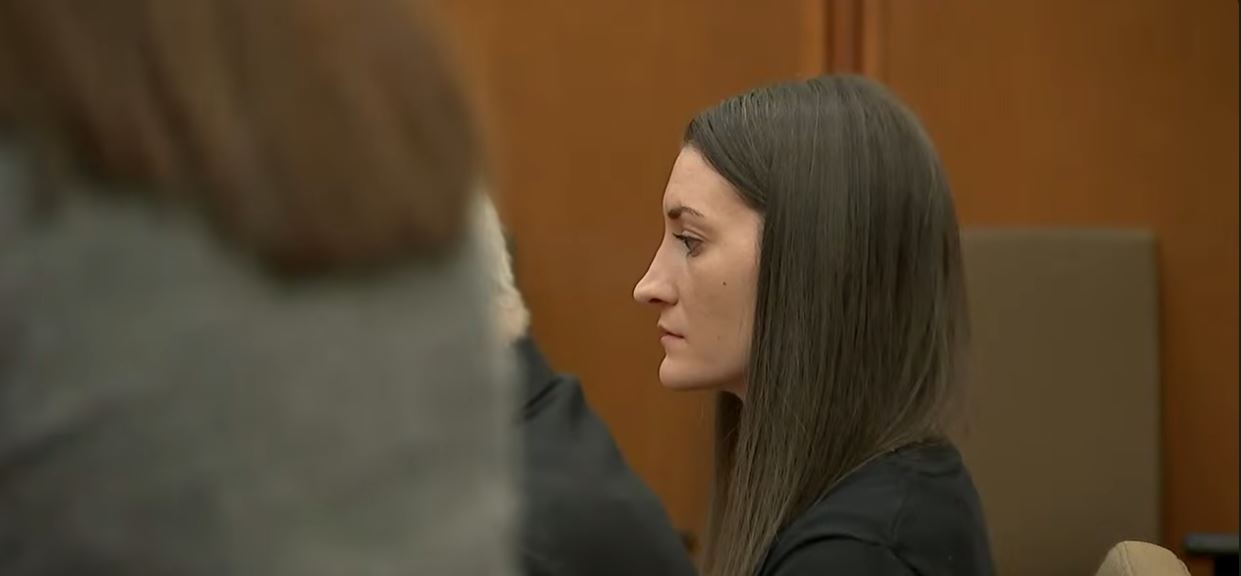
Michael Desronvil expected to return to his ordinary life after serving on the jury in Lindsay Clancy's murder trial. Instead, the lone juror who opposed acquittal found himself facing intense public attention-and competing accounts of what happened behind the jury room door.
Now, his comments about faith, conscience, and Clancy's actions are bringing renewed attention to a case that ended without a verdict. His explanation also raises a difficult question: Why did he remain convinced of criminal responsibility when the other 11 jurors reached a different conclusion?
Clancy's trial ended in a mistrial on September 4 after the jury failed to agree. Her defense maintained that postpartum psychosis left her without criminal responsibility for killing her three children in 2023, while prosecutors argued that she acted deliberately. Desronvil has described her actions as "methodical," presenting that assessment as central to his position.
A Divided Jury, Conflicting Accounts
According to The Christian Post's October 20 report, Desronvil discussed his experience in an interview with Fugitive TV host Ray Marcel. He said he approached jury service as a responsibility rather than an opportunity for attention, maintaining that his decision reflected his understanding of the evidence.
But his account faces a direct challenge from fellow jurors. Foreperson Roni Carlson has said Desronvil acknowledged reasonable doubt during deliberations, while he insists he had none. That disagreement matters because it concerns how the jury evaluated the prosecution's case, rather than simply whether members found the deaths disturbing.
The competing accounts should remain distinct. Desronvil's description of Clancy's behavior represents his interpretation; the mistrial produced neither a conviction nor an acquittal. His public confidence does not resolve the dispute over her criminal responsibility.
The Faith Behind His Public Response
The Christian Post's account also explores Desronvil's Catholic faith, describing a return to religious practice through reading, Bible study, church attendance, and adult faith formation. He spoke about wanting his daughter to experience his love through his actions as well as his words.
That personal background gives readers a fuller picture of the man whose vote prevented a unanimous verdict. It does not, by itself, establish that religious belief determined his legal reasoning. Desronvil has publicly maintained that his judgment rested on the evidence, while describing faith as a source of support through the experience.
For Christian readers, the distinction deserves attention. Faith can sustain someone through an emotionally demanding responsibility, but evaluating a juror's conduct still requires examining the evidence, the court's instructions, and what occurred during deliberations.
The Attention Followed Him Home
Desronvil told Fugitive TV that people appeared at his home immediately after the mistrial, approaching the property and looking through windows. According to the supplied report, many were journalists, and he said the attention disrupted his expectation of returning to work and supporting his family.
His reluctance to repeat the experience was clear: he said he would prefer not to serve on another jury, while accepting that he would do so if required. He also discussed plans to finish an accounting degree and pursue law school.
The interview leaves two disputes in view: the unresolved criminal case against Clancy and the conflicting accounts of the juror who stood apart. Understanding either requires more than celebrating his resolve or condemning his refusal to agree. The central questions remain what the evidence established-and whether the jury applied the required standard.


