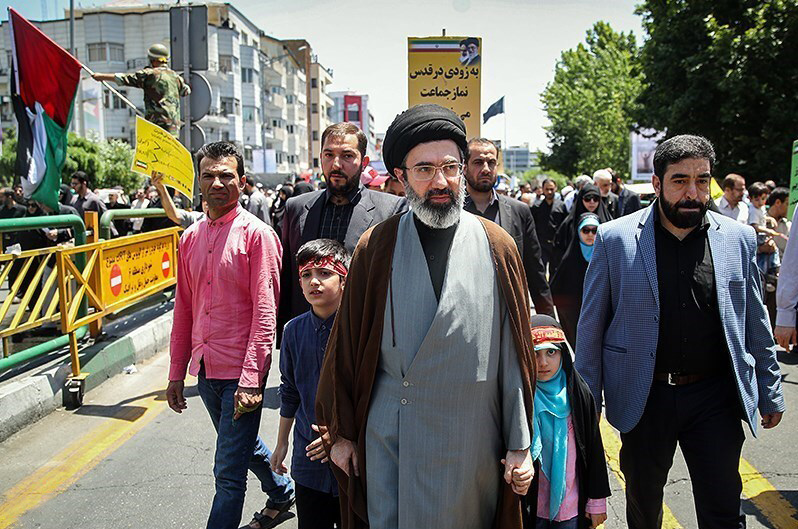
Iran may be entering a new and uncertain chapter after reports emerged that the Assembly of Experts has selected Mojtaba Khamenei, the son of the late Supreme Leader Ayatollah Ali Khamenei, as the country's next Supreme Leader.
According to reports from Iran International and other international outlets, the powerful clerical body responsible for appointing Iran's top religious and political authority made the decision amid intense pressure from the Islamic Revolutionary Guard Corps (IRGC). The reported move follows the death of Ali Khamenei, who had ruled Iran since 1989 and was one of the most influential figures in the country's modern history.
If confirmed, Mojtaba Khamenei's selection would mark a historic moment in Iran's political system, raising questions about the future direction of the Islamic Republic and the balance of power among its religious and military institutions.
The Role of the Assembly of Experts
The Assembly of Experts is an 88-member council composed largely of senior clerics. Under Iran's constitution, it holds the authority to appoint and supervise the Supreme Leader, the highest-ranking official in the country.
The body has only exercised this power once before - in 1989, when it selected Ali Khamenei to succeed Ayatollah Ruhollah Khomeini, the founder of the Islamic Republic.
However, the current succession process has unfolded under far more turbulent circumstances. Reports indicate that the leadership transition is taking place amid regional conflict, political uncertainty, and internal pressure from powerful factions within Iran's security establishment.
Some reports also suggest that the IRGC pushed for a rapid decision to ensure continuity in leadership during a period of instability.
Who Is Mojtaba Khamenei?
Mojtaba Khamenei has long been viewed as an influential but largely behind-the-scenes figure within Iran's political system. A cleric like his father, he has never held elected office and maintains a relatively low public profile.
Despite that, analysts say he has cultivated close ties with the Revolutionary Guards, Iran's most powerful military organization, which plays a central role in the country's political and security structures.
For years, Mojtaba has been rumored as a potential successor to his father, although such a transition has remained controversial. Some critics argue that passing leadership from father to son resembles the hereditary monarchy that Iran's 1979 Islamic Revolution sought to overthrow.
Political analysts have warned that installing Mojtaba Khamenei could be seen by some as a break from the revolutionary ideals that originally shaped the Islamic Republic.
A Leadership Transition During Crisis
The reported appointment comes during a period of heightened tension both inside Iran and across the region. Following the death of Ali Khamenei, Iran temporarily placed governance in the hands of an interim council consisting of senior political and judicial leaders until a permanent successor could be chosen.
At the same time, speculation had surrounded several possible candidates, including influential clerics and political figures within Iran's establishment. Among those mentioned in earlier discussions were Hassan Khomeini, the grandson of Iran's revolutionary founder, and senior political figures from the Larijani family.
Despite these alternatives, Mojtaba Khamenei appears to have emerged as the leading choice among hardline factions seeking stability and continuity.
Global Attention on Iran's Next Leader
The potential appointment of Mojtaba Khamenei is drawing significant international attention, as the Supreme Leader holds ultimate authority over Iran's military, judiciary, media, and key aspects of foreign policy.
Observers say the decision could shape Iran's political direction for years to come, particularly at a time when tensions in the Middle East remain high.
For many watching developments unfold, the transition also highlights the powerful role that religion continues to play in Iran's governance, where the highest political authority is rooted in clerical leadership.
As confirmation and further details emerge, the world will be closely watching how the Iran Assembly of Experts' reported decision influences both Iran's internal politics and the broader geopolitical landscape.


