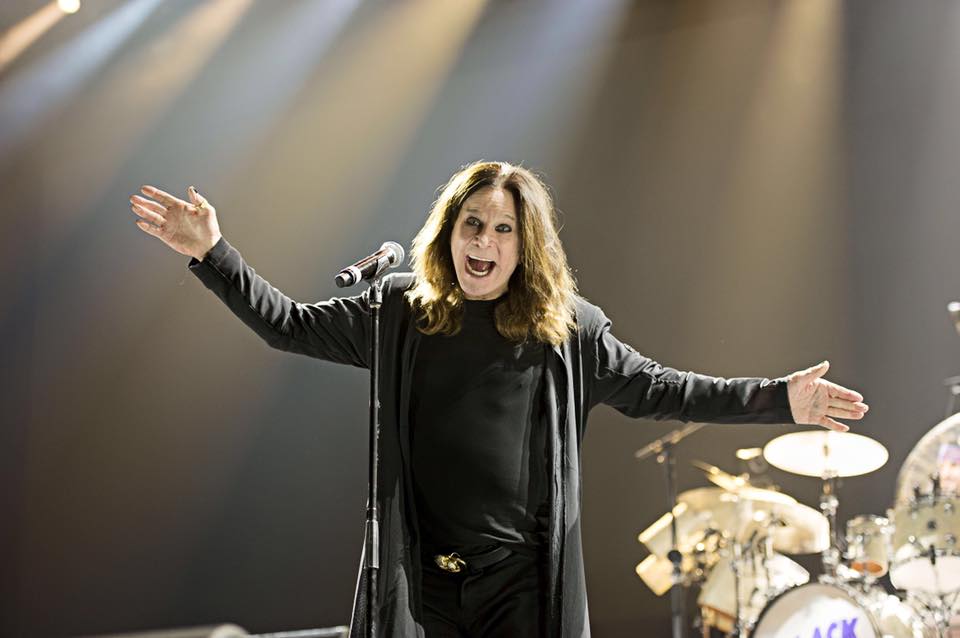
Jack Osbourne is challenging one of the most persistent narratives in rock history, firmly rejecting claims that his father, legendary musician Ozzy Osbourne, was ever involved in Satanism and offering a more personal glimpse into the beliefs behind the public persona.
For decades, Ozzy Osbourne has been associated with dark imagery, earning the nickname "Prince of Darkness" during his rise to fame with Black Sabbath. That reputation, fueled by theatrical performances and the heavy themes of early metal music, led many to assume a connection with the occult.
But according to Jack Osbourne, that assumption misses the reality.
Speaking candidly, Jack emphasized that his father's image was largely performative, not theological. He described Ozzy as someone who believed in God, kept a Bible, and wore a cross regularly-details that sharply contrast with the long-standing accusations.
"There was nothing satanic in our home," Jack clarified, underscoring the difference between stage identity and private life.
Ozzy Osbourne's music itself has often contributed to the confusion. As the frontman of Black Sabbath and later a solo artist, his songs frequently explored themes of darkness, evil, and the human struggle with sin and mortality. Tracks like "War Pigs," "Paranoid," and "Crazy Train" are not endorsements of darkness but, in many cases, critiques of war, mental instability, and societal brokenness. His work consistently wrestles with the tension between good and evil, often exposing the consequences of destructive paths rather than celebrating them.
In this sense, Ozzy's music functions less as a declaration of belief and more as a reflection on the realities of a fractured world-using dramatic imagery to provoke thought rather than promote ideology.
The conversation reflects a broader cultural dynamic in which musicians, particularly in genres like rock and metal, are often interpreted through the lens of their imagery rather than their actual convictions. In Ozzy's case, decades of misunderstanding may have blurred the line between persona and person.
Jack Osbourne's remarks now invite a reconsideration of that legacy-one that separates performance from personal faith and highlights the complexity behind one of music's most iconic figures.
As audiences continue to revisit the stories behind influential artists, this moment serves as a reminder that what is seen on stage does not always define what is believed off it.


