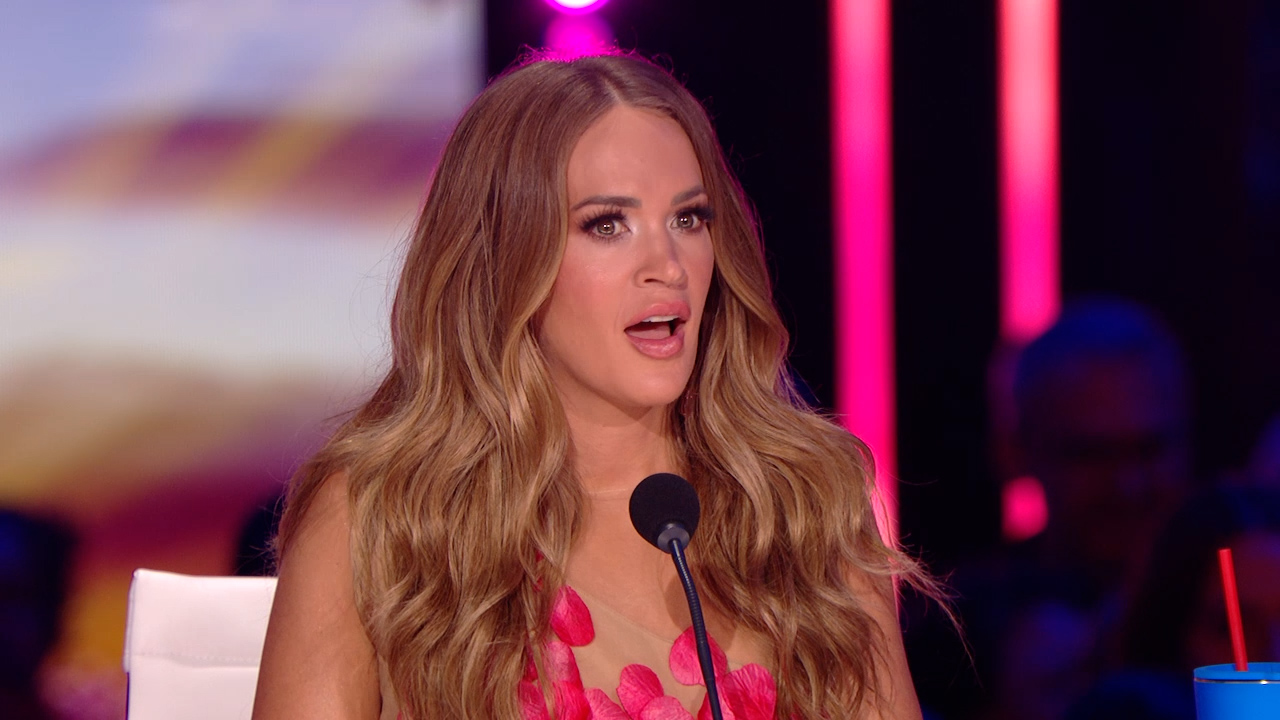
Carrie Underwood is no stranger to the American Idol stage-but this time, she's not the contestant winning over audiences. She's the judge facing them. And in recent weeks, her candid, no-filter feedback has sparked a surprising reaction: boos from the crowd.
Still, the country superstar isn't backing down.
During a recent episode of the American Idol official podcast, Underwood addressed the growing criticism surrounding her judging style. Her response was simple-and strikingly direct: "I don't care."
For some viewers, that may sound harsh. But for Underwood, it's rooted in something deeper than blunt honesty-it's about integrity.
"I can't lie, I'm a terrible liar," she explained. "As a fan of the show, if somebody had an off night and everyone says it was amazing, I'm sitting at home thinking, 'What? That's not true.'"
It's a perspective shaped by experience. After all, Underwood isn't just another celebrity judge-she's one of American Idol's greatest success stories. Since winning Season 4 in 2005, she has built a career defined by excellence, discipline, and authenticity. Now, she's bringing that same standard back to the stage-this time from the judges' table.
Not everyone is comfortable with that level of honesty.
Live audiences have responded audibly when her critiques lean more critical than celebratory. In an era where encouragement often takes center stage, Underwood's approach can feel jarring. But her intention, she insists, is not to tear down-it's to help contestants grow.
And she's not standing alone.
Fellow judge Luke Bryan has publicly defended Underwood, reminding both fans and viewers that her voice carries weight for a reason. "She won this," Bryan said during the podcast. "She knows."
He went on to acknowledge just how difficult it is to offer constructive criticism on such a high-pressure platform. "It takes a lot of confidence," Bryan added. "You don't want to say something that could hurt them, but it's something they need to hear if they're going to move forward."
That balance-truth with care-is at the heart of the debate.
For Underwood, being honest isn't about negativity; it's about respect. She believes contestants deserve real feedback, not empty praise. And while that may not always earn applause in the moment, it could make all the difference in the long run.
There's also a deeper layer to her approach that resonates with many fans of faith. Underwood has long been open about her Christian beliefs, and her career has consistently reflected themes of conviction and purpose. In that light, her refusal to compromise on truth-even when it's unpopular-feels less like defiance and more like consistency.
Honesty, after all, isn't always easy to receive. But it can be necessary.
In a culture that often prioritizes affirmation over accountability, Underwood's presence on American Idol is quietly pushing against the grain. She's reminding both contestants and viewers that growth often comes through correction-and that real support sometimes sounds like hard truth.
And despite the backlash, she seems at peace with that role.
Underwood has even acknowledged on social media that she's been "booed a lot" throughout the season, especially during Hollywood Week. But rather than softening her tone, she's remained steady in her approach-continuing to offer feedback that reflects what she genuinely sees and hears.
That consistency may ultimately be what defines her legacy as a judge.
Because while boos may fill the room in the moment, they don't necessarily tell the whole story. Behind the scenes, contestants are listening. They're learning. And in many cases, they're improving.
As American Idol continues its 2026 season, one thing is becoming clear: Carrie Underwood isn't trying to be the most popular judge-she's trying to be the most honest one.
And in the long run, that might be exactly what the show-and its contestants-need.
From a broader perspective, her journey offers a simple but powerful reminder: standing for truth isn't always met with applause. But it often leads to something greater-growth, clarity, and purpose.
Even when the crowd disagrees.


