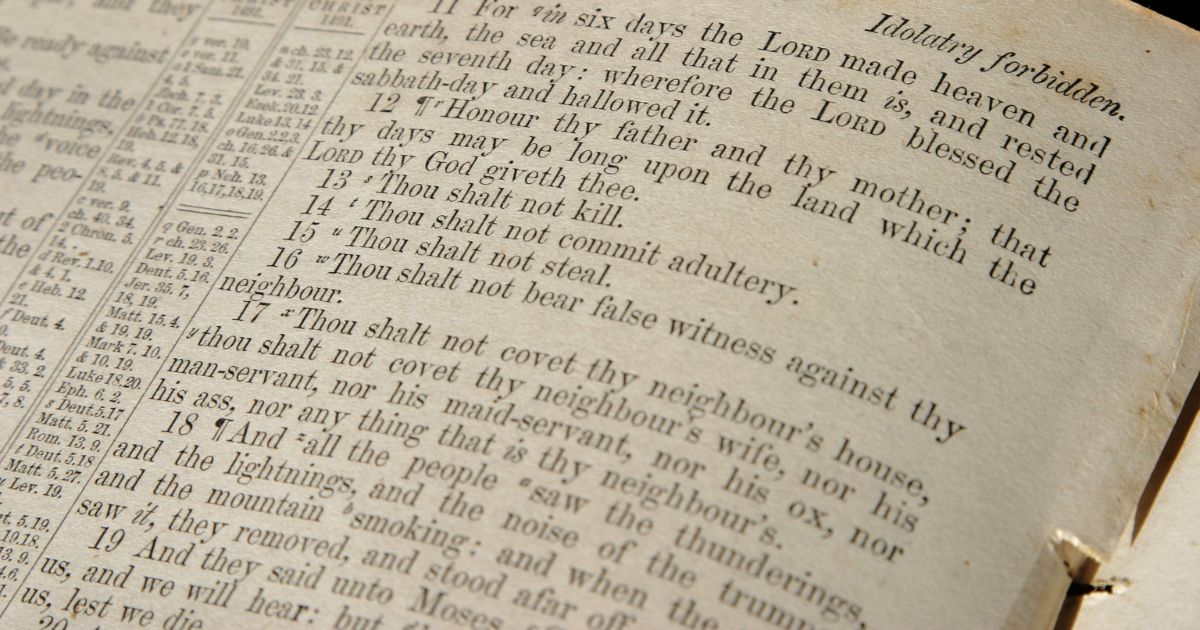
A recent federal appeals court decision is drawing nationwide attention after it ruled that Texas can require public school classrooms to display the Ten Commandments, setting the stage for what could become a landmark case at the U.S. Supreme Court. The 5th U.S. Circuit Court of Appeals, in a narrow 9-8 decision, upheld the law, reversing earlier rulings that had blocked the measure and igniting renewed conversations about faith, education, and constitutional boundaries.
The law, signed in 2025, mandates that public schools display a specific version of the Ten Commandments in a clearly visible location in every classroom. While schools are not required to purchase the posters themselves, they must accept donated versions that meet size and visibility requirements. Supporters argue that the Ten Commandments represent a foundational moral and historical influence on American society, while critics say the law crosses a line by blurring the separation between church and state.
In its ruling, the court stated that the requirement does not force students to believe, recite, or follow the commandments, nor does it require teachers to promote them. According to the majority opinion, simply displaying the text does not amount to religious coercion or instruction. This reasoning became central to the court's decision to uphold the law, emphasizing that exposure does not equal endorsement.
Still, opposition has been swift and strong. Civil liberties groups, along with families from diverse religious backgrounds, argue that the law effectively places government support behind a specific religious tradition. They have already indicated plans to appeal the decision to the Supreme Court, suggesting this issue is far from settled. Legal experts note that similar cases in the past-such as a 1980 Supreme Court ruling-have struck down nearly identical laws, making the current decision especially significant.
The ruling also reflects a broader national movement, as several states have introduced or passed similar legislation aimed at bringing more faith-based elements into public education spaces. Supporters see this as a restoration of moral grounding, while critics worry it may marginalize students of different beliefs or no religious affiliation at all.
From a faith perspective, the conversation carries deeper weight. For many Christians, the Ten Commandments are not just historical text, but a timeless expression of God's moral law, shaping personal character and guiding everyday life. At the same time, the debate raises important questions about how faith is expressed in public life and how it can be shared in ways that respect both conviction and freedom.
As this story continues to unfold, it highlights a tension that has long existed in American society-the balance between religious heritage and constitutional principles. With a potential Supreme Court review on the horizon, the outcome could have lasting implications not only for Texas but for the entire nation.
In moments like this, many in the faith community are choosing to respond not just with opinions, but with prayer, wisdom, and a commitment to reflect Christ's love in a divided conversation.


