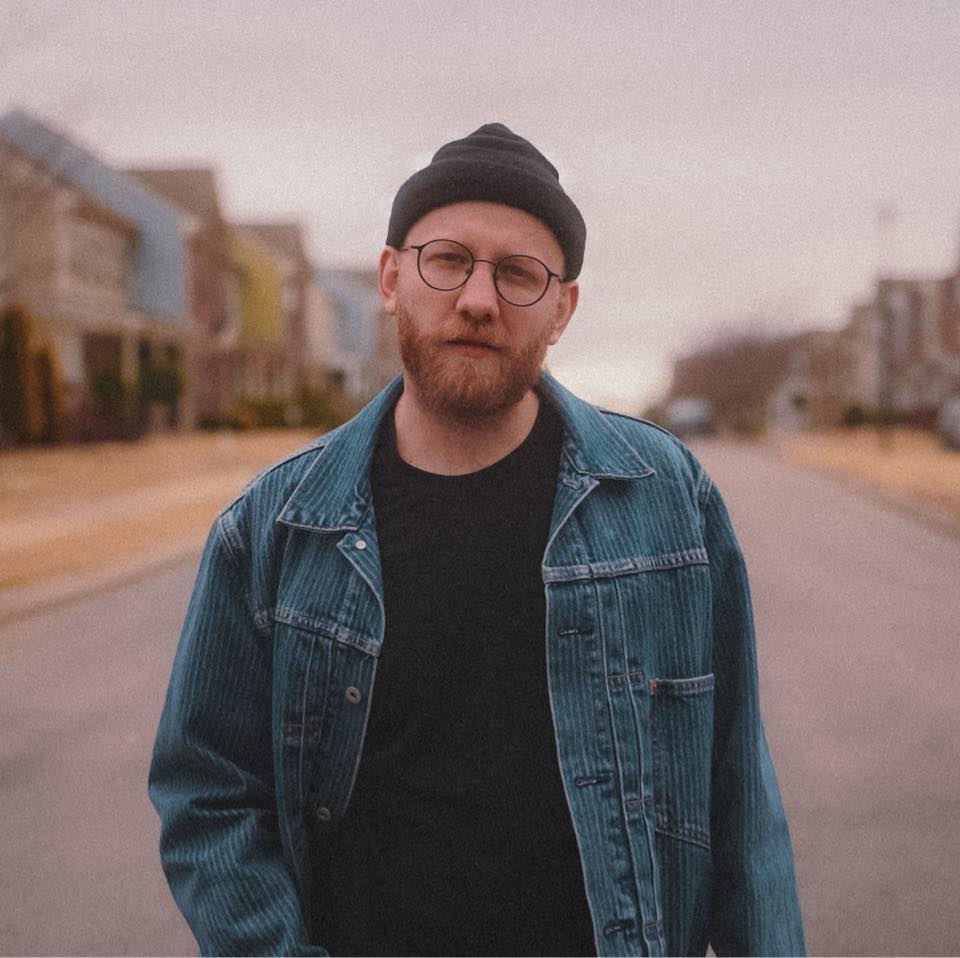
For Nashville-based singer-songwriter Kevin Embleton, songwriting is less about providing answers and more about making sense of life's questions. Across his latest project, Old Man, Young Man, Embleton reflects on seasons of waiting, personal transformation, faith, suffering, and hope, exploring the tension between who we once were and who we are becoming.
Rooted in indie folk, Americana, and the storytelling traditions of artists such as Bob Dylan, Gram Parsons, and Tom Petty, the album's centerpiece, "Not As Far," emerged from conversations about the kingdom of God, longing, and the discovery that what often feels distant may already be unfolding in everyday life. In this interview, Embleton discusses the experiences that shaped the record, his collaborative work with Messenger Music and figures, the artists and authors who continue to influence his craft, and how his Christian faith naturally informs the stories he tells through song.
To listen to the new song, click here.
Q: For readers discovering Embleton for the first time, how would you describe your sound and the creative vision behind the project?
I think the safest way to describe my sound in 2026 is indie folk, but I have a lot of those early sixties and seventies influences in my sound, specifically the singer-songwriters and folk/country bands from those years. I'm so drawn to the storytelling of the artists I love from those eras.
As far as the vision for the project, at its core Embleton is just me processing my life and the world through song. And it's the kind of thing where, you know, if I don't have this outlet, I'm not quite sure what I do with myself.
Q: Old man, young man explores the tension between who you were and who you are becoming. What personal experiences or seasons of life shaped the writing of this record?
I think the thing that comes to mind first is that I've just been through lots of seasons of waiting in the last decade. I've lived on the West Coast, Ohio, and Nashville (and not back in Ohio) in the last ten years. Some of those seasons were in vocational ministry where I experienced sustained seasons of stress I thought would never end. The kind of stress where your body just falls apart. Those seasons definitely gave me a lot of the language you hear on this record.
When I'm waiting, I sometimes reach for things to comfort me that really don't provide sustained comfort. I found as I co-wrote a lot of these songs that I'm not the only one.
Q: Not as far carries a strong sense of longing, reflection, and quiet transformation. What was happening emotionally or spiritually when you wrote the song?
I''m a part of a an organization called Messenger Music, and we get together twice a year to write songs with each other. Before each songwriting session, we have what we call theology sessions where we bring in a scholar, an author, a pastor, or someone whose profession is not in music to talk about what they're seeing in the world and where they think we need more songs.
And so we got together, me and three other guys started writing Not As Far. My friend Jeff Gilliland was in the room, and he really loves to have a framework from start to finish of what we're trying to accomplish when we write.
In contrast, when I write, I tend to just build the ship in the water and see if it floats when we're done. It's hard to describe but I don't always like to know where I'm going when I write. I need to slowly begin accessing my subconscious to see what's going in in my heart. That takes time.
Back to Not As Far... there were two other guys in the room sort of playing the support roles, and it was really beautiful how it came to be. We just we just started talking about how the kingdom of heaven is less of a coming thing. Like Jesus said, it's something that's here right now, that's unfolding within us as we yield to it. This resonated deeply with everyone in the room, yet we found it in these simple metaphors you hear in each verse.
Q Your music blends folk, Americana, and indie rock influences in an organic way. Which artist's albums or musical traditions have influenced your approach to songwriting and production?
Ready for a big list? Lol
A lot of those artists who took over the LA scene in the early seventies really just changed my life forever. Tom Petty and Jackson Brown, Gram Parsons. Then there's Bob Dylan who was more a New York scene guy. Willie Nelson. All of them are straight up troubadours. Some more modern influences are Sun Kil Moon, The Tallest Man On Earth, Pedro The Lion, Ryan Adams, Dawes.
From a literary perspective I draw a lot from Jack Kerouac and Steinbeck's style of writing. Those authors really changed the way I write music and think about poetry.
Those are all big ones, but every time I find something new that moves me, I just can't get enough of it. So most recently, it's the new Mumford and Sons record Prizefighter. I just think it's unbelievably beautiful, and I'm sure my next record will have some kind of influence from that.
Q: You spent years writing, producing, collaborating through projects like figuers and Messenger Music. How have these creative partnerships shaped you both as an artist and as a person?
Well, it kinda just takes some of the weight off when you don't have to do everything by yourself and when you have other perspectives. It sometimes can slow things down, and other times it makes things go lightning fast.
For figures, my covers project, me and my my buddy Jacob Montague get together and work a couple days at a time. Then we'll send a few sessions back and forth til they're done. I'll end up recording and editing all the vocals, maybe add a few other elements, but Jacob really is the producer on that project. So he'll kinda lead the charge on arrangements a lot of times and mixing. I master a lot of our stuff.
And then with Messenger Music, there's so many cooks in the kitchen, but it's a good thing. I don't have to carry that much weight. It reminds me to be really grateful for the team that I have at WeRock, all the publishing and distribution help I have over there. It makes me thankful for all my friends who've gone out of their way to help Embleton become what it is today.
Q: Faith and spirituality often seem woven subtly into your music rather than presented overly. How does your personal faith influence the stories you tell and the way you approach your art?
It's taken me a long time to figure out how to talk about this because when I was growing up, there was not such a strong delineation in the art scene. You could be a "Christian artist," but your lyrics didn't have to be so on the nose. Something changed in culture in the last fifteen years where more than ever, I feel like there's this distrust in poetry and maybe our ability as artists to trust the audience. If that sounds like judgment, it's not meant to be. It's an observation.
I love what Francis Schaeffer says about art. He says that all art comes from an artist who has a worldview. So every artist has an agenda, innately, whether they recognize it or not. And so because I am a Christian, my art naturally reflects my faith in Jesus, theology of suffering, and hope for the future. But I don't always sit down to make sure my art reflects those points like they're brand guidelines. They just come out in the art.
And Francis Schaeffer says some very strong words when he says, art that is only driven by agenda is akin to propaganda.
And so I like to think my intent while making art is simply to process what I'm seeing in the world, my feelings, my longings, my pain, and my hopes.


