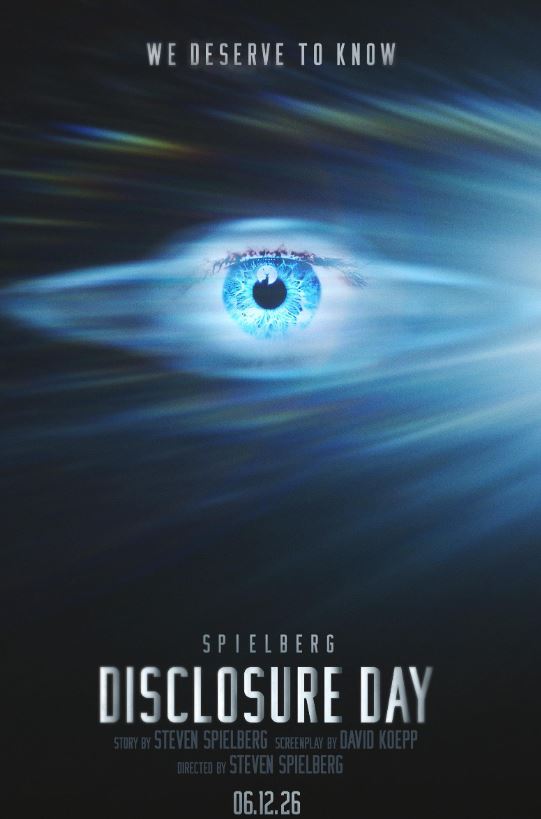
Hollywood filmmaker Steven Spielberg believes his upcoming science-fiction drama Disclosure Day may prompt audiences to wrestle with profound questions about faith, God, and humanity's place in the universe.
During an appearance on CBS Sunday Morning on June 7, the acclaimed director discussed the inspiration behind Disclosure Day, a film that explores the societal impact of a hypothetical government disclosure confirming the existence of extraterrestrial life. The movie, which opens in theaters on June 12, examines how such a revelation could affect public trust in institutions, including government and religion.
Spielberg suggested that confirmation of intelligent life beyond Earth could force many people to reconsider long-held assumptions about faith.
"If this truth were just known overnight, if the government announced, 'Yes, we have been keeping this from you since 1947,' that would mess up a lot of people," Spielberg said during the interview. "And the movie also takes the position of the church. What does this do to the fundamental beliefs that many of us have? Is God our God only on this planet, or is God a God for every system where there's civilization, intelligent life, and even developing life?"
The comments quickly generated discussion online, with some social media users accusing the director of attempting to undermine Christianity. However, Spielberg did not specifically reference Christianity during the interview. Instead, he raised broader theological questions about how faith traditions might respond if intelligent extraterrestrial life were discovered.
The legendary filmmaker, known for classics such as E.T. the Extra-Terrestrial and Close Encounters of the Third Kind, said his fascination with the possibility of life beyond Earth stretches back to childhood. He recalled watching meteor showers with his father and developing a lifelong interest in what he called "the great unknown."
According to Spielberg, Disclosure Day focuses less on alien invasion and more on the consequences of information being withheld from the public. The film explores what he described as the "politics of deceit" and asks who controls knowledge about potential extraterrestrial encounters.
The story follows a character portrayed by Emily Blunt whose life is turned upside down after discovering that major institutions may have concealed important truths. Spielberg said the character's journey forces her to reexamine her trust in government, religion, and other foundational beliefs.
A Catholic nun also plays a significant role in the film, highlighting the movie's engagement with spiritual and theological questions alongside its science-fiction themes.
Spielberg's renewed interest in UFOs and unidentified aerial phenomena was reportedly influenced by the 2023 U.S. House Oversight Committee hearings on UAPs (Unidentified Anomalous Phenomena). In a separate interview, the director said he believes there is substantial circumstantial evidence suggesting that extraterrestrial intelligence may exist and may have interacted with humanity.
Despite his fascination with the topic, Spielberg acknowledged that he has never personally experienced any paranormal or unexplained events.
For many Christians, the possibility of extraterrestrial life raises questions that theologians have debated for decades. While Scripture does not directly address intelligent life on other planets, many Christian scholars argue that the existence of extraterrestrial beings would not necessarily contradict belief in God as Creator of the universe. Spielberg's comments, however, highlight how the topic continues to spark discussion about faith, revelation, and humanity's unique place within God's creation.


