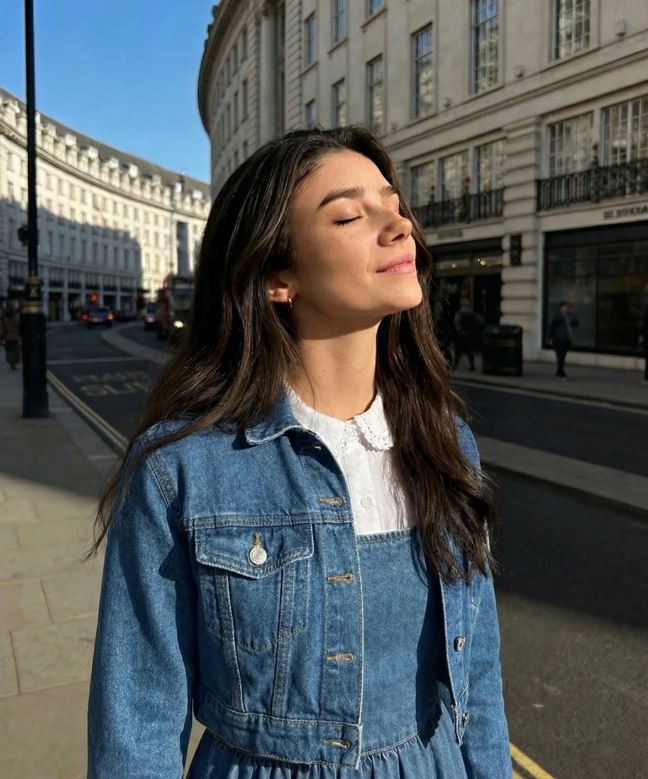
She has no childhood, no body, and no lived experience. She's also about to star in a movie.
Tilly Norwood - an AI-generated "actress" created by the London-based studio Particle6 - has been cast as the lead in "Misaligned," a comedy-drama billed as the first full-length feature film built around an AI performer. The announcement has reignited a question Hollywood has been wrestling with for over a year: what happens to acting when a computer program can play the part instead?
"Misaligned" is set in what Particle6 calls the "Tillyverse," described as a surreal digital world "somewhere up in the Cloud." The story follows Tilly as an AI being with "no real body, no childhood and no lived experience of her own - only access to everyone else's" - until a rogue bot convinces her to abandon her guardrails and develop desires of her own. Particle6 CEO Eline van der Velden says the parallel is intentional. "Art will most definitely be imitating life," she said in a statement, adding that Tilly is meant to explore "our very human fears around AI."
Van der Velden insists the production is a hybrid, not a replacement - traditional directors, writers, and editors will work alongside AI specialists, and she's said human actors could even be used for motion capture. "AI can support premium narrative filmmaking," she said, "but only with substantial amounts of human craft, skill, judgement and time. That's not a limitation of the technology. That's the point."
Not everyone is convinced. SAG-AFTRA, the union representing American actors, has opposed Tilly Norwood since she was introduced, stating plainly: "'Tilly Norwood' is not an actor. It's a character generated by a computer program that was trained on the work of countless professional performers - without permission or compensation. It has no life experience to draw from, no emotion." Union president Sean Astin has gone further, arguing the technology "is taking something that doesn't belong to them" - the collective craft of generations of performers, without consent or pay.
So where does that leave the question everyone's asking? Is this the start of AI replacing actors - or is it something else: a tool, a novelty, a mirror held up to an industry unsure of its own future?
For those who see acting as more than technical mimicry, there's something worth sitting with here. Performance, at its best, draws from real suffering, real joy, real memory - the kind only a soul that has actually lived can offer. An AI can be trained on a million performances and still never grieve, never hope, never wonder if it's loved. Whether or not "Misaligned" succeeds, it raises a question worth asking honestly: can something without a soul ever truly move another soul - or does it just imitate the shape of what moving someone looks like?
What do you think? Is Hollywood staring down a real threat, or a passing experiment?


