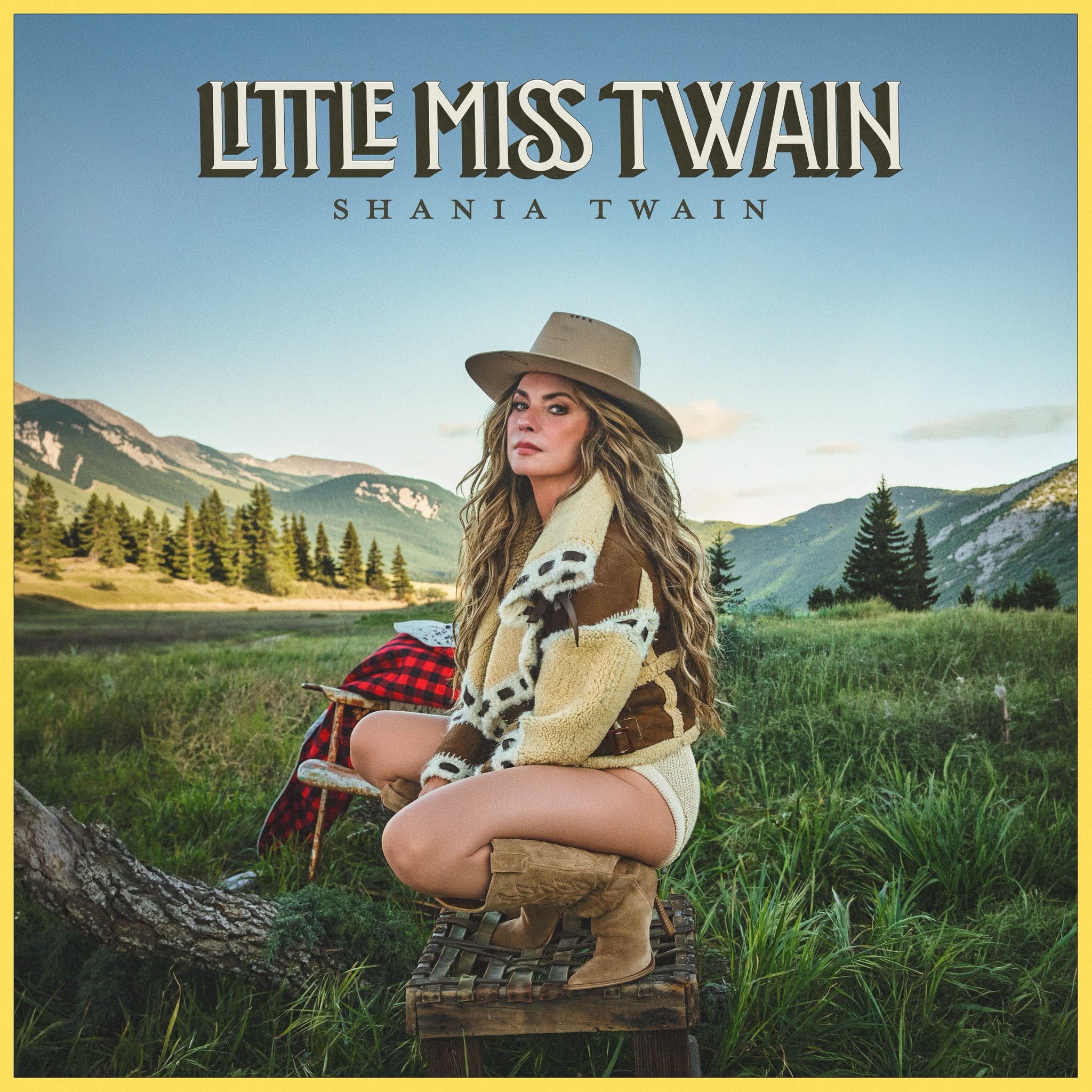
Prime Cuts: Little Miss Twain (feat. Tanya Tucker), I'd Be Loving Me, Take It to the River (feat. The War and Treaty & Ronnie Wood)
Overall Grade: 3.75/5
Shania Twain has spent the better part of the last decade proving she could still command a stage, but Little Miss Twain feels like the first time in years she's stopped trying to convince anyone of anything. Instead of chasing another Come On Over, she turns inward, revisiting the people, places, heartbreaks, and ambitions that shaped one of country music's most unlikely superstars. The album is billed as her most autobiographical yet, drawing heavily from her childhood in Timmins, Ontario, and her journey to Nashville.
That doesn't mean every experiment lands. At times, Little Miss Twain struggles to balance nostalgia with fresh ideas, occasionally drifting into pleasant-but-forgettable territory. But when Twain leans into storytelling rather than radio-friendly hooks, she reminds listeners why she became one of country music's defining voices in the first place.
The emotional centerpiece is the title track, "Little Miss Twain," featuring Tanya Tucker. Rather than simply celebrating her legacy, Twain recounts childhood memories with remarkable tenderness, recalling being "smaller than my guitar" as her mother encouraged impossible dreams. Tucker's appearance transforms the song from autobiography into full-circle testimony-the artist Twain once idolized now sings beside her. It's one of those collaborations that actually means something instead of existing for streaming numbers. Elsewhere, "I'd Be Loving Me" is the emotional gut punch. Twain has always excelled at breakup anthems, but this one trades sass for quiet devastation. Her weathered voice becomes an asset rather than something hidden behind production, giving every lyric about betrayal additional weight. Instead of sounding bitter, she sounds wiser, and that's far more compelling. The biggest surprise may be "Take It to the River." Featuring The War and Treaty alongside Ronnie Wood, the song slips into gospel-soaked Americana without feeling forced. The swelling harmonies and communal spirit elevate what could have been another love song into something approaching redemption. It's one of the few moments where Twain genuinely stretches beyond her established formula. Not every song reaches those heights. "Problematic" never quite finds its pulse, while "Down the Middle" feels trapped by an overly repetitive chorus despite its traditional country charm. "Scary Little Thing" is catchy enough but ultimately blends into the album's middle section rather than demanding repeat listens. Even upbeat numbers like "That's the Money" and "Right Time" deliver positivity without leaving much of a lasting impression. Fortunately, Twain peppers the record with enough highlights to maintain momentum. "Dirty Rosie" is pure fun-a playful, guitar-driven romp with enough swagger to become a concert favorite. "Faded Blue Jeans," her unexpected duet with Josh Homme, successfully merges country and rock textures without sounding gimmicky, while "Northern Town" and "Rockstars" paint vivid portraits of her Canadian upbringing, proving that Twain's greatest strength remains her ability to make personal memories feel universal. Those autobiographical songs ultimately become the glue that holds the project together. Perhaps the album's greatest achievement is that it doesn't try to recreate the blockbuster sheen of the '90s. Instead, Twain embraces the grain in her voice, the scars in her stories, and the perspective that only comes with six decades of living. Some listeners hoping for another parade of crossover smashes may be disappointed. Those willing to hear Shania as a storyteller rather than simply a hitmaker will discover one of her most sincere releases.


