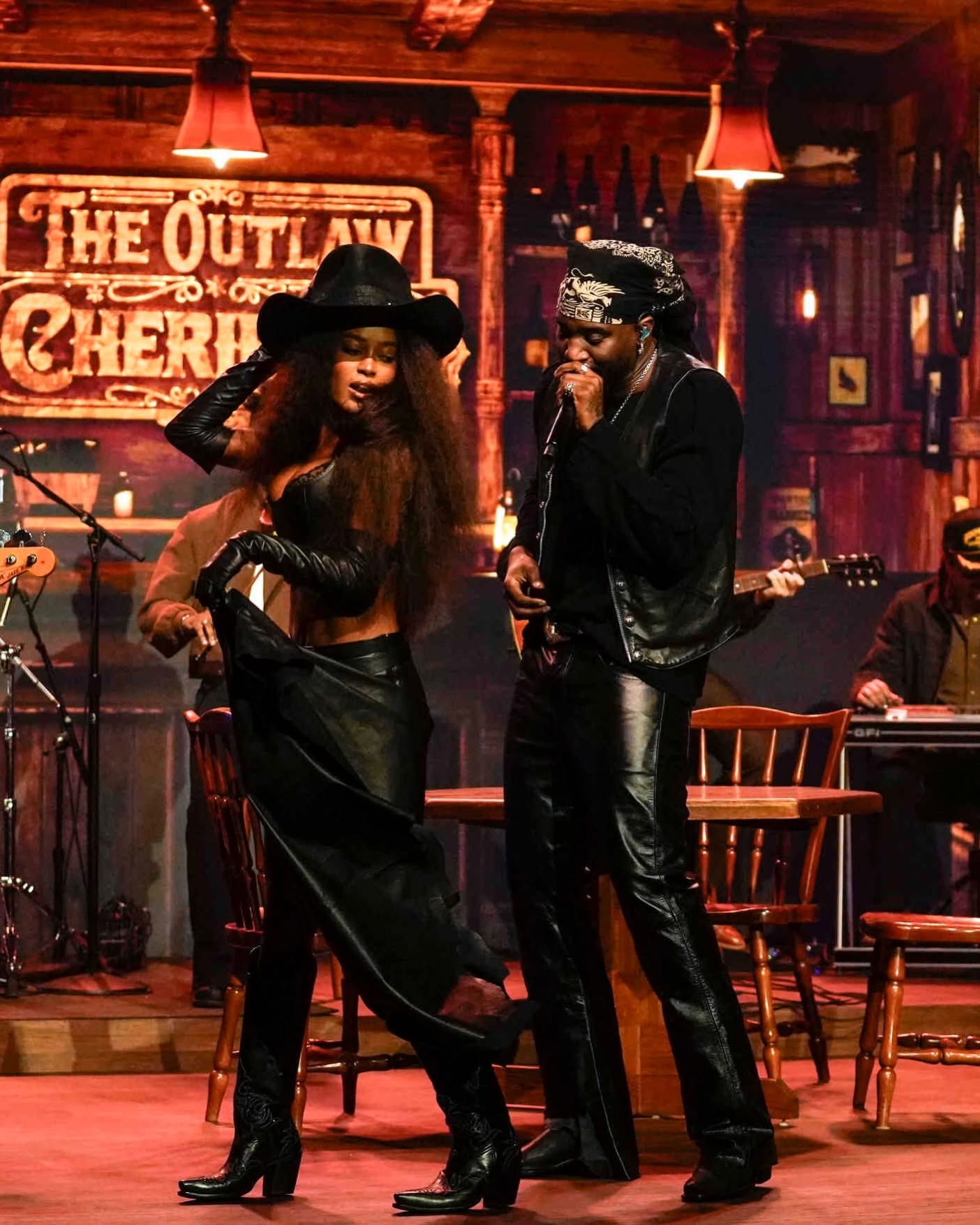
Prime Cuts: "Bullets & Blades" (feat. Kehlani), "Burn It Down" (feat. Leon Bridges), "Sweet Revenge"
Overall Grade: 4/5
After the earth-shaking success of A Bar Song (Tipsy) and the crossover phenomenon of Where I've Been, Isn't Where I'm Going, Shaboozey faced an unenviable challenge: proving he was more than the artist behind one of the biggest country hits of the decade. Instead of chasing another viral anthem, he delivers something far riskier-a sprawling Western concept album that is cinematic, ambitious, and remarkably cohesive.
The Outlaw Cherie Lee & Other Western Tales tells the revenge-driven story of Cherie Lee through songs, spoken-word interludes, and richly textured production. Featuring narration from Jamie Foxx, Sam Elliott, and Teyana Taylor, the album unfolds like a film soundtrack, complete with dusty saloons, dramatic shootouts, and moral reckonings. While concept albums often collapse under the weight of their own storytelling, Shaboozey keeps the narrative engaging without sacrificing memorable songs.
The emotional centerpiece arrives with "Bullets & Blades," a sweeping duet with Kehlani that pairs aching strings with two beautifully contrasting voices. Rather than relying on spectacle, the song explores how emotional wounds linger long after the violence ends. Kehlani's smooth vocal performance softens Shaboozey's rugged delivery, creating one of the album's most affecting moments.
"Burn It Down" continues that momentum. Leon Bridges proves an inspired collaborator, bringing warmth and soul to a track fueled by revenge and heartbreak. The fiddle-driven arrangement never feels gimmicky, and the chemistry between the two singers transforms what could have been a standard outlaw anthem into one of the record's most compelling performances. Their voices complement each other effortlessly, making this collaboration feel both natural and unforgettable.
Then there's "Sweet Revenge," perhaps the album's strongest solo statement. Built around haunting fiddle lines and gradually expanding instrumentation, it perfectly captures the obsessive pursuit of justice that defines Cherie Lee's story. Shaboozey leans fully into traditional country storytelling here, proving he understands the genre's narrative heritage while still sounding unmistakably like himself.
Not every experiment lands equally well. The numerous interludes enhance the cinematic experience during a full-album listen but have limited replay value on their own. Likewise, "High Noon" featuring Gunna feels slightly disconnected from the album's otherwise immersive Western atmosphere, even if the collaboration is enjoyable. At twenty tracks, the album occasionally lingers longer than necessary, and a tighter edit might have increased its impact.
Still, Shaboozey wisely avoids abandoning the crossover instincts that made him a star. "Cowgirl" and "Born to Die" offer infectious, radio-ready moments that recall the easy charm of A Bar Song (Tipsy) without sounding like pale imitations. Meanwhile, traditional country flourishes-fingerpicked guitars, fiddles, harmonicas, and even Orville Peck's stirring rendition of "Streets of Laredo"-demonstrate genuine respect for the genre's roots.
What ultimately makes The Outlaw Cherie Lee & Other Western Tales succeed is its confidence. Shaboozey isn't chasing another viral hit; he's building a world. The album confidently bridges country, Americana, R&B, and hip-hop without sounding like a calculated crossover exercise. Instead, it feels like the work of an artist determined to establish a lasting identity rather than simply extend a commercial moment.
Few artists follow a career-defining smash with a concept album this bold. Even fewer pull it off. The Outlaw Cherie Lee & Other Western Tales doesn't just confirm that Shaboozey belongs in country music-it suggests he's helping expand what modern country storytelling can become.


