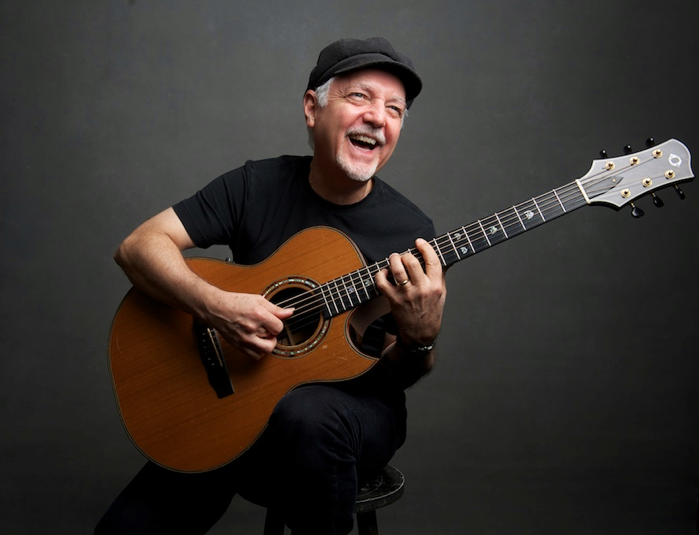
Phil Keaggy could have chased mainstream rock stardom. Instead, the legendary guitarist chose Jesus, Christian music and being home with his children - and more than five decades later, he says he wouldn't change the decision.
The 75-year-old Christian music pioneer opened up about the road not taken during a recent conversation with author and filmmaker Mark Joseph, admitting that committing himself to the emerging Christian music movement may have limited just how famous he could have become.
When Joseph suggested Keaggy had "paid a price" commercially for that choice, the guitarist didn't exactly disagree.
"I think so," Keaggy admitted.
That's quite a confession from a musician whose guitar playing has been revered for decades and whose career includes multiple Dove Awards, a Grammy nomination and a reputation as one of Christian music's most influential instrumentalists.
But Keaggy says something changed inside him during his early years with Glass Harp: fame stopped being the prize.
He Was Told Staying In Rock Could Reach More People For Jesus
Perhaps the most fascinating part of Keaggy's story is that someone actually tried to convince him that remaining in the mainstream rock world could be the more effective Christian choice.
Keaggy recalled receiving a phone call from singer Turley Richards while Glass Harp was recording its third studio album at New York's legendary Electric Lady Studios.
Richards urged him to remain with the band, arguing that Keaggy might ultimately "reach more people for Jesus" by staying with Glass Harp.
It was an intriguing proposition: don't retreat into a Christian music bubble; remain in mainstream rock and take your faith with you.
Keaggy understood the argument. He simply couldn't live it.
The demands of the road were wearing on him, and the ambition that once made rock stardom attractive was disappearing.
"I wasn't after fame anymore and I didn't care," Keaggy recalled.
Instead, he threw himself into what became known as the Jesus music movement, alongside pioneering Christian artists including Larry Norman, Randy Stonehill, Honeytree and Love Song.
And according to Keaggy, those musicians weren't sitting around plotting how to become Christian celebrities.
They wanted to make music about Jesus.
"There's so many great writers and people with good big hearts" who weren't searching for fame, Keaggy recalled. They simply wanted to express "the gospel through that music."
"And I was one of those kind of people," he added.
Then His Children Changed Everything
But Keaggy's willingness to sacrifice career opportunities didn't stop with Christian music.
Years later, fatherhood forced another decision.
In 1987, Keaggy left his wife and infant son Ian at home while embarking on a five-week tour through England, Scotland and Wales.
Ian was only four months old.
When Keaggy returned, he'd apparently had enough.
"And I said after that tour, I said that's it. No more of that," he recalled.
It was another choice that didn't exactly follow the traditional rock-star playbook. Touring is where musicians build audiences, sell records and expand careers. Keaggy was voluntarily limiting that opportunity because he didn't want to miss his children's lives.
He remembered seeing other musicians spend years away from their families and wondering what that absence was costing them.
Keaggy decided he wasn't willing to find out.
The Career He Could Have Had
That inevitably leaves one tantalizing question hanging over Keaggy's story:
How famous could Phil Keaggy have become?
His abilities have never been the issue. Keaggy has long been celebrated among guitarists, while stories about famous musicians supposedly praising his playing have circulated for decades - sometimes becoming exaggerated into rock folklore.
What is undeniable is that Keaggy had opportunities to pursue a much more conventional rock career.
Instead, he became one of the defining musicians of contemporary Christian music.
That choice may have reduced his mainstream visibility, but it also gave Christian music something enormously valuable: a serious guitarist demonstrating that explicitly Christian music did not have to mean second-rate musicianship.
More than 50 years later, Keaggy doesn't sound like a man haunted by what might have been.
Quite the opposite.
"I've been, I think, richly blessed," he said, "and not necessarily with fame, but with the assurance that I've been doing the right thing all these years and I made the right choices."
Even more remarkably, there appears to be little bitterness surrounding the decision that changed everything. Keaggy says he remains close friends with his former Glass Harp bandmates.
Fame Wasn't The Measure
Keaggy's reflections arrive at an interesting moment for Christian music, when the boundaries between mainstream and faith-based music have become increasingly porous and artists regularly wrestle with whether being labeled "Christian" helps or restricts their careers.
Keaggy faced essentially the same dilemma half a century ago.
He made his choice.
And his definition of success became very different from record sales, chart positions or celebrity.
Faith mattered. Family mattered. Being present mattered.
Now, after more than five decades of music, Keaggy says he's going to continue playing for as long as he possibly can.
There may always be speculation about the mainstream career Phil Keaggy could have enjoyed had he made different choices.
Keaggy himself doesn't appear particularly interested in that alternate history.
He chose faith over greater fame and family over endless touring. At 75, he says he made the right choices - and has "no regrets."


