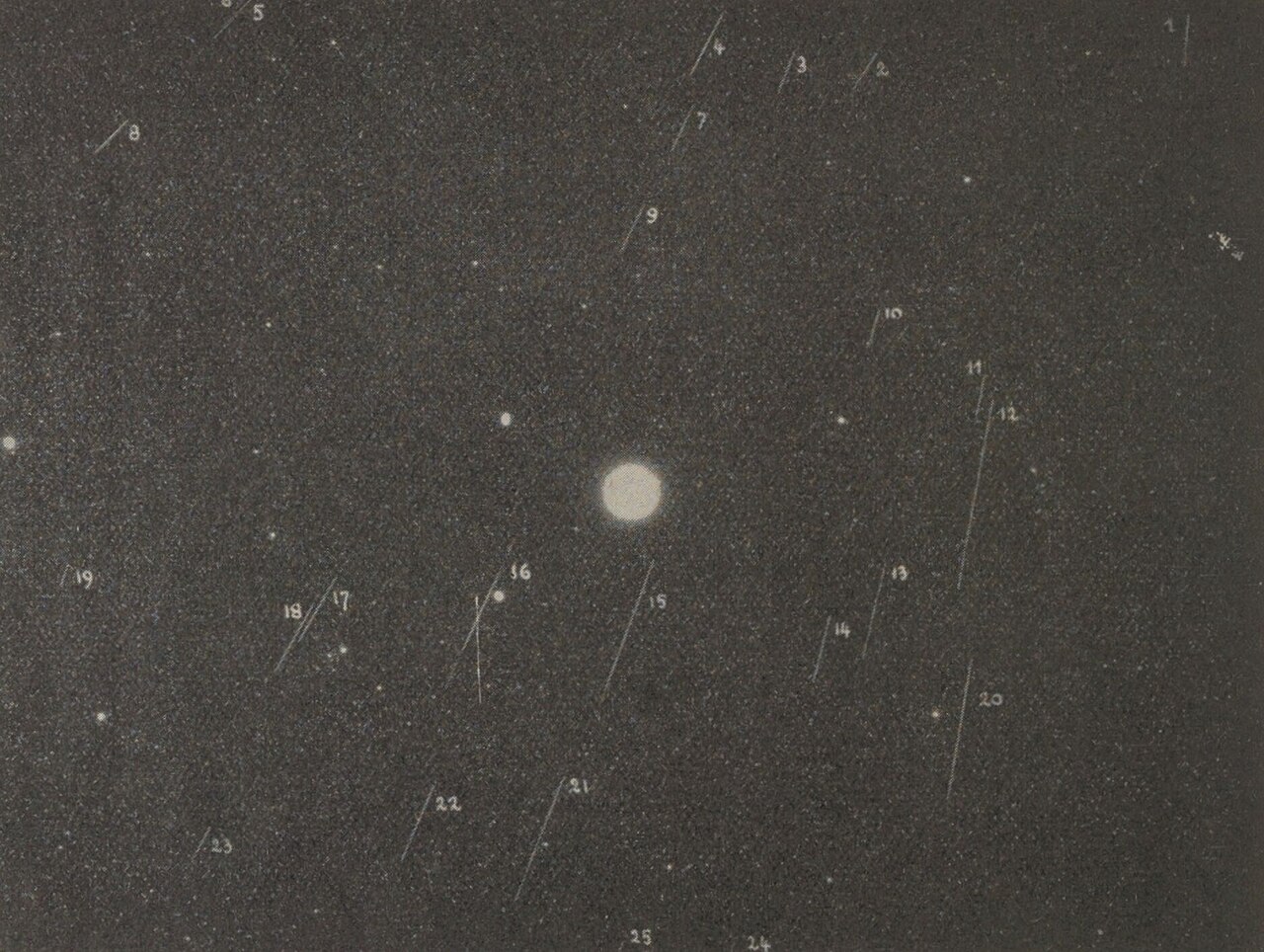
The Draconid meteor shower reaches its peak tonight, Thursday, Oct. 8, and the sky is about as dark as it can be for this show.
What time is the peak? The Draconids are expected to hit maximum activity around 9 p.m. EDT on Oct. 8, or 0100 GMT on Oct. 9. That works out to about 8 p.m. Central, 7 p.m. Mountain, and 6 p.m. Pacific. West Coast viewers should wait until it's fully dark, since 6 p.m. is still before nightfall. In New York, full darkness arrives at 7:57 p.m. EDT.
Why is this year special? The Moon is almost completely out of the picture. It's a 3 percent crescent that sets at 5:19 p.m. EDT, long before dark, and the new moon arrives on Saturday, Oct. 10. Even fainter meteors should be easier to spot.
Why watch in the evening? Most showers peak after midnight, but the Draconids are an oddity. Their radiant, near the constellation Draco, stands highest in the sky as darkness falls. The prime window is between 8 p.m. local time and midnight.
What will you see? Expect a modest show of about five to ten shooting stars per hour. No telescope or binoculars are needed. Find a dark spot, give your eyes about 20 minutes to adjust, and look toward the northwest, though meteors can appear.
What about the weather? Most of the country has favorable conditions, though parts of the Southeast, mid-Atlantic, and Northern Tier face cloud cover. Check your local forecast before heading out.
Where do the meteors come from? They're bits of debris left by Comet 21P/Giacobini-Zinner, which returns to the inner solar system every 6.6 years. The Draconids have been modest in recent years, but in 1933 and 1946 they produced two of the most active meteor displays of the 20th century.
If clouds spoil tonight, the shower stays active through Oct. 10, and the Orionids peak Oct. 21 to 22. As we reported earlier this week, here's when to watch the Draconids.
Tonight is a good reason to step outside, put the phone down, and look up.
Related article: Meteor Shower This Week: When to Watch the Draconids Peak Thursday Night


