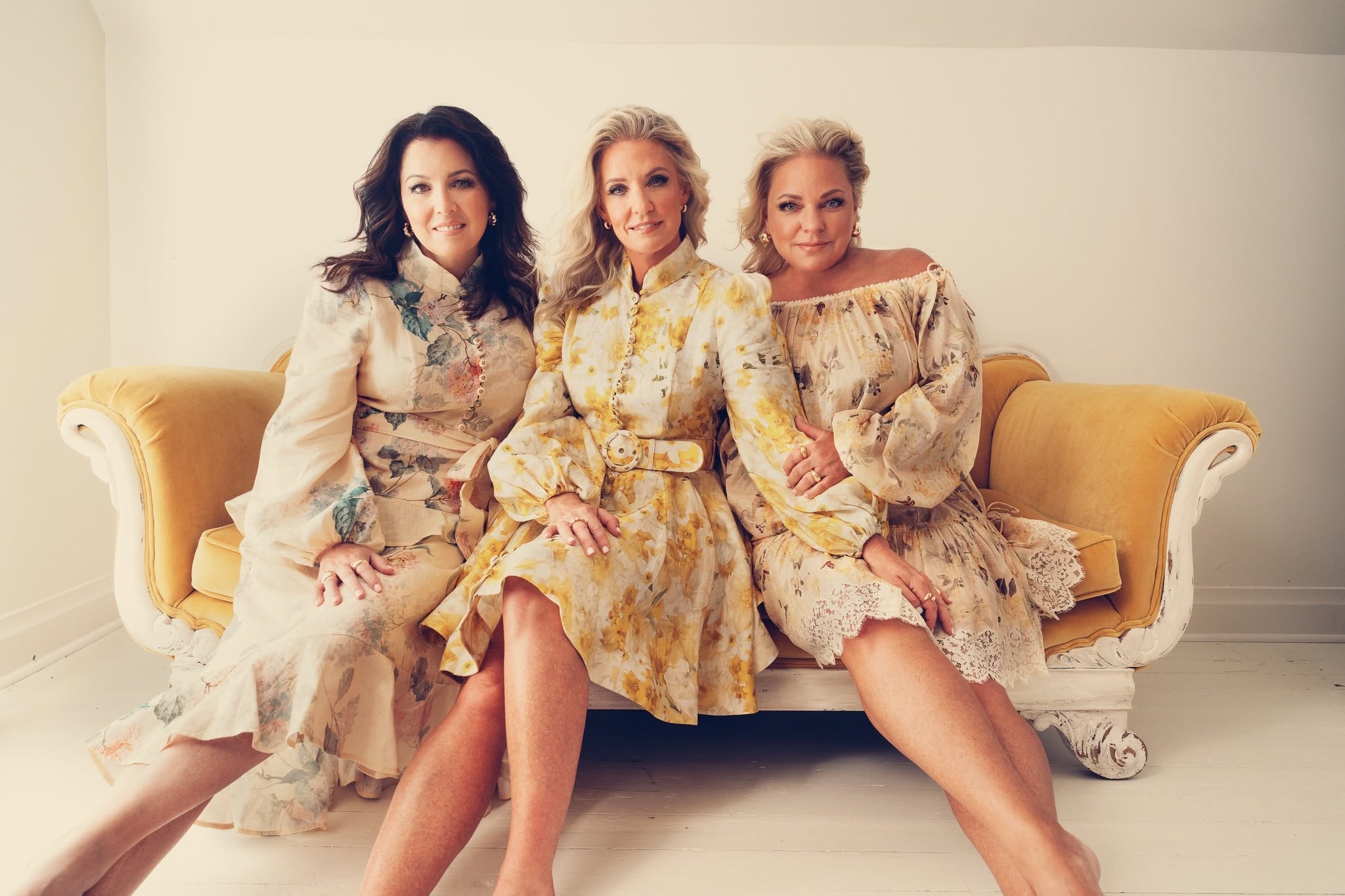
Ask Point of Grace to talk about Christian music's greatest female voices, and the names come easily. Ask them to choose just four, and suddenly the conversation gets complicated.
In the October 19 episode of 1 Degree Of Andy, Shelley, Denise, and Leigh join longtime friend Andy Chrisman for a conversation packed with musical heroes, unexpected influences, and backstage memories. What begins as a celebration of the women who shaped their voices eventually becomes a revealing debate: How do you choose between an industry icon, a personal inspiration, and an artist you believe deserved far more attention?
Chrisman initially tries to avoid that predicament altogether. Although previous episodes explored a "Mount Rushmore" of male CCM vocalists, he hesitates to apply the same exercise to women, joking, "I don't want to hurt anybody's feelings." By the end, however, even he cannot resist-and keeping the monument to four faces proves nearly impossible.
Amy Grant, Sandi Patty, and CeCe Winans emerge as recurring choices. Yet the most intriguing moments come when the conversation moves beyond the obvious names and into the records, performances, and personal encounters that made these artists matter.
For one member, the journey begins somewhere listeners might not expect: Donna Summer. Memories of singing along to On the Radio lead into an account of receiving Amy Grant's Age to Age in an Easter basket-a gift that opened up the possibility of singing contemporary Christian music herself. Elsewhere, Olivia Newton-John, Evie, Southern Gospel favorites, and Babbie Mason enter the conversation, revealing how widely the group's musical roots spread.
Patty receives particularly enthusiastic praise, with Chrisman recalling a soundcheck that became a lasting lesson in professionalism. Watching her give everything before the actual performance taught him that the audience's size should never determine an artist's effort. Point of Grace's recollections add another dimension: alongside the vocal power was a performer whose warmth and ease made communicating from the stage look natural.
Then there is Cindy Morgan, whose name prompts some of the episode's strongest admiration. The discussion celebrates her singing, songwriting, production, and continued artistic growth, while also raising a pointed question about recognition.
"She was never as big as she should have been, in my opinion," one member says.
Chrisman offers a candid illustration of Morgan's abilities, remembering a songwriting session with her and Shawn Shankel. He arrived with roughly 20 song ideas, only to find himself running out of options as the pair asked what else he had. When they eventually returned to one idea and Morgan began reshaping its lyrics, his disappointment gave way to admiration for what he was witnessing.
The episode also opens a window onto Point of Grace's own beginnings. The women recall finding songs they could build harmonies around, drawing inspiration from Christian groups and pop acts alike. Their approach was practical and instinctive: hear a song, imagine the parts, and make it work together.
That history makes their discussion of today's music landscape especially interesting. They wonder why female vocal groups seem less visible and consider whether social media's focus on individuals plays a part. Looking back at their own early years, they also admit that constant online scrutiny would have been daunting.
Naturally, the conversation refuses to stay serious for long. A cassette malfunction leaves an early performance stranded, while memories of freezing festival conditions and hurried post-concert packing reveal the less glamorous side of life on the road. These are the stories that still make longtime friends laugh-and that rarely appear in an artist biography.
Beneath the teasing is a shared conviction that musical influence reaches beyond technique. The voices they remember helped them imagine how they could sing, communicate their faith, and find their own place in Christian music.
By the time Chrisman expands his own selection beyond four, the difficulty feels entirely understandable. Choosing the greatest voices means deciding what greatness actually sounds like-and Point of Grace has plenty of reasons to keep the conversation going.


