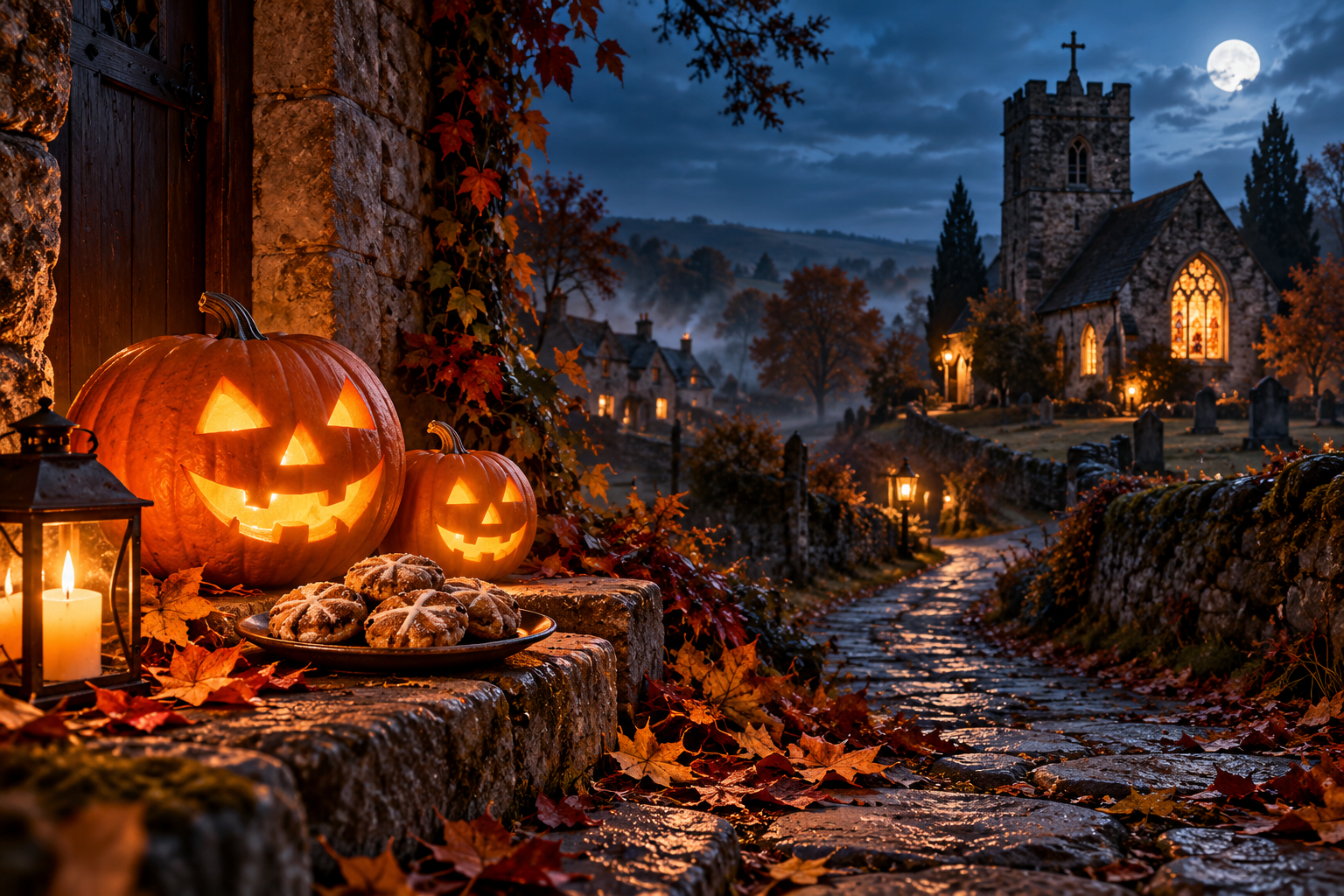
A knock at the door. A small cake offered. A promise to remember someone who had died.
Centuries before Halloween became a parade of plastic skeletons and overflowing candy buckets, a seasonal doorstep custom brought together two deeply human needs: food for the hungry and remembrance for the dead. Its name was "souling," and its Christian history offers an unexpected angle on the holiday's origins.
In medieval England, poorer people visited their wealthier neighbours around Halloween and All Souls' Day, asking for charity. Householders gave them small cakes known as "soul cakes." In return, the recipients offered prayers for the household's deceased relatives and friends. English Heritage identifies this practice as a probable precursor of modern trick-or-treating.
Behind that simple exchange stood a particular Christian understanding of death. Medieval Catholics believed that souls undergoing purification in purgatory could benefit from the prayers of the living. Giving food and offering prayer became connected acts of charity: one household shared its provisions, while its visitors remembered people that household had lost.
The treat carried the weight of a family's grief.
Even Halloween's name preserves a church connection. November 1 was All Hallows' Day-All Saints' Day-and October 31 was its eve. "All Hallows' Eve" eventually became "Halloween." All Souls' Day followed on November 2, creating a cluster of observances concerned with holiness, death and remembrance.
The Christian calendar behind these observances developed over centuries. Vatican News traces the celebration of All Saints to the fourth-century Eastern Church. Different regions observed it on different dates; November 1 was established in England and Ireland by the eighth century and adopted in Rome during the ninth.
Souling's story also contains a surprising survival. During the English Reformation, Protestant reformers rejected prayers for the dead, and All Souls' Day disappeared from the Church of England's calendar. Yet the cake-giving custom persisted in some communities. The seventeenth-century antiquary John Aubrey recorded soul cakes in Shropshire and neighbouring counties, including among people who were not Catholic. The custom outlasted agreement about its theology.
This is one strand in Halloween's complicated history. Costuming, seasonal mischief and other traditions also contributed to the celebrations familiar today; soul cakes cannot explain every pumpkin or disguise. English Heritage connects modern trick-or-treating with a combination of older practices, including souling and "guising," or dressing up.
For Christian readers, however, the doorstep exchange offers a compelling possibility for the present: let a season preoccupied with death become an occasion to care for people living with loss.
A church might remember bereaved families. A household might share food with a struggling neighbour. Parents might tell children about a faithful grandparent whose name deserves to be spoken again.
The little soul cake leaves us with an unexpectedly searching image: a household opening its door, sharing what it has, and asking someone to remember its dead.


