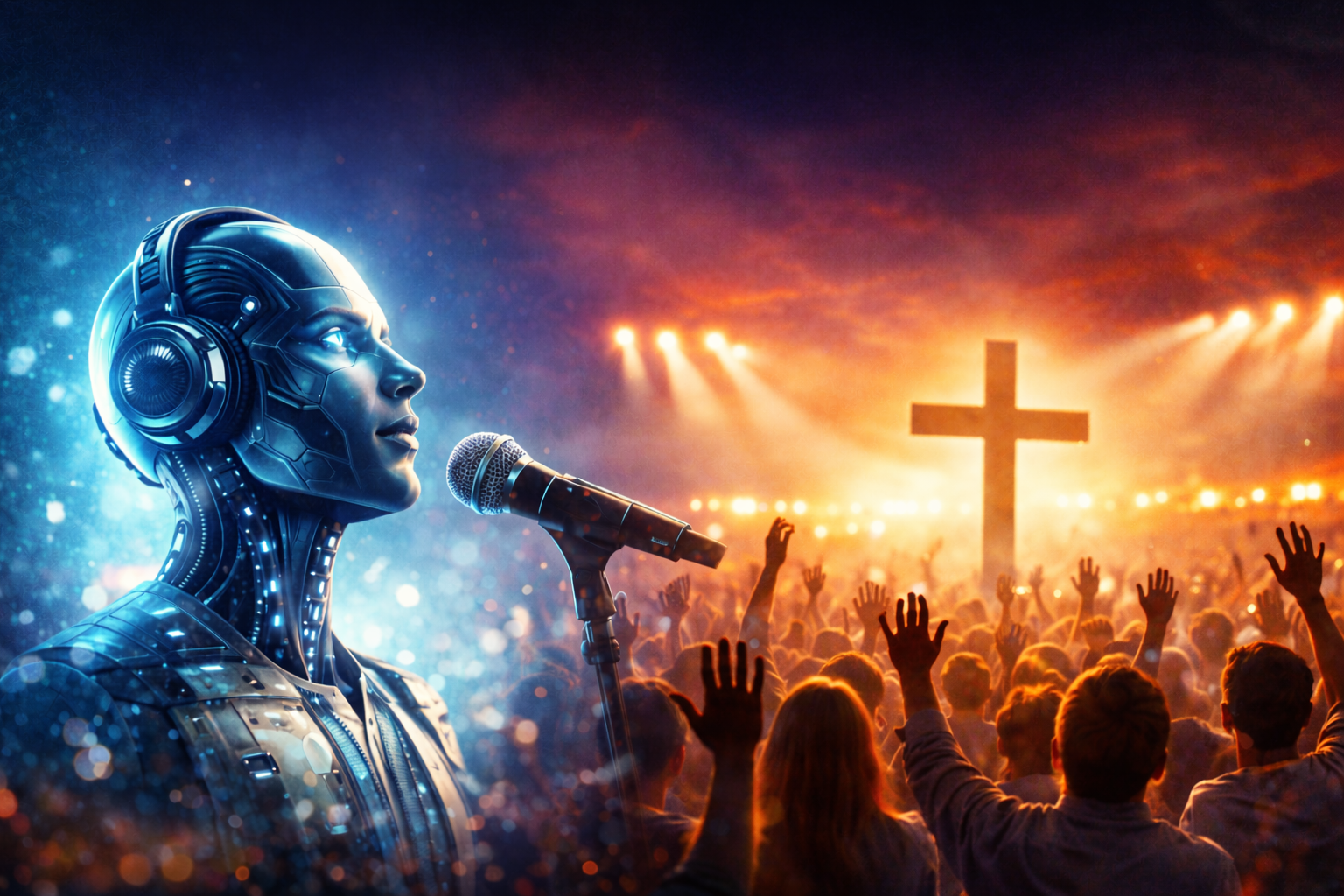
When an AI music artist topped the Christian charts in late 2025, it marked a moment few anticipated. Artificial intelligence was no longer assisting production behind the scenes it had become the voice, face, and brand of a No. 1 Christian project.
Now in 2026, the question isn't whether AI is coming. It's already here.
Solomon Ray, a fully AI-generated Southern soul singer, gained more than a million streams and climbed to the top of the iTunes Christian & Gospel chart. His voice, lyrics, and persona were created using artificial intelligence tools directed by a human creator.
That development raises important questions for believers.
If worship music has traditionally flowed from testimony, from personal encounter, struggle, redemption, gratitude - what happens when the "artist" has never experienced faith? Can lyrics about surrender carry the same weight if they are generated rather than lived?
At the same time, Christians have never rejected technology outright. The printing press once transformed Scripture distribution. Radio expanded evangelism. Streaming reshaped church gatherings. If those tools could be used for ministry, is AI simply another instrument in the toolbox?
Or is this different?
Does worship require a worshiper?
Is the message enough or does the messenger matter?
If a song points someone toward Christ, does its origin change its impact?
Are we consuming convenience over authenticity?
How will AI shape the next generation's understanding of Christian artistry?
In 2026, artificial intelligence is woven into everyday life. Churches use AI for graphics, research, and communication. Artists use it for production assistance. The line between tool and creator is becoming increasingly blurred.
Perhaps the deeper issue is discernment. Not fear. Not blind embrace. But careful evaluation.
As AI-generated content becomes harder to distinguish from human creation, believers may need to think more intentionally about what forms their hearts, shapes their theology, and influences their worship.
The rise of AI music artists doesn't force one answer but it does force better questions.
And maybe that's where the conversation truly begins.


