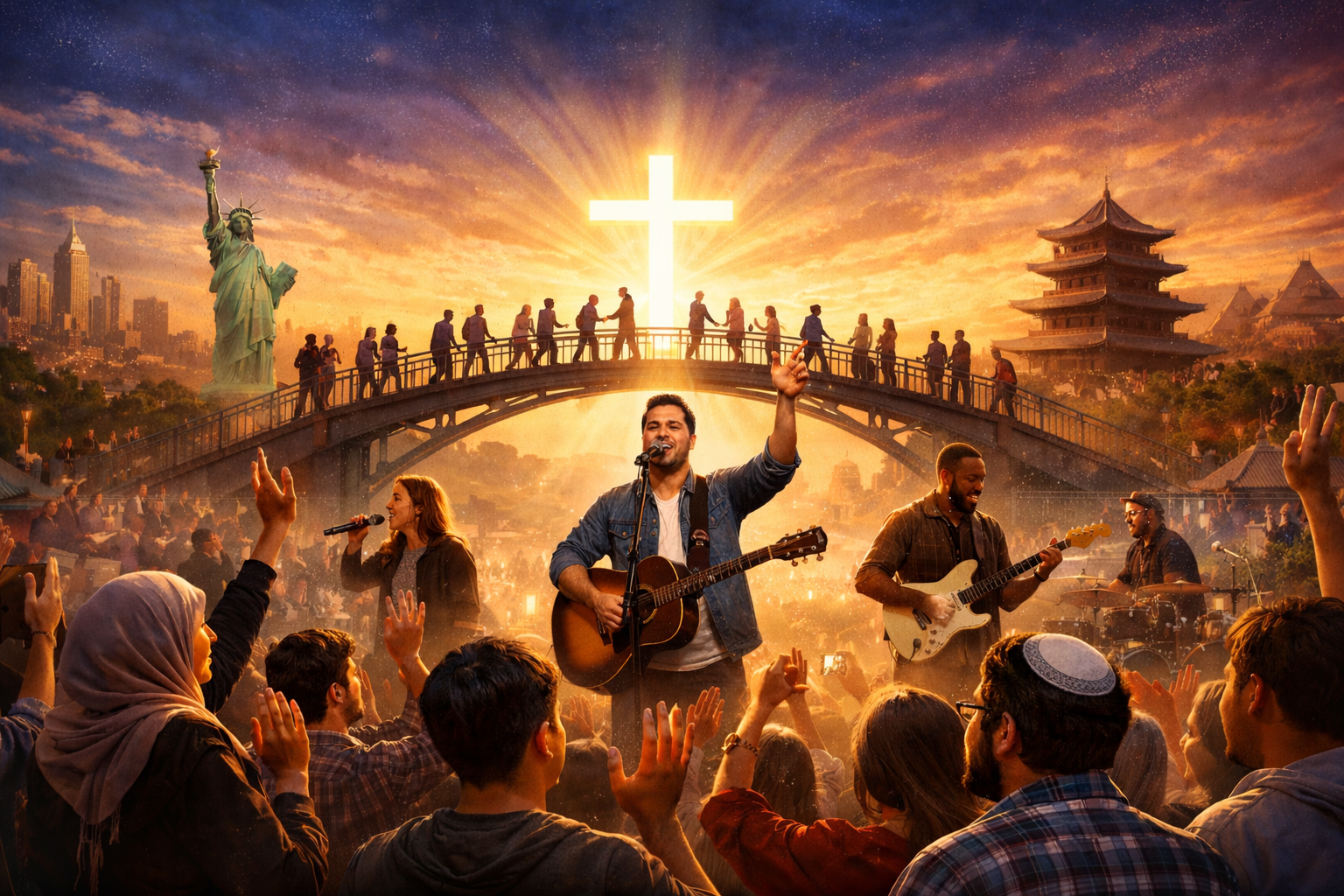
For years, Christian music was often seen as a separate lane - its own charts, its own radio stations, its own audiences.
But in 2026, something interesting is happening.
Christian artists are collaborating across genres. Worship songs are appearing on mainstream playlists. Gospel vocalists are sharing stages with R&B and soul performers. Even secular festivals are inviting faith-based acts into their lineups.
So the question is worth asking:
Is Christian music becoming a new cultural bridge?
Crossing Genre Lines Without Losing Identity
One of the biggest shifts this year is how fluid Christian music has become.
Artists are blending:
-
Worship and pop
-
Gospel and R&B
-
Christian hip-hop and mainstream rap
-
Indie alternative with Scripture-rooted lyrics
What once felt compartmentalized now feels connected.
Yet what's fascinating is that many artists are not watering down their faith to cross over. Instead, they're staying lyrically bold while expanding musically.
The name of Jesus is still being sung.
Scripture is still being quoted.
Testimony is still being shared.
But the sound is wider.
Streaming Is Breaking Down Walls
In the past, radio largely determined who heard what.
Today, streaming algorithms don't recognize denominational lines. A worship song can sit right next to a pop anthem on someone's personalized playlist.
That proximity is changing exposure.
Listeners who may never step inside a church are encountering faith-based lyrics organically - not because they were seeking worship music, but because the song resonated.
And once a song resonates, curiosity follows.
Collaboration Over Competition
Another defining mark of 2026? Collaboration.
Christian artists are increasingly working together across stylistic differences rather than competing for the same lane.
Worship leaders are featuring gospel choirs.
Hip-hop artists are sampling hymn melodies.
Pop-influenced singers are co-writing with church-based worship teams.
This spirit of collaboration reflects something deeper than strategy - it reflects unity.
And unity is magnetic.
A Generation Looking for Meaning
Younger listeners today are spiritually curious, even if they are institutionally skeptical.
They may hesitate at labels - but they respond to authenticity.
Christian music that speaks honestly about doubt, redemption, anxiety, grace, and hope resonates in a generation navigating uncertainty.
The cultural moment is hungry for meaning.
Christian music carries meaning.
That intersection matters.
The Risk and the Responsibility
With greater visibility comes responsibility.
If Christian music becomes more culturally central, the pressure to compromise could increase.
Artists must continually ask:
-
Are we influencing culture - or being shaped by it?
-
Are we remaining rooted in truth while engaging broadly?
-
Are we building bridges that lead somewhere meaningful?
A bridge only matters if it leads to something solid.
So What's Happening in 2026?
Christian music is no longer just operating within church walls.
It's entering conversations.
It's appearing in unexpected spaces.
It's resonating beyond its traditional base.
And perhaps that's not accidental.
Historically, music has often been the first bridge between belief and culture.
Maybe in 2026, Christian music is stepping into that role again - not as background noise, but as a voice carrying hope into places that might not otherwise hear it.
The question isn't whether Christian music is growing.
The real question is:
What will we do with the influence?


