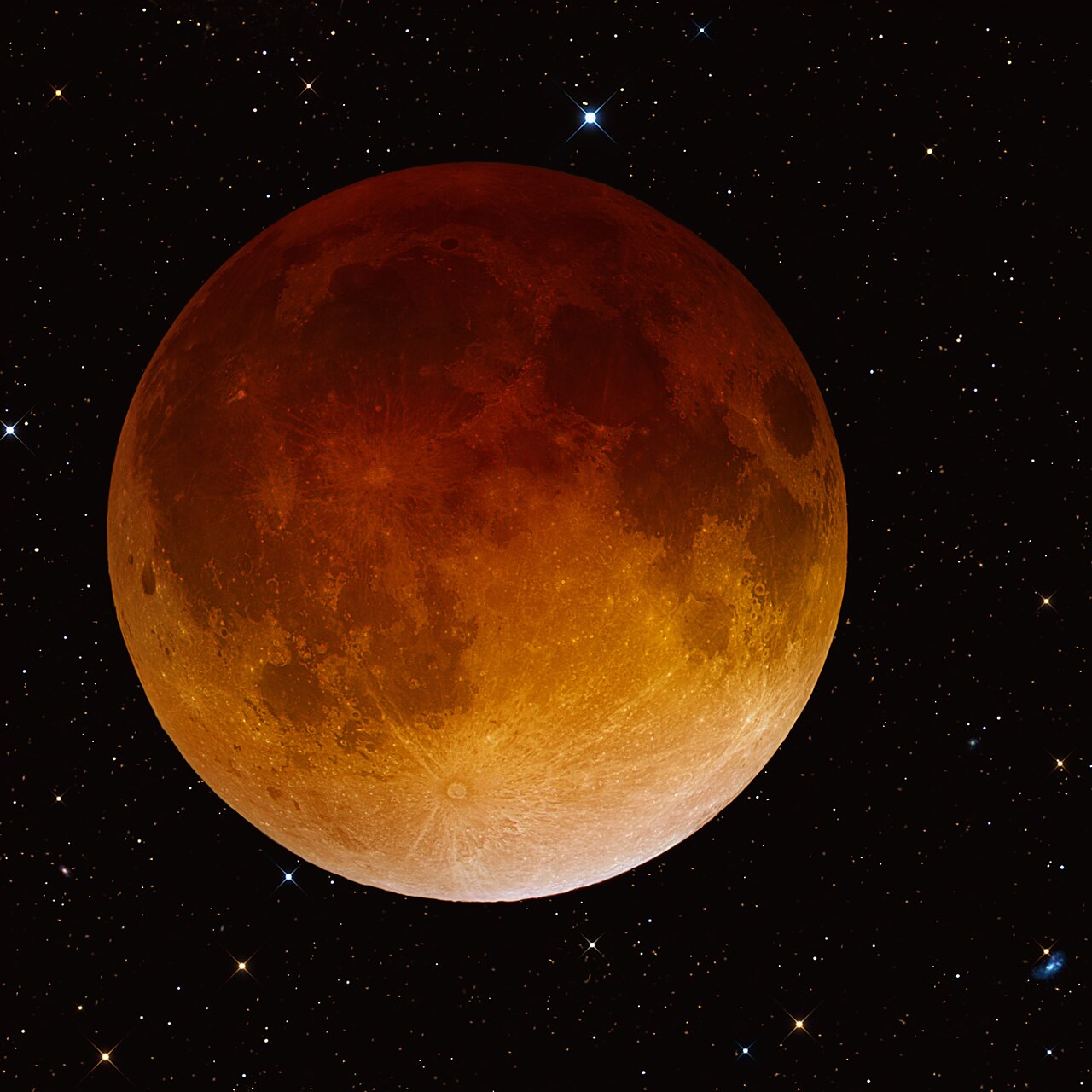
Early on March 3, 2026, skywatchers across parts of the world looked up to witness a striking "blood moon" total lunar eclipse, where the moon appeared deep red as Earth's shadow completely covered it. But if you happened to miss the celestial spectacle, the next chance to see a similar event may be much farther away than expected.
According to NASA, the next total lunar eclipse - often called a blood moon - will not occur until December 31, 2028, meaning skywatchers could wait nearly three years before witnessing the phenomenon again.
For many astronomy enthusiasts, the March 2026 eclipse marked the last opportunity for quite some time to see the moon dramatically change color during a total eclipse.
Why the Moon Turns Red During a Blood Moon
A total lunar eclipse happens when the Earth moves directly between the sun and the moon, casting a shadow that slowly covers the lunar surface. As the eclipse reaches its peak, the moon often takes on a reddish or copper color.
This happens because sunlight passing through Earth's atmosphere is filtered and bent toward the moon. The atmosphere scatters shorter blue wavelengths of light and allows more red wavelengths to pass through, creating the glowing red hue often described as a blood moon.
These events can only occur during a full moon, when the sun, Earth, and moon line up closely in space.
The Next Total Lunar Eclipse Arrives in 2028
While eclipses happen several times each year somewhere on Earth, total lunar eclipses visible from specific regions are less common.
NASA reports that the next total lunar eclipse will occur on December 31, 2028, creating a dramatic end-of-year celestial event for many parts of the world.
However, observers in the United States may not get the best view. The 2028 eclipse is expected to be most visible across Europe, Africa, Asia, Australia, and parts of the Pacific Ocean, leaving much of North America without a clear view of the full event.
For American skywatchers, that means the wait for another easily visible blood moon could stretch even longer.
Other Eclipse Events Still Coming
Even though a total blood moon may be years away, several other eclipses will still occur in the meantime.
In 2026, astronomers expect four eclipses:
-
Aug. 12, 2026 - Total Solar Eclipse: The moon will completely block the sun in parts of eastern Greenland, western Iceland, and northern Spain.
-
Aug. 27-28, 2026 - Partial Lunar Eclipse: Part of the moon will pass through Earth's shadow and will be visible from North America, Europe, Africa, and parts of Asia.
While these events will not produce the dramatic red glow of a total lunar eclipse, they still offer impressive sights for skywatchers.
A Rare Moment in the Night Sky
Blood moons have fascinated observers for centuries. Ancient cultures often viewed them as mysterious or symbolic events, while modern science explains them as the result of predictable celestial alignments.
Today, they remain one of the most captivating astronomical events because they transform the familiar full moon into something completely different.
For those who missed the March 2026 eclipse, the good news is that the night sky always offers more to explore - even if the next true blood moon may take a few years to return.


