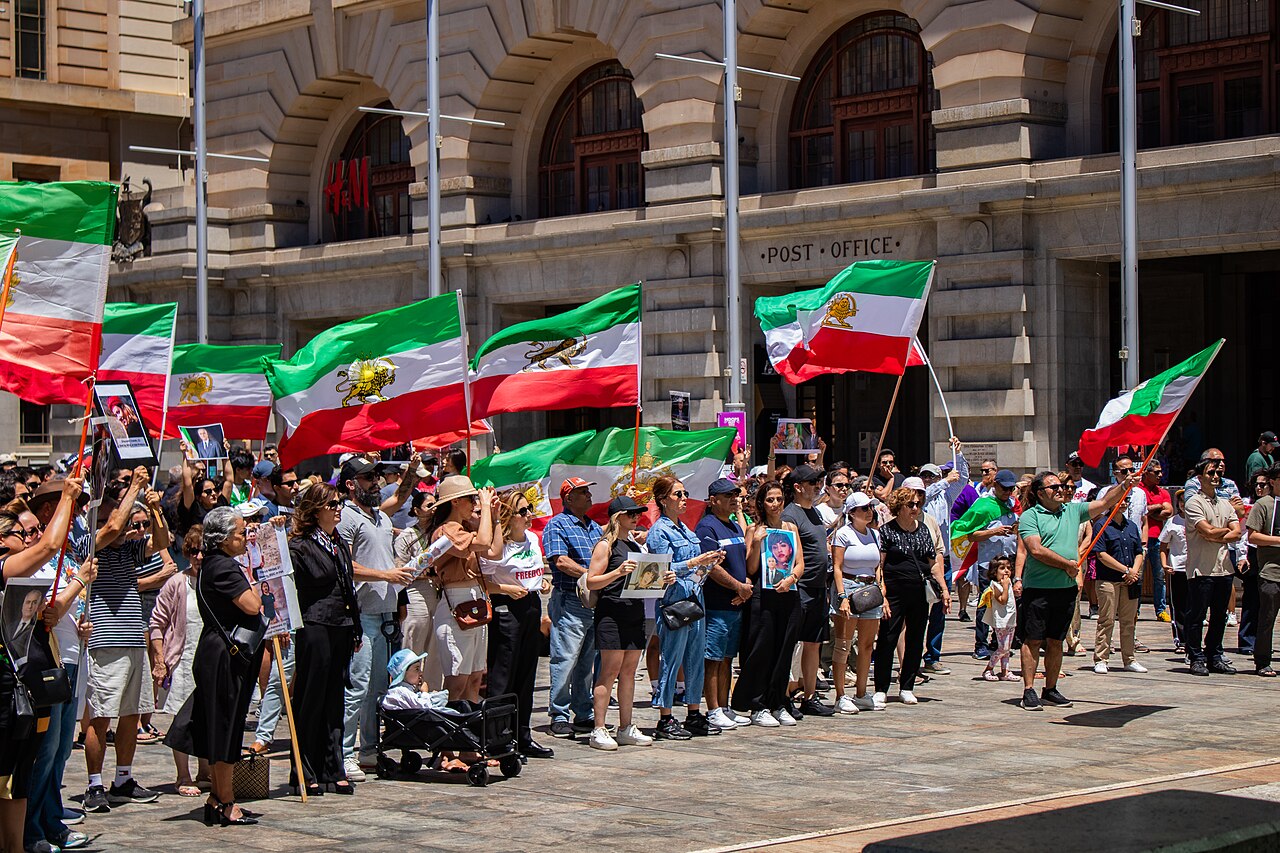
Iran executed 19-year-old wrestling champion Saleh Mohammadi on Thursday morning - and the timing tells a story the regime did not want the world to read carefully.
The hanging took place just eleven days after Mojtaba Khamenei was appointed Iran's new supreme leader, succeeding his father Ayatollah Ali Khamenei, who was killed in U.S.-Israeli airstrikes on February 28. The 56-year-old is described as more hardline and conservative than his father, and analysts say the execution of a teenage athlete - during wartime, despite international warnings - is an early signal of exactly what kind of leadership the world is now dealing with.
Who was Saleh Mohammadi?
Born in 2007, Mohammadi was a member of Iran's national freestyle wrestling team and one of the sport's brightest young talents. He won a bronze medal at the Saitiev International Cup in Krasnoyarsk, Russia in September 2024. Months before his arrest, he posted a video on Instagram documenting his return from injury, writing simply: "And we held on beyond what we ever imagined for ourselves."
He was 19 years old when he was killed.
Why was he executed?
Mohammadi was charged with moharebeh - "enmity against God" - and executed alongside two other men, Mehdi Ghasemi and Saeed Davoudi, who were accused of killing two police officers during protests in the holy city of Qom on January 8. Iranian authorities claimed the men acted on behalf of Israel and the United States - a charge human rights organizations describe as a standard tactic used to justify the execution of protesters and dissidents.
His family, coaches, and teammates insisted he was not present during the violence and had been at his uncle's home at the time. Mohammadi himself denied the charges in court. According to Amnesty International, he was denied adequate legal defense, subjected to coercive interrogation, and forced to sign confessions he later retracted. Rights groups described the trial as closed-door, expedited, and without a meaningful right to appeal.
The U.S. State Department had issued a direct warning in January, calling on Iran to halt Mohammadi's execution and stating the regime was "massacring young people and destroying Iran's future." Iran proceeded anyway.
Who is Mojtaba Khamenei - and why does it matter here?
Mojtaba Khamenei was announced as Iran's new supreme leader on March 9, following the assassination of his father during the 2026 Iran war. He is widely believed to have wielded power behind the scenes for years - from crushing dissent to influencing presidential elections - and has deep ties to the Islamic Revolutionary Guard Corps.
In political ideology, Khamenei is considered among the most hardline of the Iranian principlists, and his ascension to the top position has done nothing to slow the regime's use of execution as a tool of domestic control. Mohammadi's hanging - carried out just days into Mojtaba's leadership - was the first officially announced execution tied to the January protests. It will not likely be the last.
Iranian-American activist Masih Alinejad wrote on X that the regime had done the exact opposite of what it signaled to the world - including to President Trump - regarding protester executions. "After signaling to the world that they would halt executions of protesters, the regime has done the exact opposite," she wrote.
What Olympians are saying
The reaction from the international sports community was immediate and pointed.
Olympic gold medal wrestler Brandon Slay, who has traveled to Iran twice for the sport, called the execution heartbreaking - and grounded his response in faith. "I've seen firsthand the dignity and heart of the Iranian people," Slay said. "My prayers are with Saleh Mohammadi's family and all who are suffering. In the face of such oppression, I hold to the hope of the Gospel of Jesus Christ - the only light that overcomes darkness and the only truth that proclaims justice and mercy will one day prevail."
Three-time gold medal bobsledder Kaillie Humphries called the execution beyond abhorrent. "Murdering a teenager who was specifically targeted because he is a champion athlete and icon of his country is even worse," she said. "I pray there is justice for his family and freedom for their athletes."
Five-time Olympian Katie Uhlaender focused on institutional failure. "These athletes did nothing wrong. They represented their sport and their country, and instead of being protected, they were left exposed to a system that failed to act," she said, calling on the United States to lead on athlete safety through sport diplomacy and international engagement.
Former Iranian world champion wrestler Sardar Pashaei, who had personally advocated for Mohammadi in the weeks before the execution, said he was devastated. "I did everything I could - speaking to the media, raising awareness - but I could not save him," Pashaei said. "The International Olympic Committee and global sports bodies failed."
Human rights activist Nima Far called it a political murder and demanded that Iran be banned from international competition until it halts executions of protesters and releases all detained athletes.
Other athletes are still at risk
Among those currently detained are footballer Mohammad Hossein Hosseini, water polo goalkeeper Ali Pishevarzadeh, marathon runner Niloufar Pas, kickboxing champion Benjamin Naghdi, teenage footballer Abolfazl Dokht, and boxer Mohammad Javad Vafaei Sani. Human rights groups warn that further executions tied to the January protests remain possible.
Mohammadi's death has drawn immediate comparisons to Navid Afkari, the Iranian wrestler executed in 2020 after participating in protests. Both were athletes. Both were young. Both were killed despite international outcry. The pattern is not a coincidence - it is a policy.
For those in the faith community watching this story, Brandon Slay's words carry particular weight. A regime that hangs a 19-year-old wrestler for walking in the streets is not one that responds to diplomacy alone. What it cannot silence, however, is the prayer being lifted up for Saleh Mohammadi's family by believers around the world - and the conviction, shared by those who follow Christ, that justice deferred is not justice denied.
JubileeCast will continue to follow developments in Iran and the fate of detained athletes.


