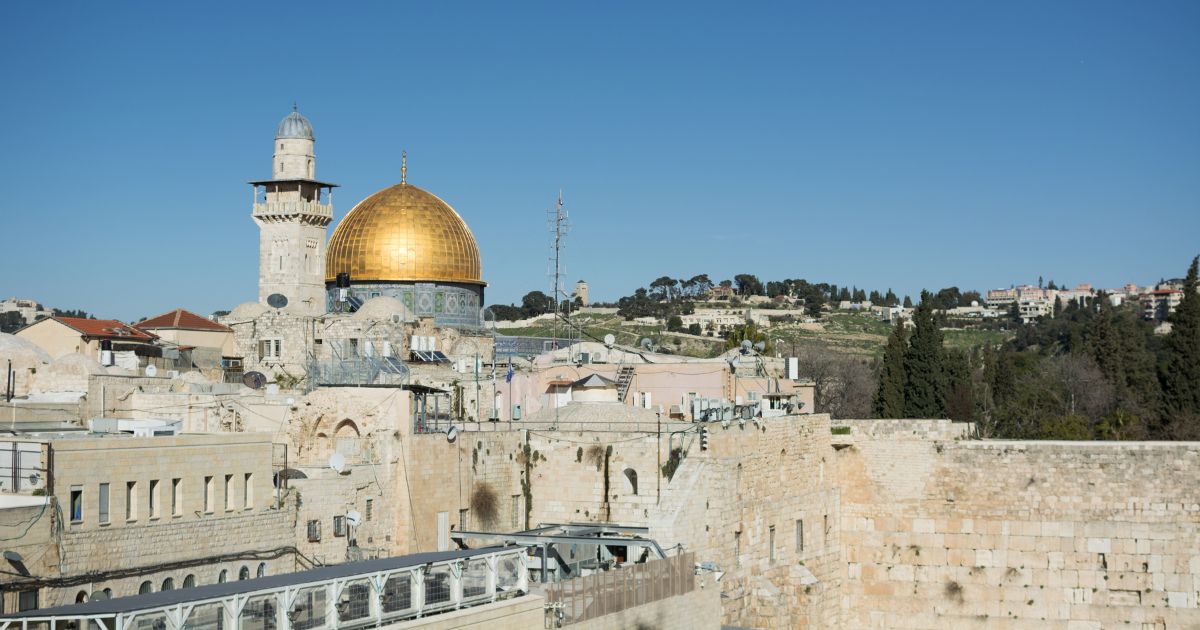
Palm Sunday 2026 has taken an unexpected and historic turn in Jerusalem, where church leaders were reportedly barred from entering the Church of the Holy Sepulchre, one of Christianity's most sacred sites. The restriction, described by church authorities as unprecedented in centuries, has sparked global attention and raised serious questions about religious access during one of the most important weeks in the Christian calendar.
Palm Sunday marks the beginning of Holy Week, the period leading up to Easter, and commemorates Jesus Christ's entry into Jerusalem. Traditionally, it is a day filled with processions, prayer, and symbolic acts of worship-especially in the very city where the events of the Gospels are believed to have taken place.
However, in 2026, the usual observances in Jerusalem were significantly altered. According to the Latin Patriarchate of Jerusalem, senior church leaders were prevented from entering the Holy Sepulchre to celebrate Palm Sunday Mass. The Patriarchate described the situation as a "grave precedent," emphasizing the significance of the decision not just locally, but for Christians around the world.
A Sacred Site at the Center of the Disruption
The Church of the Holy Sepulchre holds profound meaning in Christian tradition. It is widely believed to be the location of Jesus' crucifixion, burial, and resurrection, making it one of the most visited pilgrimage destinations in the world.
On Palm Sunday, the site typically hosts large gatherings, processions, and liturgical services. In previous years, church leaders have led public celebrations that draw attention from both local worshippers and international pilgrims.
But in 2026, access was restricted. Church officials stated that they were stopped while traveling to the site, even though they were not participating in any formal procession. According to reports, they were turned back before reaching the church, preventing them from carrying out their planned service.
For many believers, the restriction was more than a logistical issue-it struck at the heart of a tradition that connects faith, history, and place.
Security Measures and Official Response
Israeli authorities have cited security concerns as the reason behind access limitations in Jerusalem's Old City. Officials stated that certain religious sites were closed or restricted to ensure public safety during a period of heightened regional tension.
The Old City is a complex and densely populated area, home to several major religious landmarks, including:
- The Church of the Holy Sepulchre (Christianity)
- Al Aqsa Mosque (Islam)
- The Western Wall (Judaism)
Authorities noted that the area presents challenges for emergency response and crowd control, especially during large gatherings. As a result, access to key sites was adjusted, with restrictions affecting multiple faith communities.
Despite these explanations, church leaders and international observers expressed concern about the broader implications of such restrictions during a sacred time.
Global Reactions and Religious Concerns
The decision to restrict access to the Holy Sepulchre during Palm Sunday quickly drew reactions from religious leaders and political figures across the world. Many emphasized that religious freedom includes the ability to worship at sacred sites, particularly during significant holy days.
Church officials in Jerusalem described the incident as a serious disruption to worship. They also suggested that the decision failed to account for the spiritual importance of the day for millions of Christians.
International voices also weighed in. Some government officials criticized the move, calling for greater sensitivity when managing access to religious sites. They argued that restrictions of this nature should be handled with caution, especially when they involve locations of global religious importance.
At the Vatican, prayers were offered for Christians in the Middle East. The message acknowledged the challenges faced by believers in regions affected by conflict and highlighted the importance of being able to observe religious traditions without interruption.
Palm Sunday and the Meaning Behind It
Palm Sunday is often described as a day of both celebration and reflection. It commemorates Jesus' arrival in Jerusalem, where crowds welcomed him with palm branches and praise. This moment, recorded in the New Testament, represents recognition, hope, and the beginning of a deeply significant week in Christian belief.
The symbolism of Palm Sunday carries several key themes:
- Humility: Jesus enters not as a conqueror, but on a donkey
- Hope: The crowd celebrates what they believe to be a coming kingdom
- Foreshadowing: The same crowd that praises Jesus will later face his crucifixion
For many Christians, the day serves as a reminder of faith in difficult circumstances. It sets the tone for Holy Week, which moves from celebration to sacrifice, and ultimately to the resurrection celebrated on Easter Sunday.
Faith, Freedom, and Reflection
The events surrounding Palm Sunday 2026 highlight a deeper conversation about the intersection of faith, safety, and access. While security concerns remain a priority for authorities, the ability to worship at sacred sites is deeply meaningful for millions of people around the world.
In moments like these, faith communities often turn to reflection. The story of Palm Sunday itself carries a powerful message-one of entering into challenge with humility and hope, even when circumstances are uncertain.
This year's observance in Jerusalem reminds believers that faith is not limited to location. While physical access to holy sites holds deep importance, spiritual connection can also transcend barriers.
At the same time, the global response reflects a shared desire: that places of worship remain accessible, especially during sacred times.
A Moment That Resonates Beyond Jerusalem
Palm Sunday 2026 will be remembered not only for its religious significance, but also for the unusual circumstances surrounding its observance in Jerusalem. The restriction at the Church of the Holy Sepulchre has added a new layer of complexity to a day already rich in meaning.
As Holy Week continues, Christians around the world will move forward toward Good Friday and Easter Sunday-days that carry the core message of sacrifice and hope central to the faith.
In the end, Palm Sunday continues to serve as a powerful reminder: faith often thrives even in unexpected moments, and its meaning is shaped not only by tradition, but by the challenges and realities of the present day.


