The holiest week in Orthodox Christianity is full of history, mystery, and traditions most people - even lifelong Christians - have never heard.
Orthodox Holy Week runs April 6-12 this year, leading up to Pascha on April 12. If you've never stepped inside an Orthodox church during this week, here are ten things that will make you see it completely differently.
1. Orthodox Holy Week Has Been Documented Since 381 AD
A Christian pilgrim named Egeria documented Holy Week observances in Jerusalem around 381 AD, describing processions, prayers, and how each specific day was honored. The traditions she described are still practiced today - largely unchanged for over 1,600 years.
2. Every Single Day Has Its Own Unique Theme
Each day of Holy Week carries its own distinct theme. Monday is the sterile fig tree that yields no fruit and is condemned. Tuesday is the vigilance of the wise virgins. Wednesday focuses on the fallen woman who repents - deliberately contrasted with Judas, a chosen apostle who is lost. The whole week is a carefully structured theological journey, not just a countdown to Easter.
3. There Is One Day When No Liturgy Is Celebrated Anywhere on Earth
Great Friday is the only day in the entire Orthodox calendar when the Divine Liturgy is never celebrated - in any church, anywhere in the world. Because Christ Himself is the sacrifice, the Church goes completely silent. The altar offers nothing. It is the one day the liturgy stops.
4. The Holy Week Calendar Is Deliberately Upside-Down
During Holy Week, time is upended and reversed. Vespers on Sunday evening still belongs to Palm Sunday - not Holy Monday. This means for every day of Holy Week, Vespers is actually the last service of the day rather than the first. The Orthodox Church literally restructures the flow of time during this week as a theological statement.
5. The Great Friday Procession Is Essentially a Royal Funeral
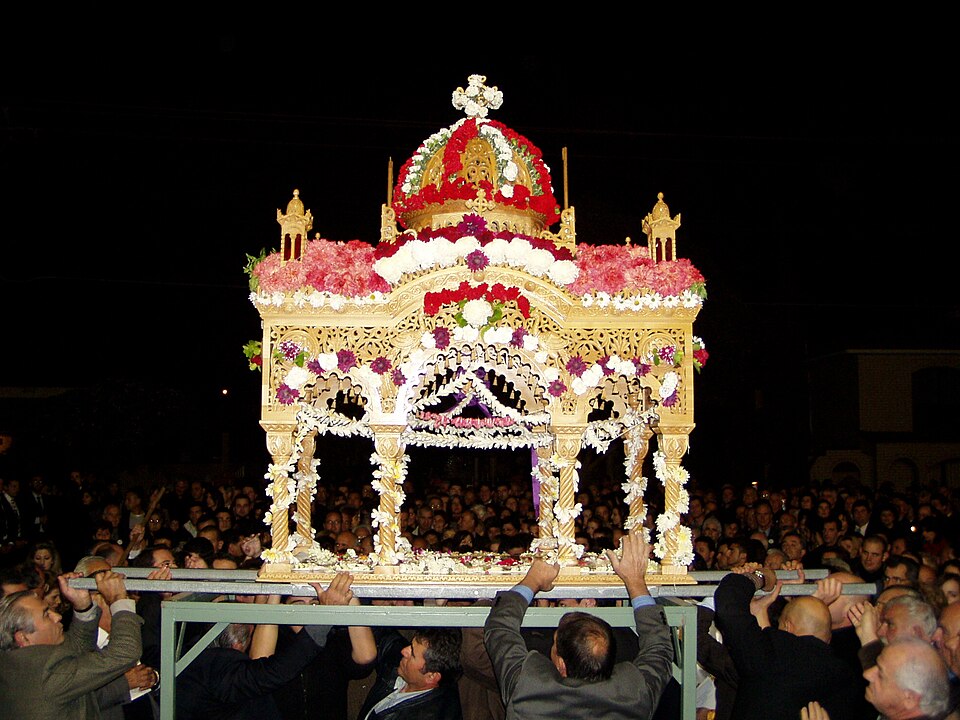
The Epitaphios - the cloth icon of Christ's burial - is sprinkled with flower petals and rosewater, decorated with candles, and ceremonially censed as a mark of respect. The faithful walk underneath it as a gesture of faith and devotion. It is one of the most visually striking Christian processions anywhere in the world.
6. On Great Saturday, Laurel Leaves Are Thrown Inside the Church
Bay laurel leaves are strewn throughout the church right after the Epistle reading on Holy Saturday. In the ancient world, laurel leaves were a sign of victory for generals. Christ is being honored as a conquering King - inside what the Church is calling His tomb. The symbolism is extraordinary.
7. The Vestments Change Color Mid-Service on Great Saturday
Halfway through the Vesperal Liturgy of St. Basil on Great Saturday, the royal gates close and the clergy change their vestments from dark Passion colors into bright white - the color of Christ's victory. While this happens, the faithful sing Psalm 82: "Arise, O God, and judge the earth, for to Thee belong all the nations." Pascha has not yet been announced - but it has already begun breaking through.
8. Orthodox Christianity Has Been in America Since 1740
In 1740, a Divine Liturgy was celebrated on board a Russian ship off the Alaskan coast - one of the earliest Christian liturgies on American soil. Orthodox Christianity has been part of this continent longer than the United States has existed as a country.
9. Orthodox Christians Fast for More Days Than They Don't
The Orthodox fasting calendar is one of the most demanding in all of Christianity. Between Great Lent, the Apostles' Fast, the Dormition Fast, and the Nativity Fast - plus every Wednesday and Friday throughout the year - Orthodox Christians observe fasting disciplines for well over half the days of the year. Holy Week carries the strictest fast of all.
10. The Midnight Pascha Service Begins in Complete Darkness - and a Single Flame Changes Everything
Before the midnight Paschal service, all candles and lights in the church are extinguished. Everyone waits in complete darkness and silence for the proclamation of the Resurrection. Then a single flame is passed from the priest to the people, candle to candle, filling the entire church with light - a physical image of the Gospel itself.
It is, by almost any measure, the most dramatic moment in the Christian liturgical year.


