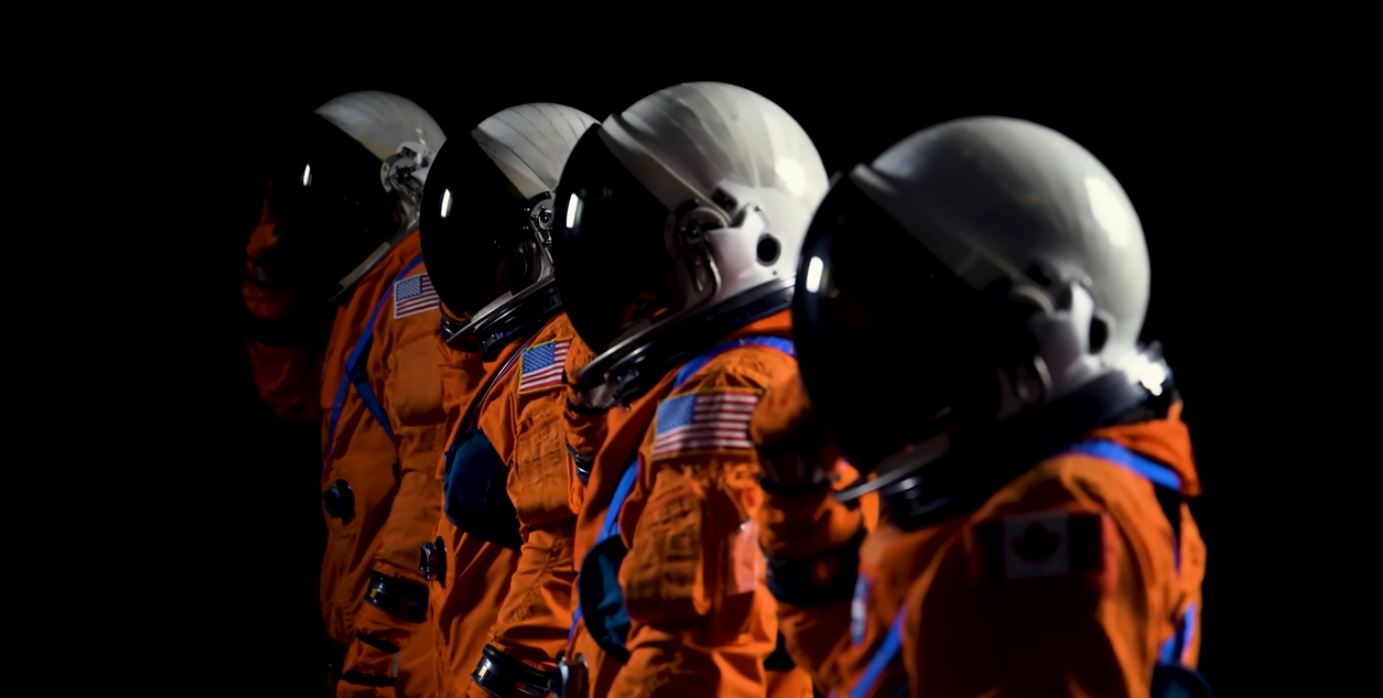
In a historic milestone for both space exploration and faith-inspired artistry, contemporary Christian music (CCM) found its way into orbit during Artemis II, the first crewed mission to circle the moon in more than half a century. Across the mission's 10-day journey, songs rooted in worship, encouragement, and spiritual reflection became part of the astronauts' lived experience-demonstrating the far-reaching impact of Christian music in even the most extraordinary environments.
The mission launched from Kennedy Space Center on April 1, 2026, marking a new chapter in NASA's Artemis program. Among the defining moments of the launch was a moving performance of the U.S. National Anthem by rising Christian artist Anne Wilson. For Wilson, the opportunity represented more than a career highlight-it was a deeply personal, full-circle moment. Having once dreamed of becoming an astronaut herself, she reflected on how God redirected her path through seasons of hardship into a platform that now allows her to inspire millions through music.
As the mission progressed, CCM continued to play a meaningful role aboard the Orion spacecraft. On the sixth day of the journey, astronauts were awakened with the song "Good Morning," produced by TobyMac and featuring the late Mandisa. The track, known for its uplifting message and vibrant energy, was selected as part of NASA's traditional wake-up call routine-an established practice designed to encourage and energize crew members during missions.
The inclusion of "Good Morning" marked a poignant moment for the Christian music community. TobyMac publicly expressed his gratitude, calling it an honor to have the song played in space and reflecting on Mandisa's enduring legacy. The moment resonated deeply with fans, symbolizing how messages of hope and faith can transcend earthly boundaries and reach into the cosmos.
Faith itself remained a visible and unifying thread throughout the Artemis II mission. Astronaut Victor Glover, known for his outspoken Christian beliefs, shared a powerful reflection during an Easter broadcast from space. Speaking from orbit, Glover pointed to the beauty and uniqueness of Earth as a testament to God's creation, encouraging people around the world to recognize both their shared humanity and the significance of their place in the universe.
These moments-both musical and spiritual-highlight the enduring role of faith in shaping human experience, even in the context of cutting-edge scientific achievement. While Artemis II represents a leap forward in humanity's quest to explore beyond Earth, it also underscores a deeper truth: that worship, reflection, and the search for meaning accompany us wherever we go.
The presence of contemporary Christian music during the mission serves as a powerful reminder of the genre's cultural and spiritual reach. From launchpad performances to in-flight wake-up calls, CCM provided a soundtrack of encouragement and worship that echoed far beyond Earth's atmosphere.
As NASA continues its Artemis program with future missions aimed at returning humans to the lunar surface, Artemis II leaves behind more than scientific data and technological progress. It carries a legacy of faith-infused moments-where music, mission, and meaning converged-demonstrating that even in the vast silence of space, songs of hope still resound.


