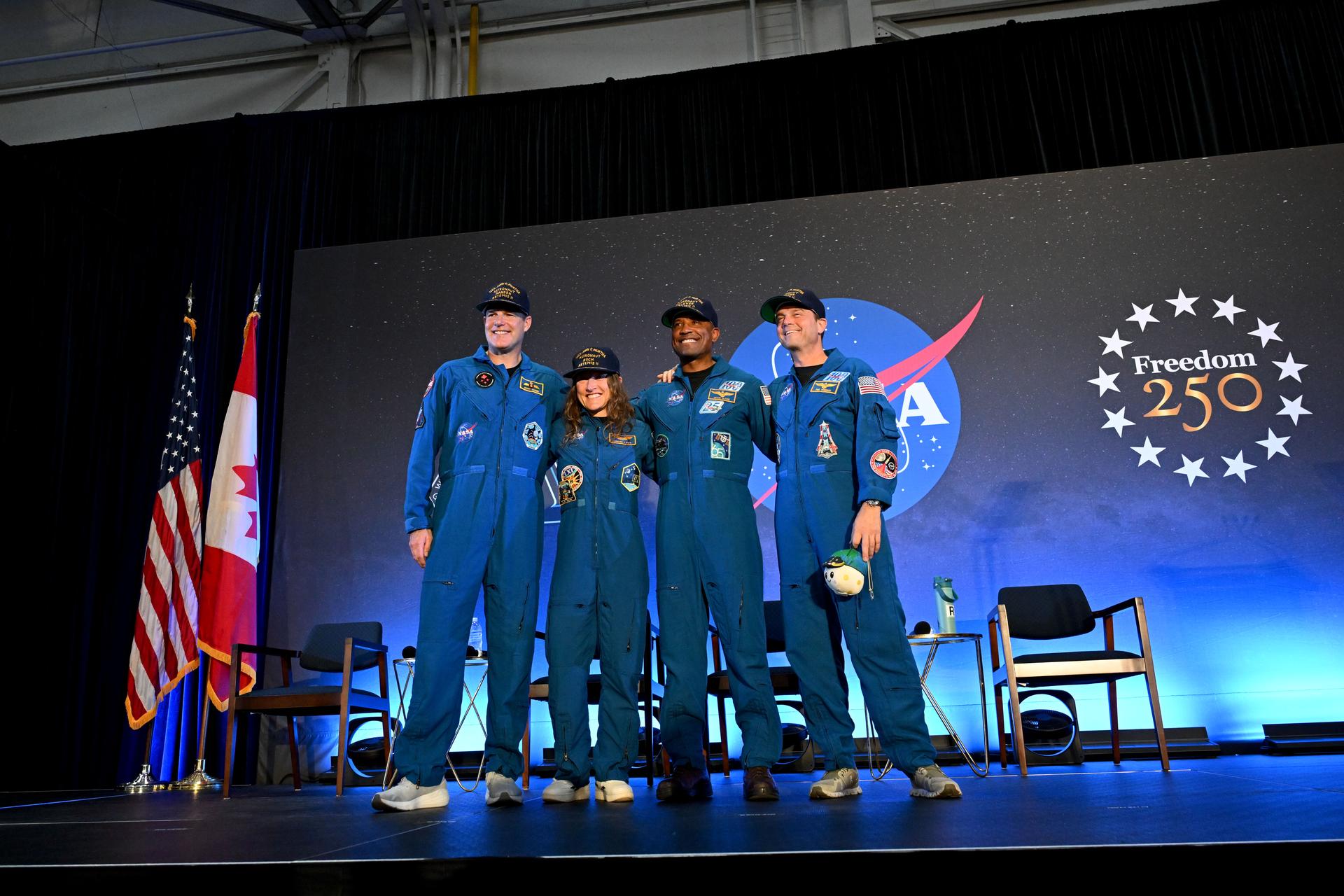
The Artemis II crew has returned from one of the most historic space missions in decades-but what they brought back isn't just data or record-breaking achievements. It's perspective. And according to the astronauts themselves, that perspective is already reshaping how they see life on Earth.
After traveling more than 250,000 miles from home and circling the far side of the moon, astronauts Reid Wiseman, Victor Glover, Christina Koch, and Jeremy Hansen are now reflecting on a journey that pushed the limits of human exploration-and revealed something far deeper about humanity itself.
At a welcome home event in Houston, the crew spoke candidly about the emotional and mental impact of seeing Earth from such an unimaginable distance. What stood out wasn't just the beauty of the planet-but its fragility.
"Earth was just this lifeboat hanging in the universe," Koch shared, describing the moment she looked back at the small blue sphere surrounded by endless darkness. It's a striking image-one that has quickly resonated around the world.
That single view seemed to shift everything.
From space, borders disappear. Differences fade. What remains is a shared home-one that the crew says feels more connected than ever. Koch summed it up simply: "Planet Earth-you are a crew."
For Commander Reid Wiseman, the journey was both awe-inspiring and deeply personal. While the mission fulfilled a lifelong dream, it also brought a renewed longing for the very things often taken for granted.
"Before you launch, it feels like the greatest dream on Earth," he said. "But when you're out there, you just want to get back to your families and your friends."
That tension-between exploration and belonging-became a defining theme of the mission.
Inside the Orion spacecraft, the crew shared close quarters for nearly 10 days, traveling farther into space than any humans in history. Yet some of the most meaningful moments weren't about the moon or the mission itself, but about connection. Hearing each other speak with loved ones back home, sharing laughter, even moments of silence-it all took on new meaning in the vastness of space.
"Hearing your crewmates loving their families from afar-that changes you," Wiseman reflected.
Pilot Victor Glover echoed that sentiment, expressing gratitude that extended beyond the mission. "I wanted to thank God," he said. "What we experienced... it's too big to hold in one body."
It's a rare moment when science and spirituality intersect so naturally. For the Artemis II crew, space wasn't just a frontier to explore-it became a mirror, reflecting the deeper truths of life, purpose, and connection.
Jeremy Hansen emphasized that idea during the event, telling the audience that their experience wasn't just theirs alone. "We are a mirror reflecting you," he said. "If you like what you see, look a little deeper. This is you."
Their words have struck a chord not only within the scientific community but also among everyday people watching from around the world. In a time when division often dominates headlines, the crew's message feels refreshingly simple: we are more united than we think.
The mission itself was a major milestone. Artemis II marked the first time humans have traveled to the moon since 1972, breaking records and paving the way for future missions, including NASA's planned return to the lunar surface. But beyond the technical success, it's the human story that continues to resonate.
There were challenges along the way-even minor issues like a malfunctioning onboard toilet-but those details have only added to the authenticity of the journey. This wasn't just a flawless mission; it was a real, human experience in one of the most extreme environments imaginable.
And now, back on Earth, the crew is still processing what it all means.
"I have not processed what we just did," Glover admitted. "And I'm afraid to start even trying."
That honesty underscores just how profound the experience has been.
For many, the Artemis II mission is a reminder that exploration isn't just about going farther-it's about seeing clearer. Sometimes, it takes distance to truly understand what's right in front of us.
From a faith perspective, the crew's reflections echo a timeless truth: that creation itself points to something greater, and that even in the vastness of space, there is purpose, order, and meaning. Seeing Earth as a "lifeboat" in the universe is more than a poetic image-it's a call to care for one another and the world we share.
As the Artemis program continues, the legacy of this mission is already taking shape-not just in future launches, but in the hearts of those who witnessed it.
Because in the end, what the Artemis II crew saw wasn't just space.
They saw home-differently.
Related Article: Faith, Fear, and a 6-Minute Blackout: The Most Intense Moment of Artemis II


