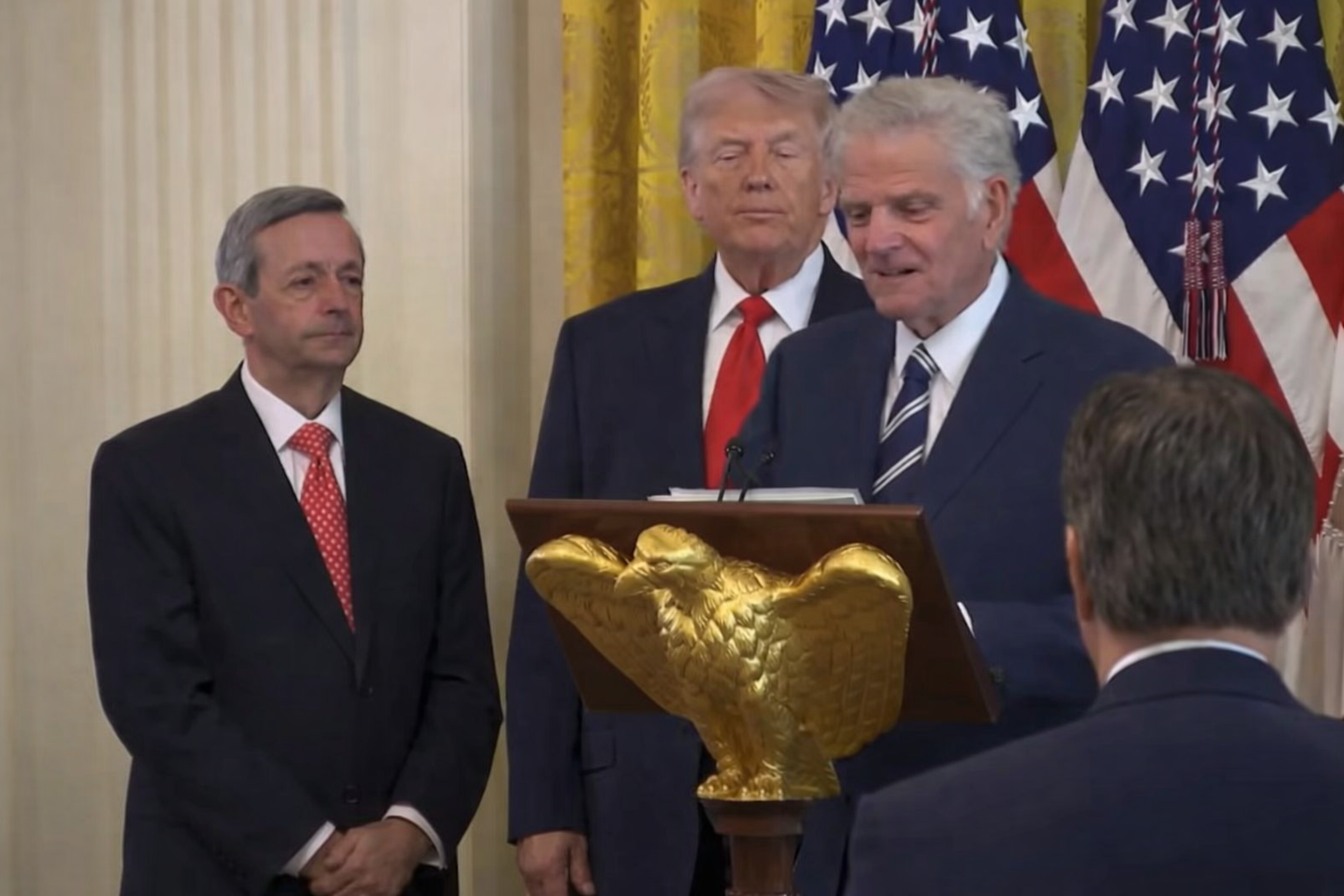
Evangelist Franklin Graham is speaking out following widespread backlash over an AI-generated image shared by Donald Trump that appeared to depict the former president in a Christ-like form-dismissing the controversy as overblown and urging a more measured response.
In comments reported by The Christian Post, Graham emphasized that he does not believe Trump intentionally portrayed himself as Jesus, calling such an interpretation inappropriate but ultimately misunderstood.
"I do not believe President Trump would knowingly depict himself as Jesus Christ," Graham stated, noting that the image-reportedly AI-generated-was misunderstood by the president, who initially thought it represented a doctor helping others before removing it amid criticism.
The controversy intensified after a second image circulated showing Jesus embracing Trump, further fueling debate across political and religious circles. Yet Graham maintained that critics were reading too much into the situation and argued that the reaction had been shaped by assumption rather than careful interpretation.
"When I looked at the illustration, I didn't jump to the same conclusion as some... I think this is a lot to do about nothing," he said, pointing to the absence of overtly spiritual symbols in the original image and suggesting that the outrage had been amplified beyond what the situation warranted.
Rather than focusing solely on political implications, Graham redirected attention to a broader spiritual reflection, using the moment to emphasize the importance of seeking Christ personally. Referring to the second image of Jesus placing a hand on Trump, he described it as a reminder that guidance and dependence on Christ are needed by all, regardless of position or influence.
Graham, who has consistently supported Trump, also reaffirmed his belief that the former president has been a strong advocate for religious freedom, describing him as one of the most pro-Christian leaders in his lifetime.
As debates continue over the use of faith imagery in political spaces, Graham's response reflects his broader approach to public controversy-downplaying polarization while pointing toward spiritual introspection. In a cultural moment shaped by viral images and rapid reactions, his remarks shift the focus from outrage to a more enduring question of faith, discernment, and how individuals respond to Christ beyond the noise of public discourse.


