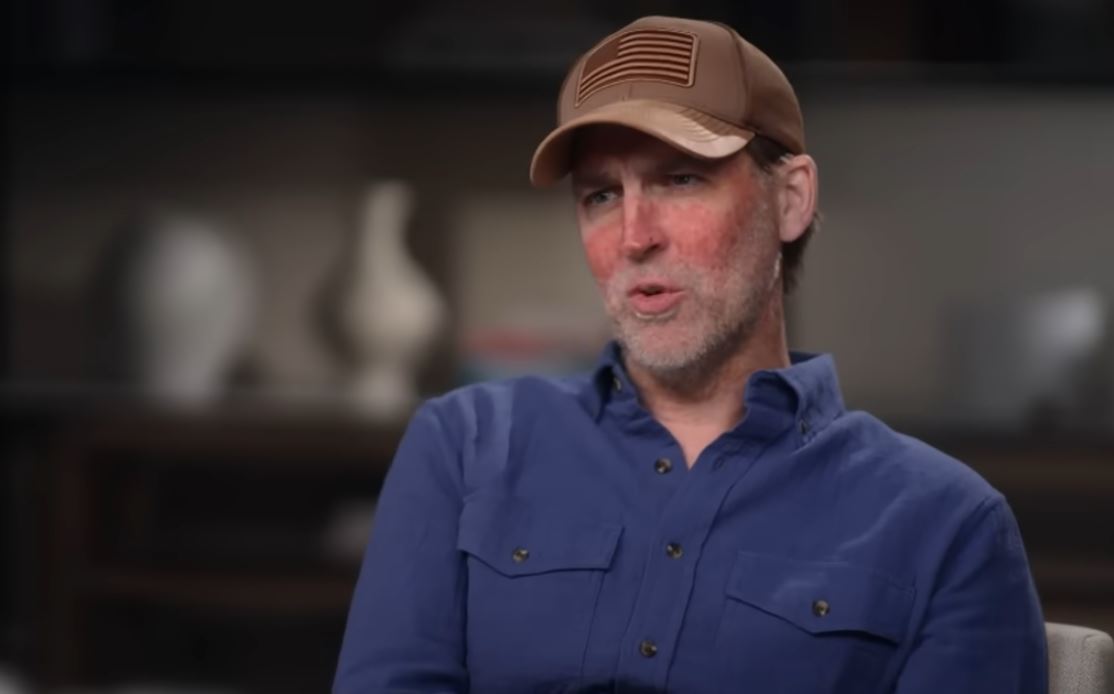
Former U.S. Senator Ben Sasse has offered one of the most reflective and deeply personal interviews of his public life during a recent extended appearance on 60 Minutes, where he spoke candidly about his battle with advanced pancreatic cancer, his view of American politics, and what he believes the nation is truly lacking today-not policy reform, but spiritual depth and communal grounding.
Sasse, who was diagnosed in December and initially given just a few months to live, revealed that he is currently surviving beyond that prognosis thanks to an experimental treatment. While the medical update itself is significant, the tone of his conversation was not centered on survival statistics or political legacy. Instead, it focused on something far more foundational: how confronting mortality has reshaped his understanding of life, purpose, and faith.
He described cancer not as an isolated tragedy but as a universal reminder of human finitude. "We're all always on the clock," he noted, emphasizing that awareness of limited time can sharpen clarity about what truly matters. For Sasse, that clarity has shifted his attention away from institutional politics and toward the deeper structures of society-family, faith, and local community life.
Throughout the interview, Sasse repeatedly returned to a central concern: American politics has become increasingly performative, while missing the larger cultural and spiritual forces shaping everyday life. He argued that Congress and national institutions often focus on symbolic battles rather than addressing long-term challenges such as technological disruption, the transformation of work, and the erosion of community ties.
In his view, the United States is not merely experiencing a political crisis but a relational one. Despite unprecedented material wealth, he suggested that many Americans feel disconnected from neighbors, isolated from extended family, and uncertain about their role in a rapidly changing world. "We are incredibly rich materially," he said in essence, "but spiritually and communally, we are struggling."
One of Sasse's most striking observations centered on technology and its impact on human behavior. He warned that digital platforms and emerging artificial intelligence systems are accelerating both economic abundance and social fragmentation. While these tools promise convenience and productivity, they also risk weakening attention, discouraging deep relationships, and reshaping how people understand meaning and purpose.
He compared modern technology to a force that can either serve humanity or quietly erode it depending on how it is used. Without intentional boundaries, he suggested, people risk outsourcing not only their work but also their attention, habits, and even relationships to systems designed for constant engagement rather than human flourishing.
Faith plays a central role in how Sasse is processing both his illness and his critique of modern life. As a committed Christian, he spoke openly about prayer, suffering, and dependence on God. While he does pray for healing, he also emphasized that mortality is not an exception but a shared human reality. His perspective reflects a belief that faith does not remove suffering, but it reorients how suffering is understood.
Sasse also reflected on the importance of family, expressing both gratitude and regret. Married for more than 30 years with three children, he admitted that his public life often pulled him away from home more than he would have liked. If given more time, he said, he would prioritize deeper family connections and invest more intentionally in building a legacy rooted in relationships rather than titles or achievements.
Perhaps most significantly, Sasse suggested that America's greatest need is not political innovation but moral and spiritual renewal. He called for a return to what he described as "thick community"-relationships rooted in trust, responsibility, and shared life. In his view, no amount of legislation can replace the foundational role of families, neighborhoods, and places of worship in shaping a healthy society.
His comments also pointed toward a broader cultural concern: the loss of intergenerational connection. Sasse emphasized that young people need the guidance of older generations, while older individuals need opportunities to serve and invest in the young. Without this exchange, he warned, society risks becoming fragmented into isolated age groups and digital echo chambers.
Even as he acknowledged the seriousness of his illness, Sasse's tone was not one of despair but reflection. He expressed hope that the United States can still navigate its current challenges if individuals choose to rebuild local community life and prioritize meaningful relationships over political noise.
In the end, his message on 60 Minutes was not a political argument in the traditional sense. It was a reminder that beneath every system and institution lies something more fundamental: the human soul. And for Sasse, it is here-rather than in Washington-that the future of America will ultimately be shaped.
As he continues his treatment and extended time beyond initial expectations, his words serve as a sobering invitation to reconsider priorities. Faith, he suggests, is not an escape from reality, but a framework for understanding it. And in a time of uncertainty and division, that perspective may be more relevant than ever.
Watch the Full Interview here: Ben Sasse: The 60 Minutes Interview
Related Article: Ben Sasse Reveals Tumors Shrinking 76% and Why He's Thanking God for Pancreatic Cancer


